
Most AI Math Solver tools can return an answer. The bigger difference is what happens after that: how they handle images, PDFs, symbolic notation, step explanations, and follow-up questions. That is where the category starts to split.
Some tools are best when the task is clean and computational. Some are better when the student wants to inspect every step. Some are most useful when homework begins as a worksheet photo, a screenshot, or a mixed-format assignment rather than a neatly typed equation. In other words, the best Math Solver depends less on marketing and more on the kind of work the student is actually doing.
This guide compares six AI Math Solver tools through that lens. The focus is not “which brand sounds biggest,” but which tool is more reliable for specific types of student use: step-by-step learning, advanced symbolic work, quick camera-based solving, or broader homework workflows that involve text, images, calculator input, and PDFs.

Different Math Solver tools are good at different tasks. Some are better for method visibility. Some are stronger in exact computation. Some are more useful when homework is messy and the student needs more than one interaction.
| Tool | Best For | Input Types | Strongest Point | Main Limitation |
|---|---|---|---|---|
| Dechecker | Mixed-format homework workflows | Text, image, calculator, PDF | Broad workflow support with follow-up interaction | Less established brand recognition |
| Symbolab | Step-by-step learning | Text, image, screenshot | Clear procedural breakdown | Less flexible outside core math workflows |
| Wolfram|Alpha | Advanced and exact math | Structured text, image, file support | Computational depth and precision | More technical, less approachable |
| Photomath | Fast camera-first solving | Camera, image, calculator input | Low-friction mobile use | Narrower beyond scan-first tasks |
| Mathway | Quick answer-first solving | Text, photo | Speed and familiarity | Weaker explanation depth than stronger alternatives |
| Gauth | Broader homework support | Image, text, app-based input | Wider schoolwork coverage | Less focused as a dedicated Math Solver |
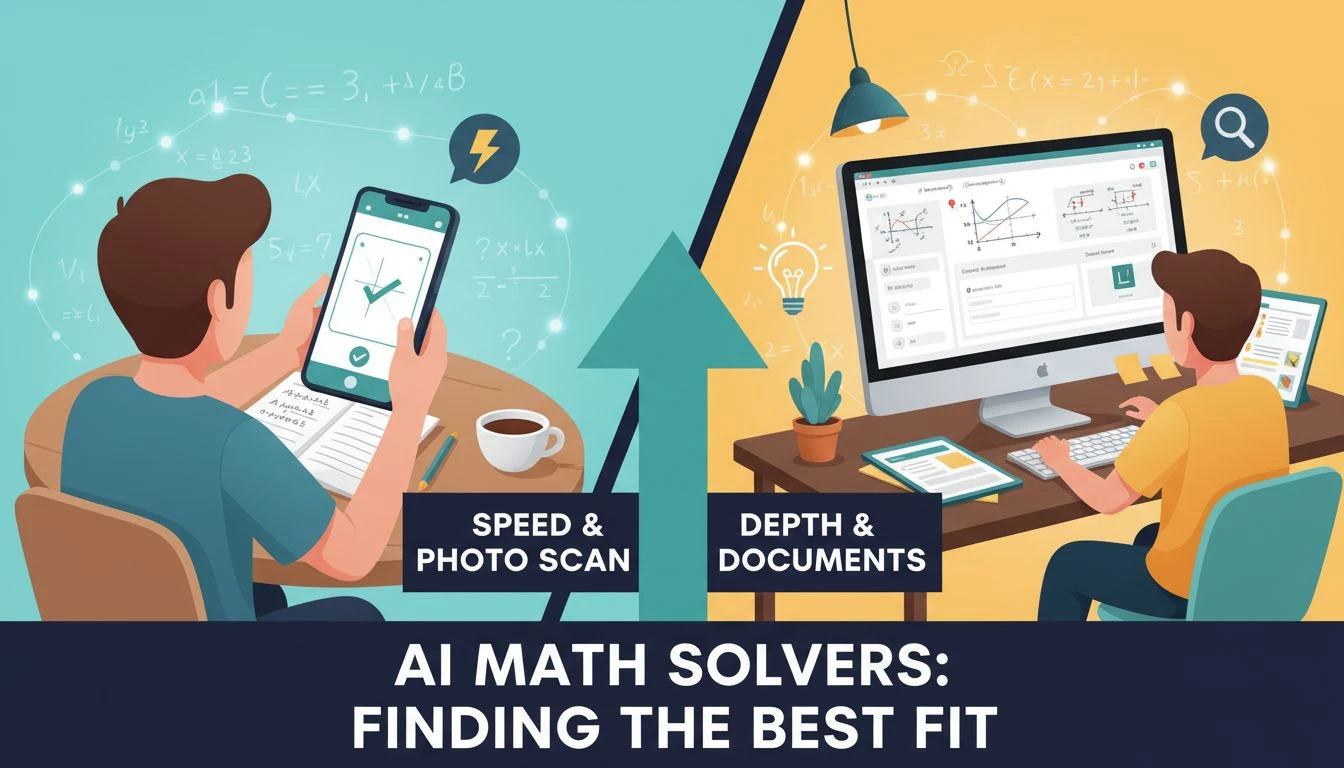
The best Math Solver depends on the task. A student solving algebra from a worksheet photo is not looking for the same thing as a student checking symbolic calculus. A student who wants fast mobile help is also solving a different problem from someone who needs a tool that can stay useful across explanation, follow-up, and document-based homework.
This comparison focuses on where each AI Math Solver is most useful and where it becomes less reliable.
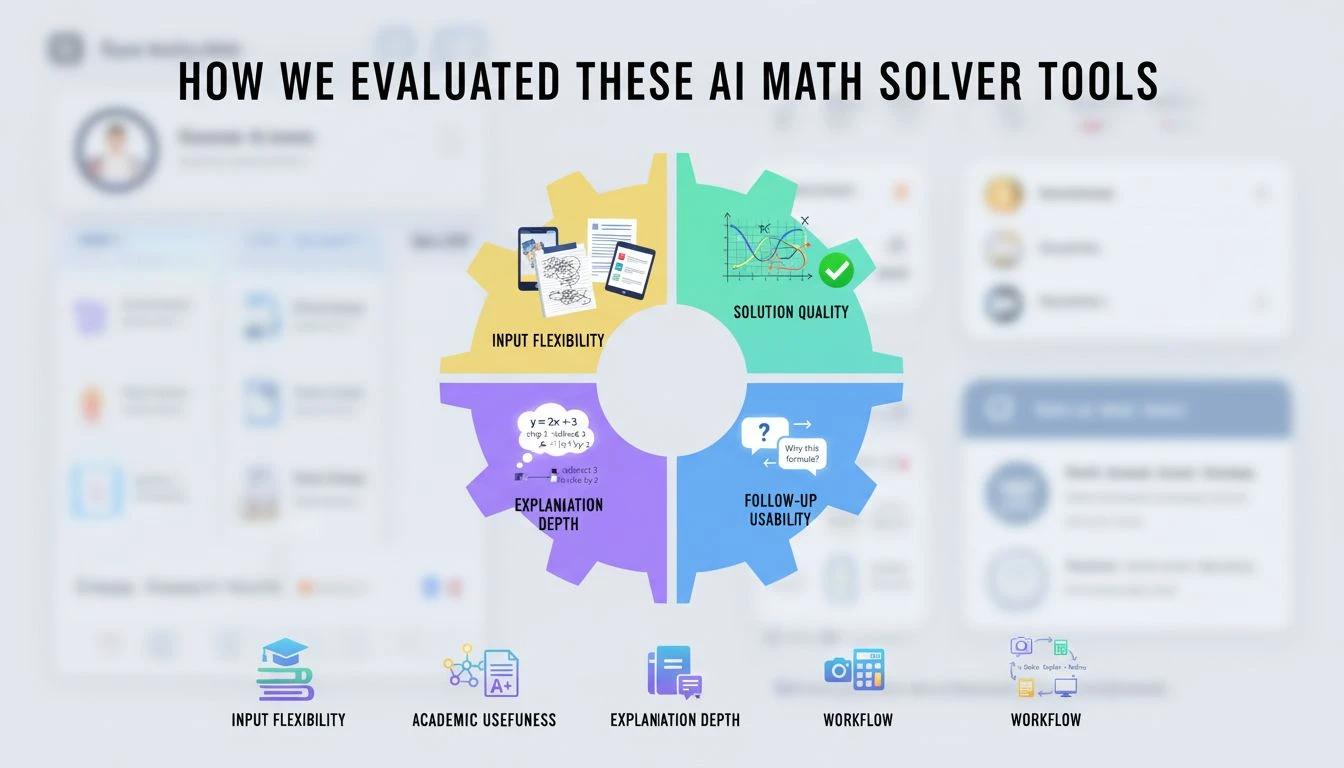
We looked at six factors: input flexibility, solution quality, explanation depth, follow-up usability, academic usefulness, and workflow.
These factors matter because Math Solver performance changes depending on the type of problem, the format of the input, and whether the student needs an answer, an explanation, or both.
Input flexibility matters because homework rarely starts as a clean typed equation. Students work from screenshots, worksheet photos, handwritten notes, copied text, and PDFs. A Math Solver that works well only with polished input is already limited.
Solution quality matters because not every tool stays stable across problem types. Some work well on routine algebra but become weaker on symbolic notation, applied questions, or multi-step expressions.
Explanation depth matters because a useful Math Solver should do more than return a result. It should explain enough of the method for the student to use the answer, verify it, or continue the problem independently.
Follow-up usability matters because the first answer usually is not the end of the interaction. Students ask why a formula was used, whether there is another method, or how the answer changes under a slightly different condition. Some tools support that naturally. Others do not.
Academic usefulness matters because students often need school-style problem support rather than raw computation alone. That includes structured steps, concept support, and compatibility with common homework formats.
Workflow matters because the best AI Math Solver is often the tool that fits the full assignment process best, from input to explanation to continued help.
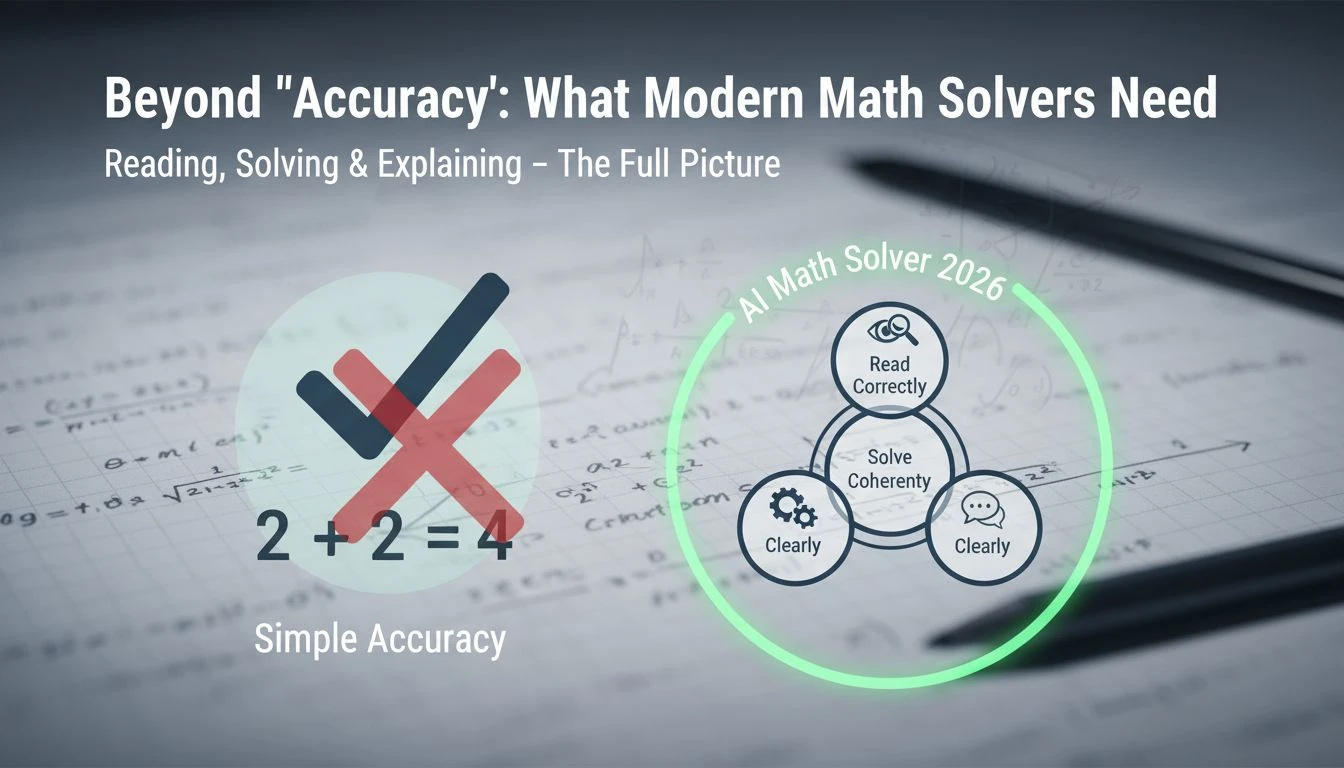
“Accuracy” is one of the weakest words in Math Solver comparisons when it is used without context. Performance depends on the input format, the level of math, the style of notation, and whether the task is mainly computational or explanation-heavy.
A more useful question is this: where does each tool remain dependable, and where does it start to lose value? That standard gives students clearer guidance than generic claims about smartness or correctness.
A useful AI Math Solver in 2026 should do three things well: read the problem correctly, solve it coherently, and explain the path clearly enough for the student to keep working. Many tools can do the first two under good conditions. Fewer handle all three consistently across real homework input.
The tools below are not identical products competing on one axis. Each is better suited to a different type of student work. The most useful comparison is not “which one wins,” but what kind of math help each tool is built for.
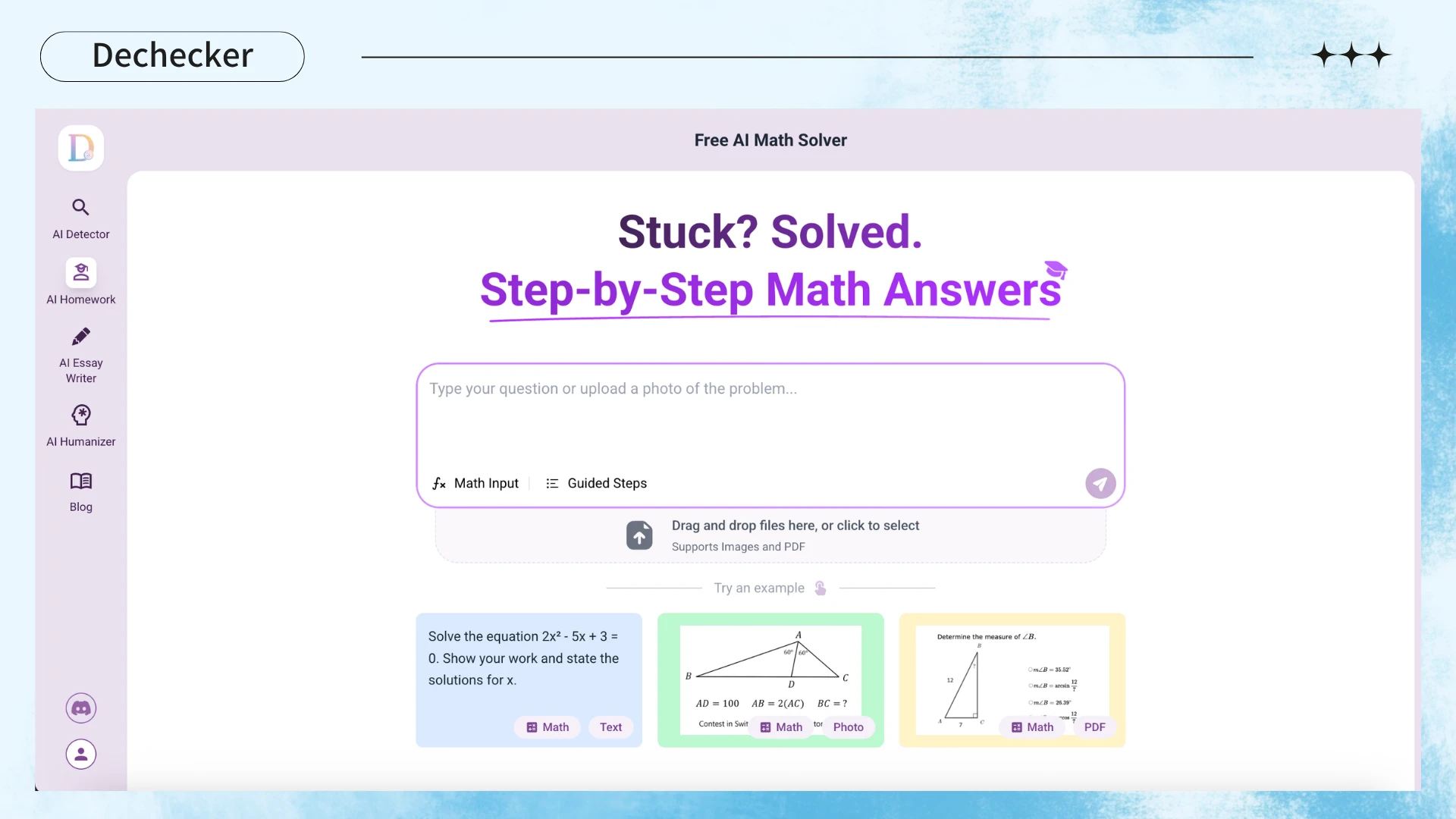
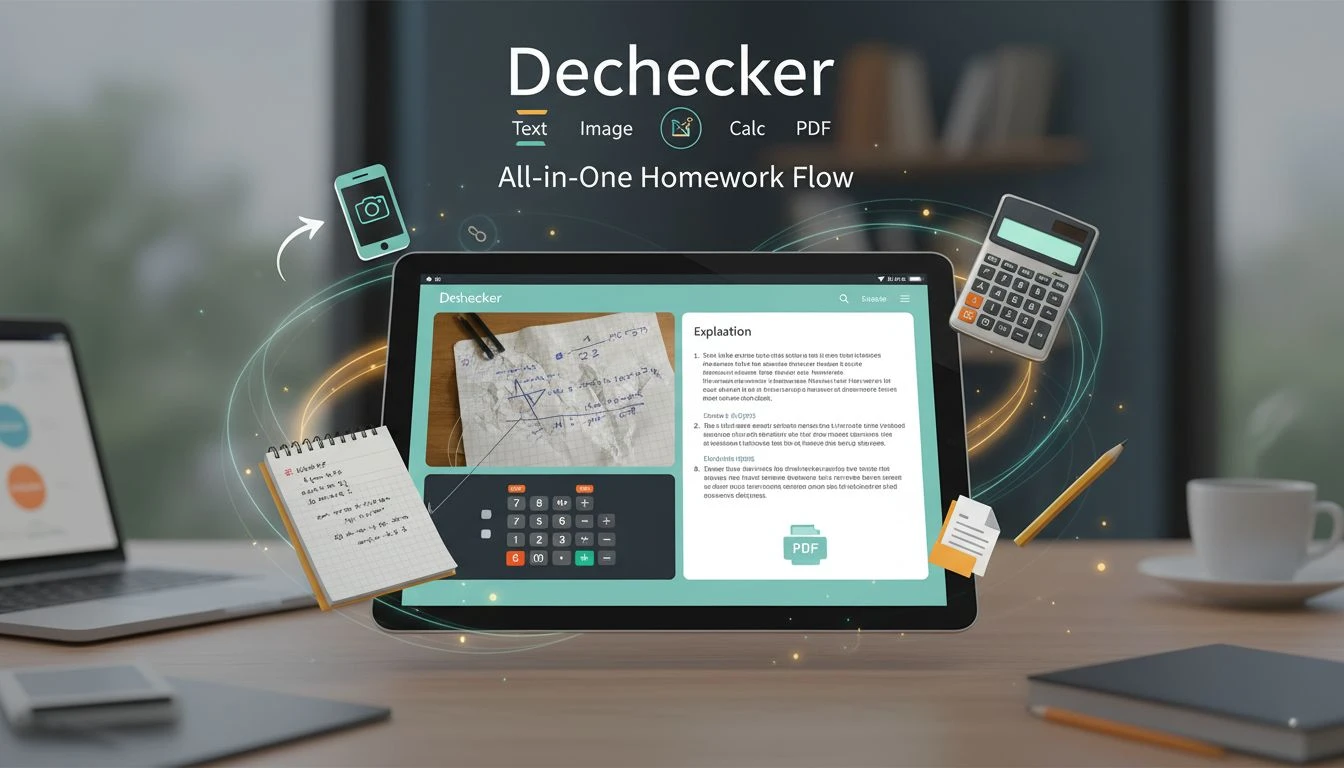
Core positioning: an AI Math Solver for mixed-format homework and continued problem-solving rather than one-shot equation output.
Dechecker is better suited to students whose homework does not begin in a single clean format. It supports text input, image upload, calculator-style entry, and PDF-based questions, which makes it more adaptable than tools built mainly around typed expressions or camera scanning alone.
Dechecker accepts multiple kinds of input and returns a structured response organized around the problem, the answer, the step-by-step solution, and supporting concepts. That structure is important because it matches how students usually consume math help: first confirm the problem, then inspect the answer, then trace the steps, then ask what the method means.
The tool is also designed for continued interaction. Students can move from the initial solution into follow-up questions without leaving the same workflow. That makes it more useful than tools that treat solving as a single transaction.
Its main strength is workflow coverage. Dechecker is more useful than narrower Math Solver tools when the assignment includes screenshots, pasted text, image-based questions, or longer documents. It also benefits from being free to use and accessible without forced sign-up, which reduces friction at the moment students actually need help.
Its weakness is not capability so much as familiarity. It is newer than older category names, which means some students may still default to legacy tools first.
Best for: students who want one Math Solver for text, image, calculator, and PDF input, plus step explanations and follow-up interaction.
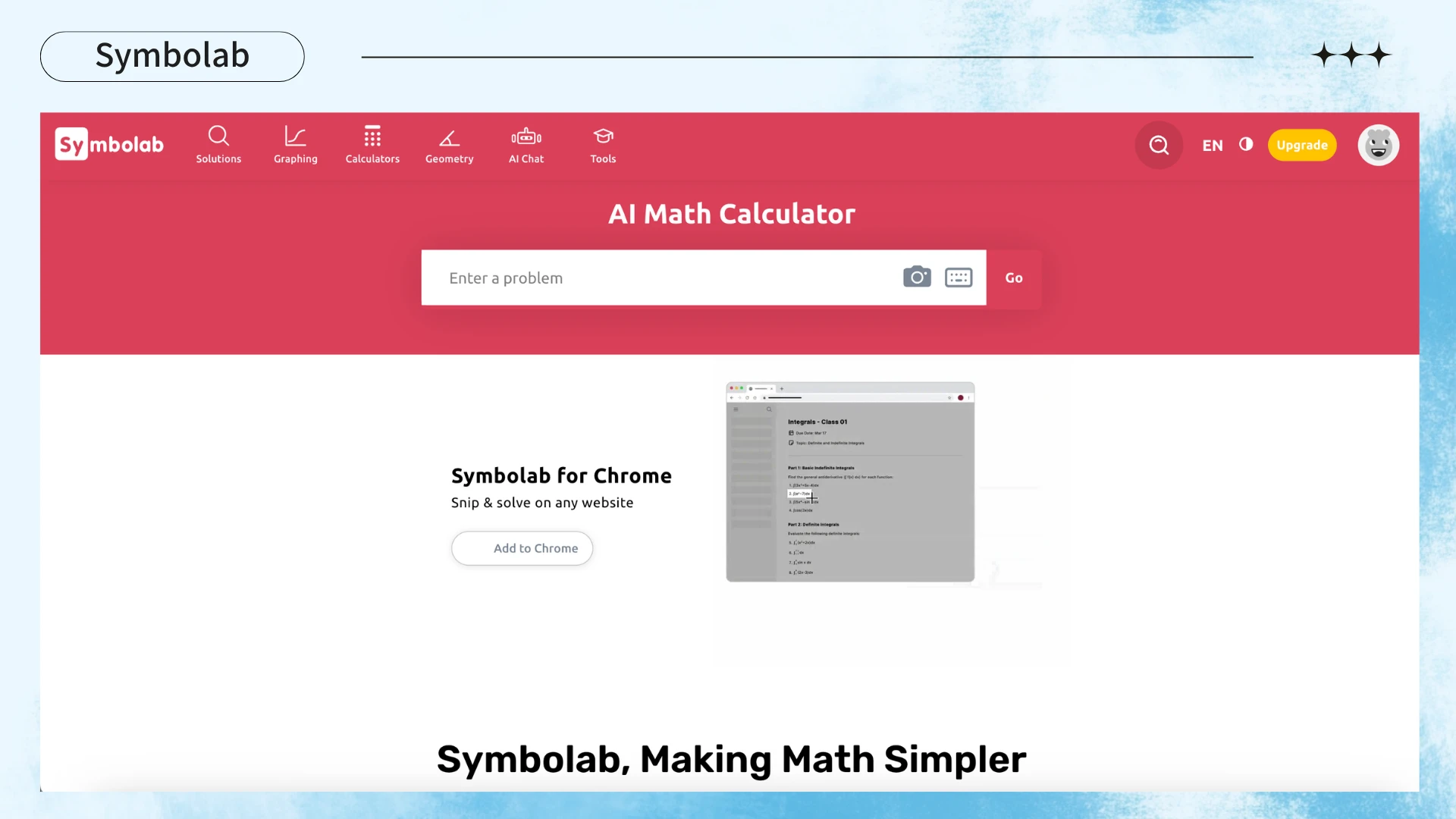
Core positioning: a Math Solver built around method visibility and procedural learning.
Symbolab is more useful when the main goal is to inspect how the solution works rather than get to the answer as quickly as possible. It remains one of the most method-focused tools in the category.
Symbolab interprets the problem, identifies the solving path, and lays out the procedure step by step. That makes it especially effective in algebra, calculus, derivatives, integrals, and other topics where the student benefits from seeing how one expression becomes the next.
It behaves less like a broad homework assistant and more like a dedicated Math Solver built around instructional sequencing.
Its strongest feature is step visibility. For students who need to review method, track transformations, or reinforce procedures, Symbolab is one of the most reliable options.
Its limitation is range. Symbolab is strong inside core math-solving tasks, but less flexible when the work starts as a longer document, a mixed-format question, or an open-ended follow-up-heavy workflow.
Best for: students who want clear steps, procedural transparency, and method-based math review.
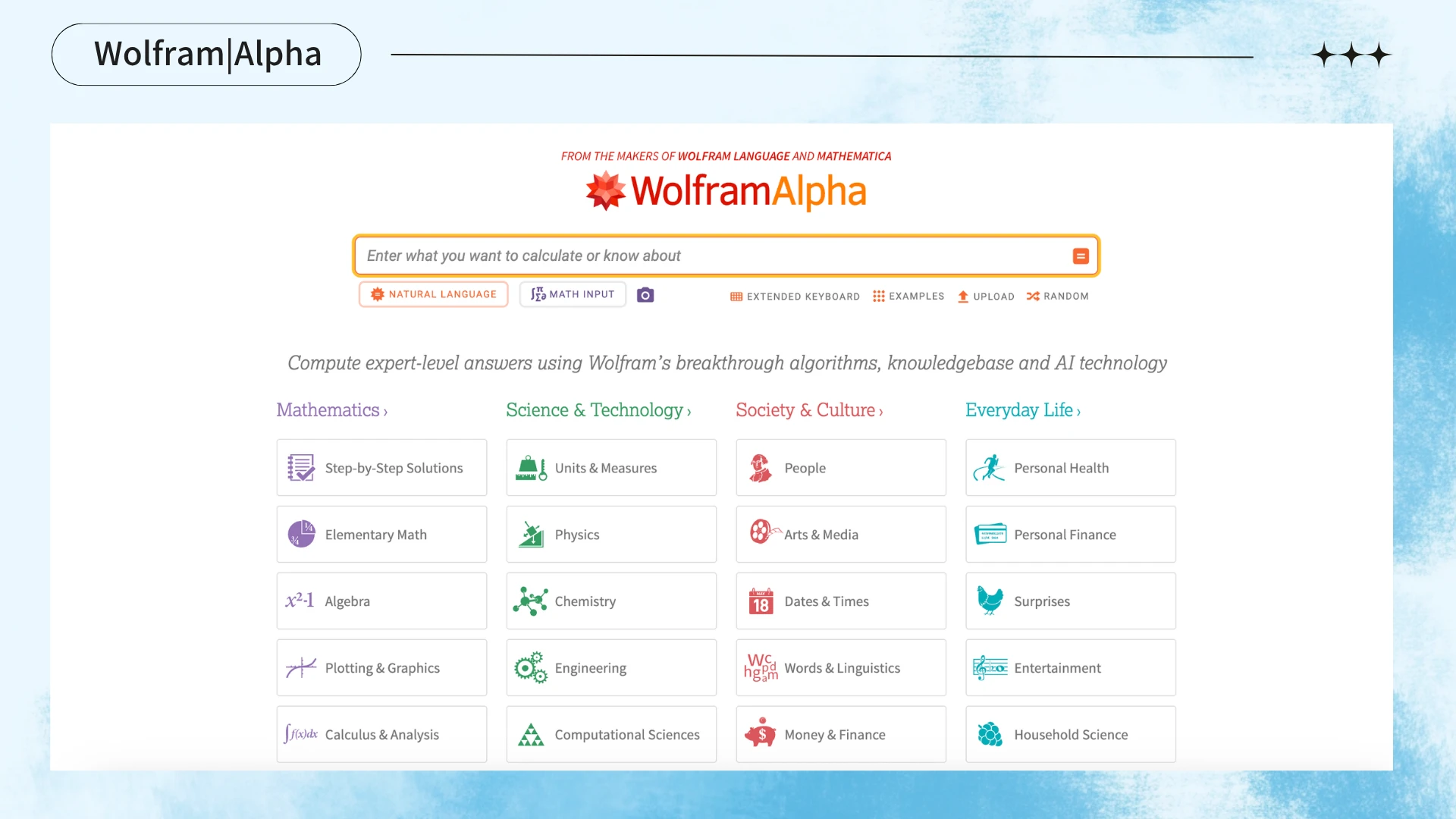
Core positioning: a computational engine for advanced, symbolic, and exact mathematics.
Wolfram|Alpha is more useful when the work is formal, advanced, or technically demanding. It is less a casual Math Solver and more a serious mathematical engine.
Wolfram|Alpha maps the problem into a formal mathematical structure, computes the result, and often returns mathematically dense output. That makes it particularly strong for symbolic algebra, calculus, exact values, and more technical queries where computational precision matters more than a soft learning interface.
Its main strength is depth. For advanced algebra, symbolic manipulation, exact computation, and high-precision results, Wolfram|Alpha remains one of the strongest tools available.
Its limitation is accessibility. Compared with more student-centered Math Solver tools, it can feel more rigid and more technical, especially for users who want explanation and ease of use alongside solving power.
Best for: advanced math, symbolic work, exact results, and students who prioritize computational depth.
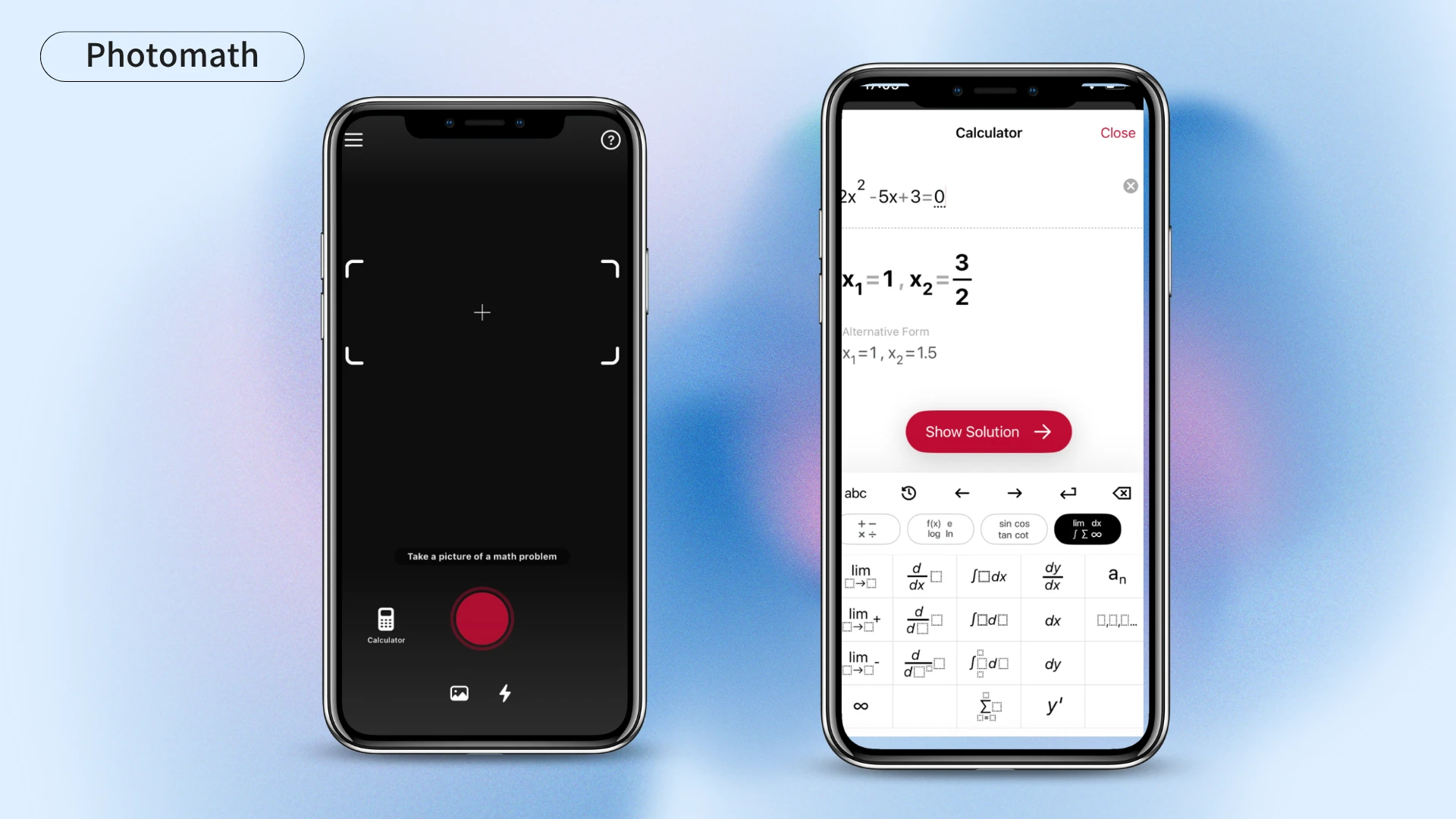
Core positioning: a camera-first AI Math Solver for fast mobile problem capture.
Photomath works best when the problem starts on paper and speed matters more than workflow breadth. It remains one of the clearest scan-first options in the category.
Photomath takes camera or image input, extracts the problem, and presents a structured solution path. The product is built around quick conversion from paper to screen, which is why it remains widely useful for textbook-style questions and everyday mobile homework help.
Its strongest point is convenience. Students can go from worksheet to solution with very little setup, which makes Photomath especially useful for standard classroom problems and mobile-first study habits.
Its limitation is range. Once the homework becomes more mixed-format, more concept-heavy, or more dependent on follow-up interaction, Photomath feels narrower than broader Math Solver tools.
Best for: students who want fast camera-based help, especially on mobile and with standard worksheet-style math.
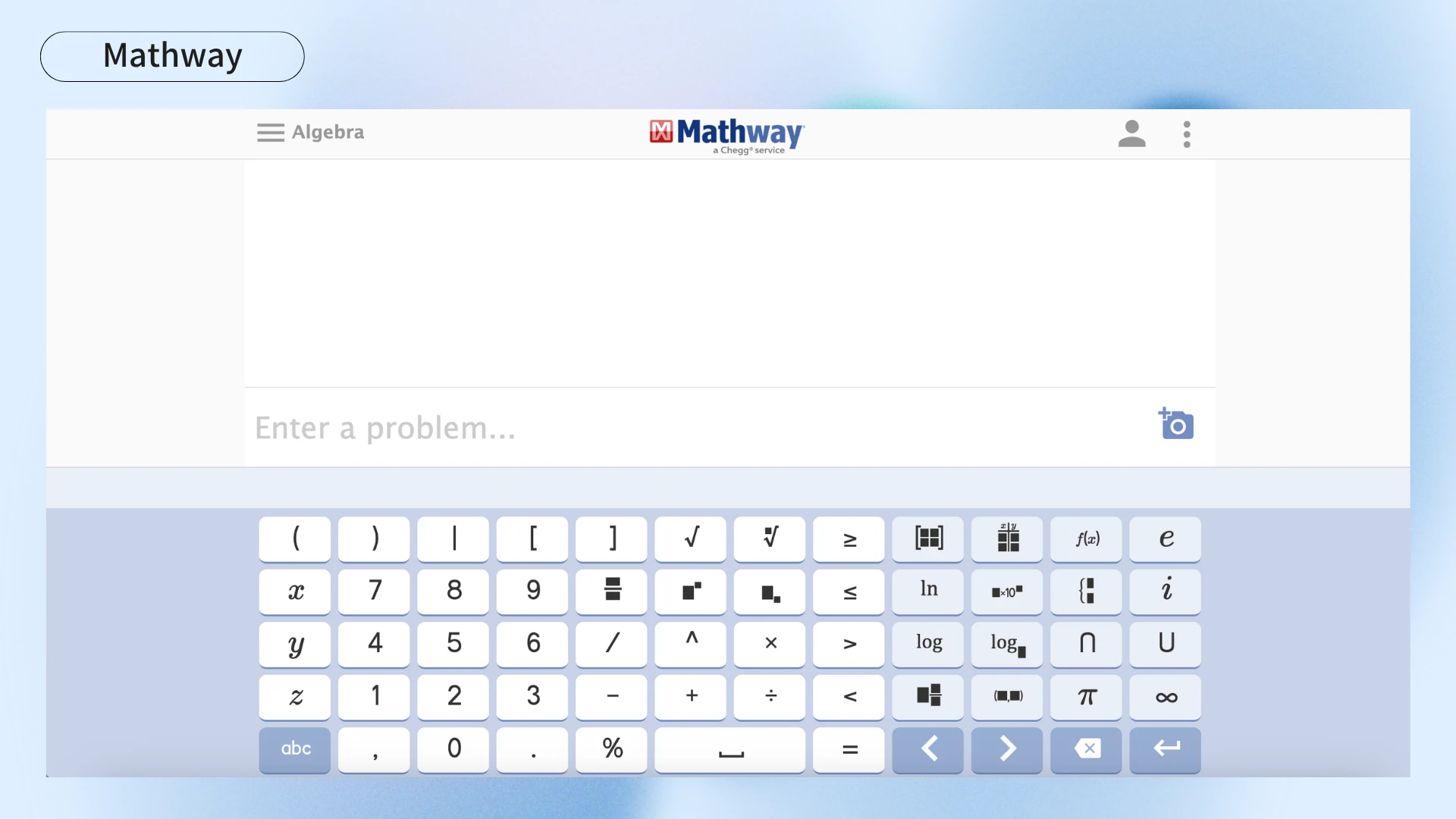
Core positioning: a fast, familiar Math Solver centered on quick answer-first use.
Mathway is more useful when the student wants speed, familiarity, and minimal interaction overhead. It has remained relevant because that use case is still common.
Mathway accepts typed or photographed input and returns solutions through a very direct workflow. Its strength lies in reducing friction and moving quickly from problem to result.
Its strengths are speed and ease of use. Students who want a low-friction Math Solver with a familiar interface can still get substantial value from it.
Its limitation is explanation depth. Compared with stronger alternatives, Mathway now feels thinner on method support and less useful once the student wants more than the first output.
Best for: students who want quick answers, familiar UI, and minimal setup.
Core positioning: a broader homework helper that includes math but is not limited to math.
Gauth is more useful for students who want one tool that can move across assignments and subjects rather than a narrowly specialized Math Solver.
Gauth combines AI-based problem solving with broader homework-help functionality. As a Math Solver, it is usable, especially when the student begins with image-based input or wants a product that can also help outside math.
Its strength is breadth. For students who want a more general schoolwork assistant, Gauth can reduce the need to switch across tools.
Its limitation is specialization. As a pure AI Math Solver, it feels less focused than the stronger math-centered tools in this comparison, especially when the main need is detailed explanation or consistent mathematical clarity.
Best for: students who want a broader homework assistant rather than a dedicated math-first tool.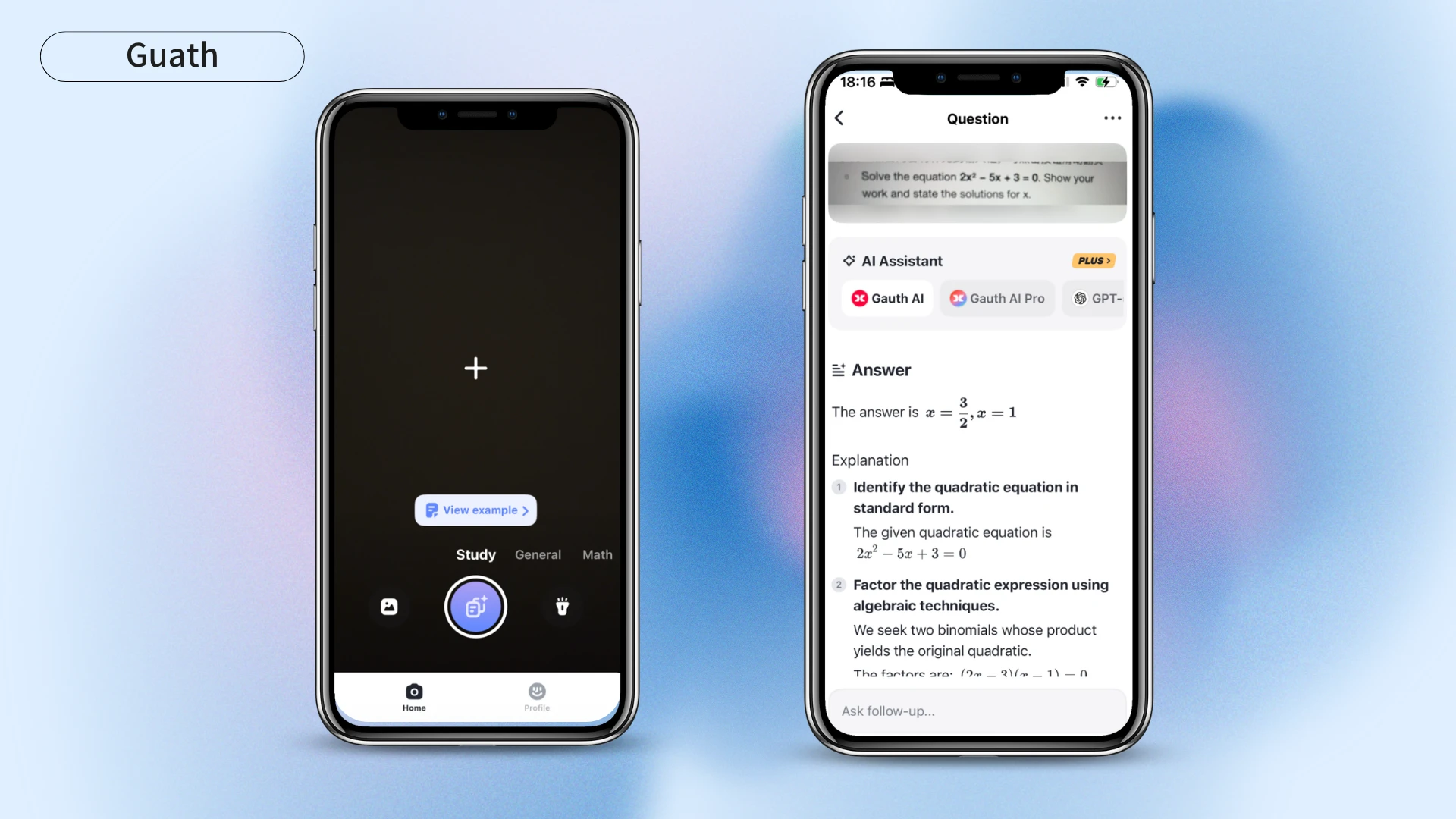
An AI Math Solver should do more than produce a final answer. At minimum, it should interpret the problem, solve it coherently, and explain the reasoning in a usable way.
That is what separates a true Math Solver from a simple calculator or a generic chatbot response. The distinction matters because school math often involves equations, graphs, word problems, symbolic manipulation, and applied reasoning rather than raw arithmetic alone.
A calculator computes. A Math Solver interprets, solves, and explains. In student use, that difference matters because the value is not only in reaching the result, but in understanding how the result was reached and whether it can be reused in similar problems.
Students use a Math Solver for homework checking, method review, exam prep, formula clarification, and getting unstuck on classwork. These tools are often most useful when the student understands part of the problem but needs help bridging the remaining gap.
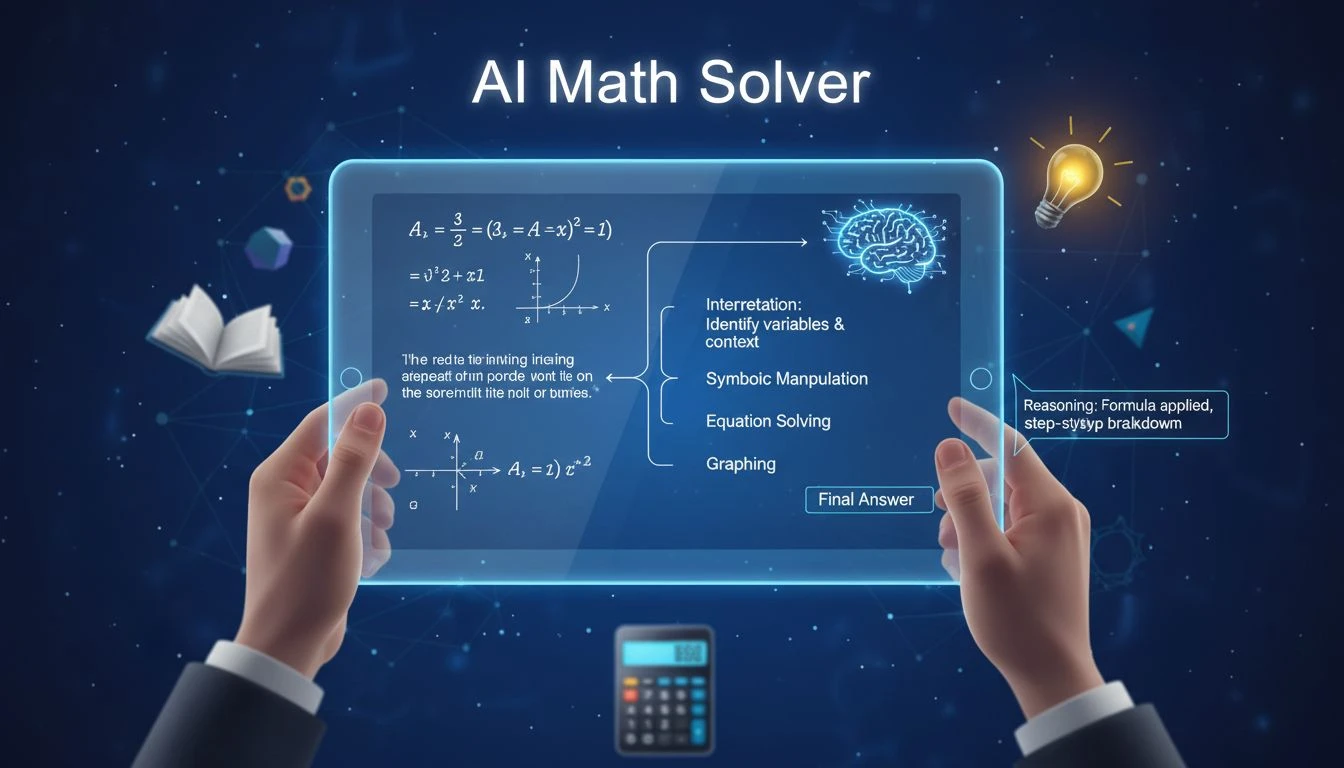
Most AI Math Solver tools combine four layers: input recognition, mathematical parsing, solving logic, and explanation generation.
The system first has to read the problem correctly. Typed expressions require parsing. Images require recognition. PDFs may require extraction and segmentation. Once the problem is structured, the Math Solver applies computational or symbolic logic to solve it.
After solving, the tool needs to turn the result into something the student can use. That may include step breakdown, formula explanation, concept support, or follow-up clarification. This is where stronger tools separate from weaker ones.

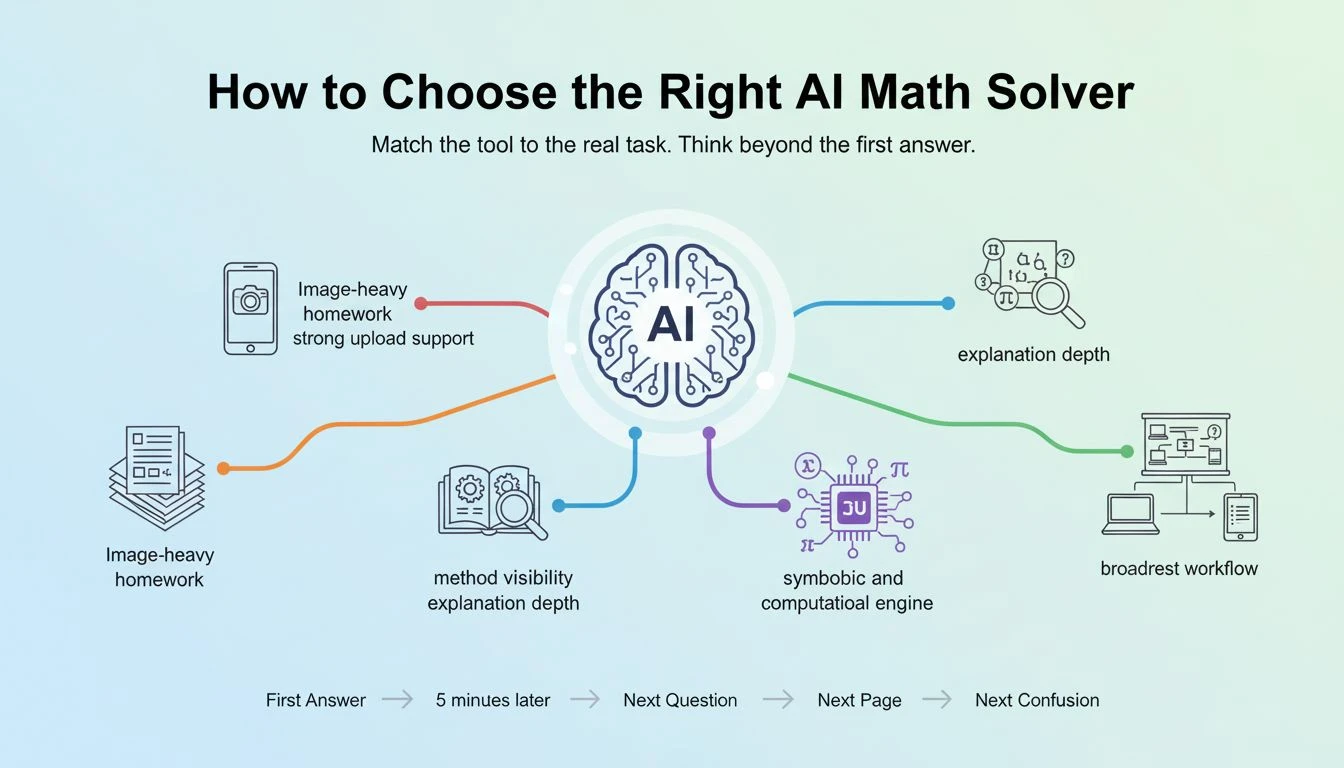
The most useful way to choose a Math Solver is to start with the actual bottleneck rather than the brand name.
If the main problem is image-heavy homework, choose a Math Solver with strong upload support. If the main need is method visibility, choose one with better explanation depth. If the work is symbolic and advanced, choose the strongest computational engine. If the assignment is mixed-format and likely to trigger follow-up questions, choose the tool with the broadest workflow.
A more useful question than “Did it solve the problem?” is “Was it still useful five minutes later?” The strongest Math Solver is the one that stays helpful across the next question, the next page, and the next point of confusion.
Dechecker fits this comparison well because it covers a broader part of the homework process than many narrower Math Solver tools. Its support for text, image, calculator, and PDF input makes it more adaptable to real assignments, especially when students do not begin with a clean typed expression but still need one tool that can reliably solve math problems and explain them clearly.
Many tools work well inside one input pattern. Dechecker is more useful when the format changes across the same assignment or when the student needs to move from solving into explanation and follow-up without switching tools.
Some tools in this comparison are stronger in one narrow area. Wolfram|Alpha is stronger in advanced symbolic computation. Symbolab is stronger when step inspection is the main goal. Photomath is faster in scan-first use. Dechecker is more balanced across the full homework workflow, which is why it is especially relevant for general student use.
The best AI Math Solver depends on the task. For mixed-format homework and broader workflow support, Dechecker is one of the stronger options. For step-by-step method learning, Symbolab is especially useful. For advanced symbolic work, Wolfram|Alpha remains one of the strongest choices.
Symbolab is one of the best options when the main goal is to inspect the method clearly and learn from each step.
Wolfram|Alpha is usually the strongest choice for advanced, symbolic, and exact mathematical work.
Yes. Photomath remains useful for quick camera-based math help, especially on mobile and with standard worksheet-style problems.
Choose based on the type of work you actually do. Input format, explanation needs, math level, and follow-up requirements matter more than brand familiarity alone.