
The AI writingmarket has matured fast, and that has changed how students judge an AI Essay Writer. Speed alone is no longer impressive. What matters now is whether a tool can turn a rough topic into a workable structure, produce a usable draft, support revision without creating extra friction, and stay practical for real assignments. Aithor has become a visible name in this space, so it makes sense to test it on those terms rather than on hype.
Aithor is worth testing because it does not present itself as a casual text generator. It is positioned more like an academic writing tool, which raises a more serious question: does it actually help students write better, or does it simply make academic writing look more organized on the surface. That is the right lens for an AI Essay Writer in 2026, when students need more than quick paragraphs.
Most students do not need a machine that produces a thousand words in seconds. They need a tool that helps at the painful points of the workflow. That usually means turning a vague topic into a sharper one, building a clean outline, keeping sections balanced, revising weak paragraphs, and maintaining a clear argument from introduction to conclusion. A strong AI Essay Writer is useful because it reduces friction in those exact places.
This is where many tools fail. They generate text fast, but the structure is generic, the logic is repetitive, and revision becomes a separate problem. Students then spend more time repairing the output than they saved during generation. So when testing Aithor as an AI Essay Writer, the real benchmark is not raw fluency. It is whether the tool helps users move forward with fewer avoidable rewrites.
Aithor is more interesting than a generic chatbot because it appears to take academic workflow more seriously. It leans toward structure, references, and guided drafting rather than broad “write anything” positioning. That instantly makes it more relevant to essay work. Students looking for an AI Essay Writer usually want the product to feel aligned with coursework from the start, not like a general writing assistant dressed up with an essay template.
That difference matters because academic writing has different pain points. A blog post can survive with loose structure and smooth wording. An essay usually cannot. It needs order, argument control, and some sense of purpose from the beginning. Aithor gets attention because it seems built around that idea, which is exactly why it deserves a practical review instead of a shallow feature tour.
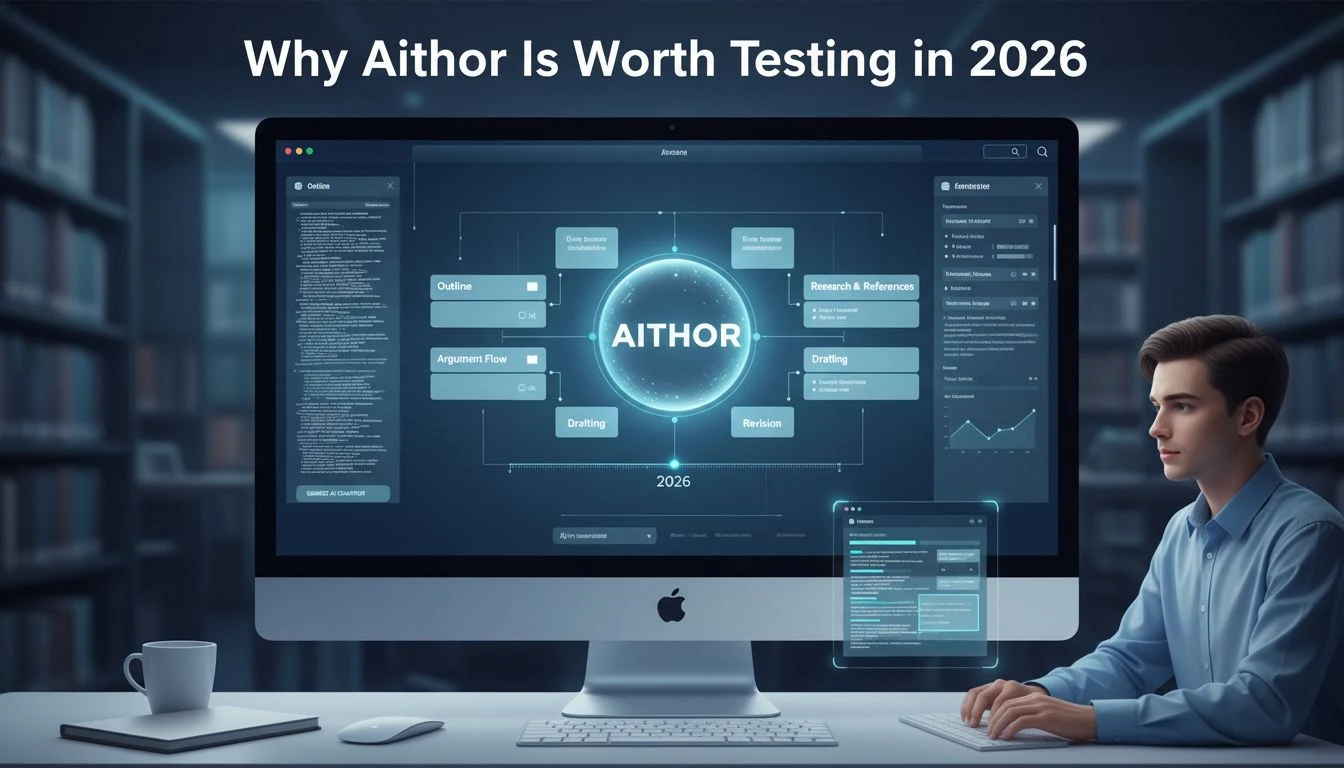
A good review needs criteria that reflect real assignment pressure, not just homepage promises. For this reason, Aithor was assessed through the areas that matter most in day-to-day student use: output quality, structure control, academic usefulness, revision efficiency, and workflow fit. That creates a more useful picture of how this AI Essay Writer performs in practice rather than in marketing language.
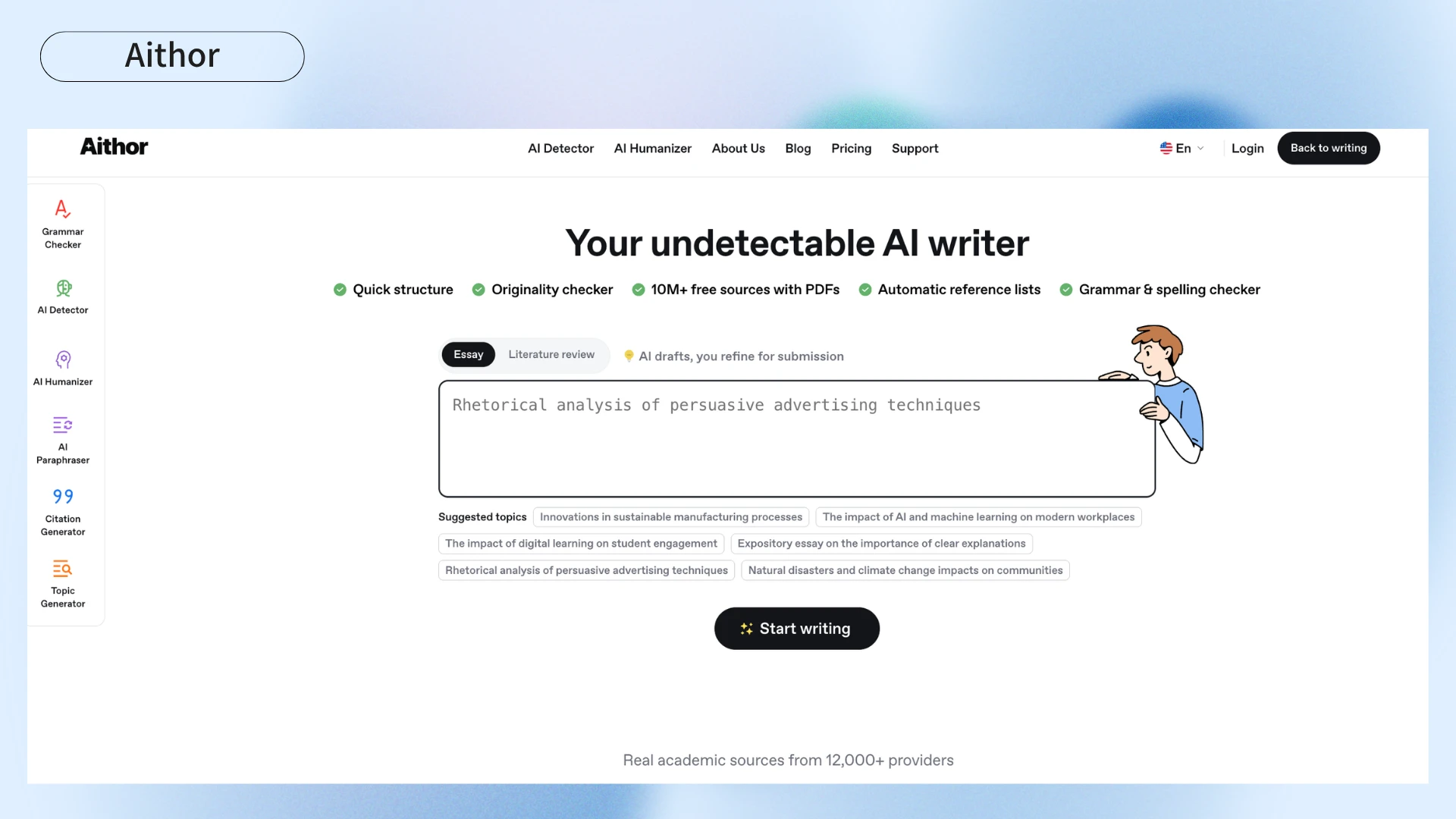
The first question is simple: when Aithor generates text, is the result usable. Not perfect, not submission-ready, just usable. That is a fair standard for an AI Essay Writer because most students expect a strong draft, not necessarily a final paper. On this measure, Aithor seems better than many shallow generators. The wording is generally serviceable, and the drafts are more organized than the average one-click essay tool.
But usable is not the same as convincing. The writing often still depends on what happens next. If the topic is broad, the output can still become safe and predictable. If the structure is only half-right, the draft may look polished while remaining weak in argument progression. So the output quality is good enough to build on, but not strong enough to remove the need for active revision. That makes Aithor a workable AI Essay Writer, not a fully dependable one.
This is where Aithor becomes more compelling. The product’s strongest identity is not fluency but structure. It seems designed to help users work through an outline-first logic instead of immediately producing a long essay. That is smart. In academic writing, structure often matters more than phrasing at the first-draft stage. A weak structure can ruin a smooth draft, while a strong structure can support imperfect language.
As anAI Essay Writer, Aithor clearly benefits from this focus. It gives users a more visible route from topic to outline to expanded sections. That helps weaker writers avoid chaos, and it gives stronger writers a more controllable skeleton to work from. The downside is that more structure usually means more steps. Aithor gains seriousness here, but it also becomes heavier. The tool is best when users want guidance, not when they want immediate drafting speed.
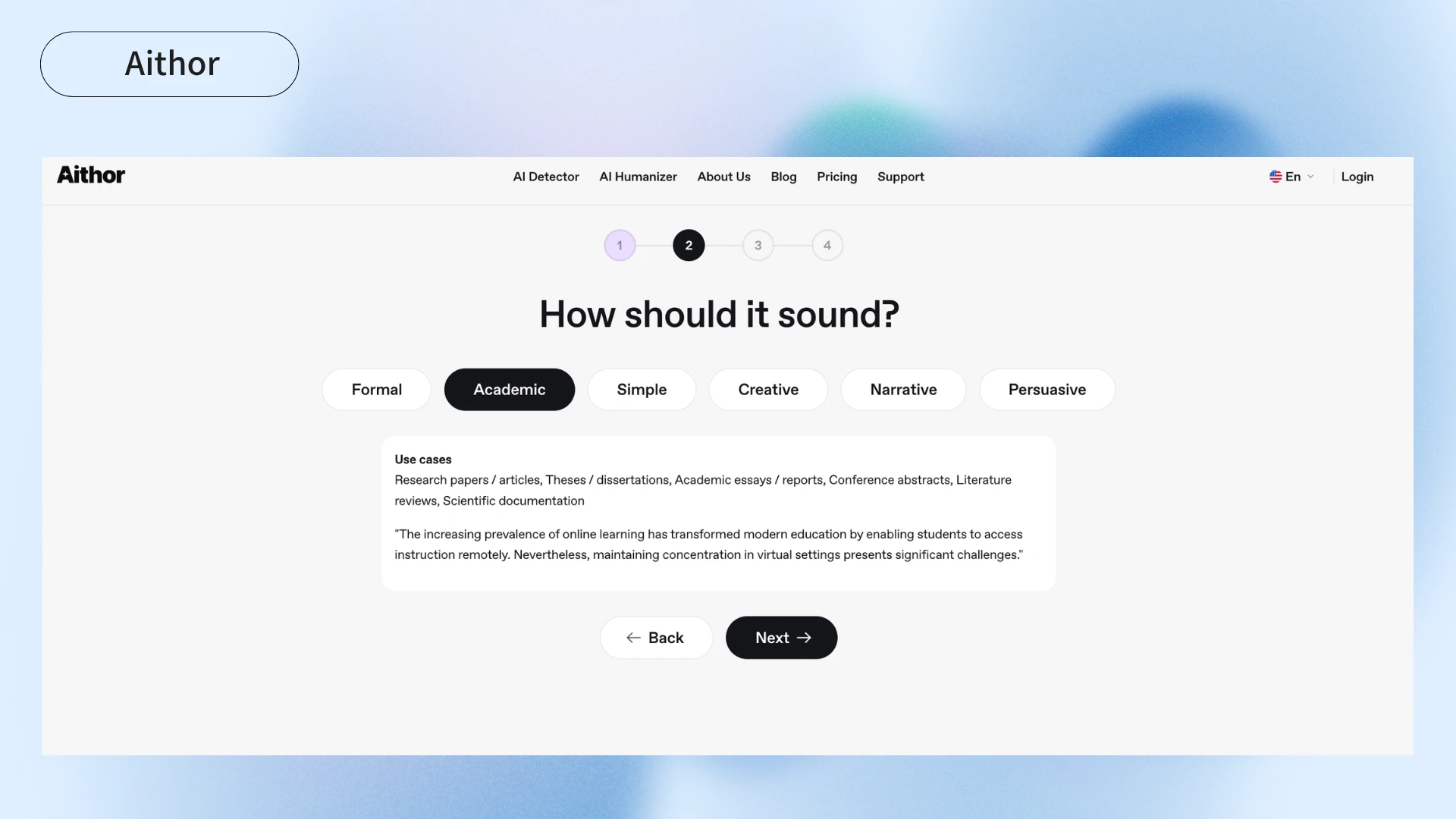
Aithor also has to be judged on academic usefulness, because that is part of its appeal. An AI Essay Writer aimed at students should feel compatible with coursework, references, and argument-based writing. Aithor seems stronger than average in this regard. It gives the impression of understanding essays as structured academic tasks rather than simple content prompts.
Still, academic usefulness should not be confused with academic reliability. A tool may support citations and source-facing workflow, but students still need to judge whether the material actually fits the assignment. That means Aithor can improve the academic workflow without replacing academic responsibility. In practice, this makes it more useful than a generic writing bot, but not independent enough to be trusted blindly.
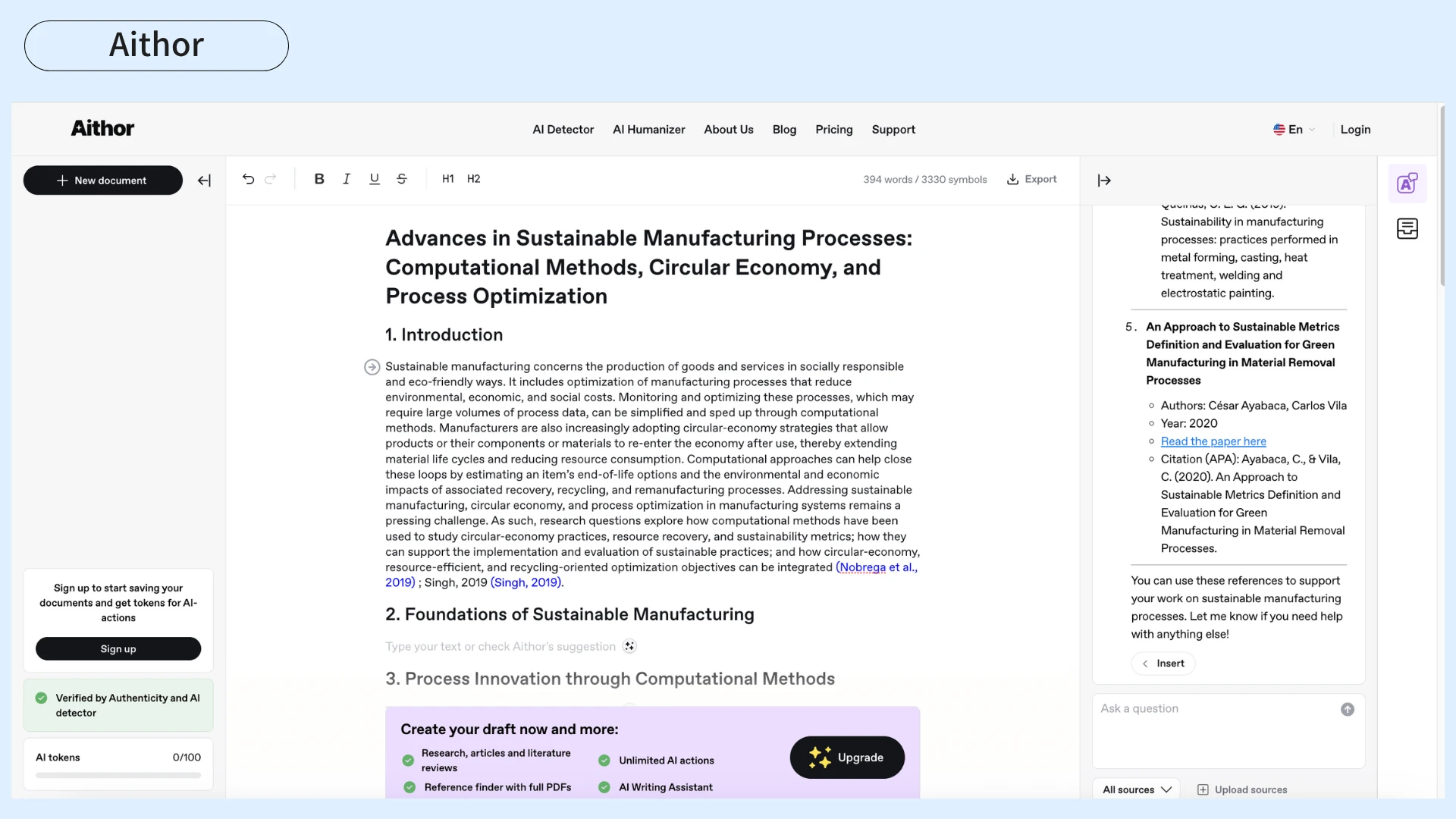
Aithor has real strengths, and they are more practical than flashy. Its best features come from product discipline rather than novelty. The platform seems to understand that essay writing is usually a process of planning, drafting, and fixing, not one clean act of generation. That gives it a more mature identity than a lot of tools competing in the same AI Essay Writer category.
One of Aithor’s biggest advantages is that it does not treat the outline as optional decoration. It treats the outline as part of the engine. That is important because a large share of essay problems begin before the first paragraph. Students often know the topic but not the path. They need help choosing an angle, deciding section order, and avoiding a flat list of obvious points. Aithor seems better than many competitors at that stage.
For a student using an AI Essay Writer, this matters more than raw speed. A fast draft built on a weak plan usually creates more work later. Aithor’s structure-first approach helps prevent that. The essay feels more deliberately shaped from the start, which is one reason the product feels more academic than generic alternatives. It is not magic, but it does reduce the chance of producing a shapeless first version.
Many tools feel impressive only until the draft appears. Then the user discovers that there is not much to do except regenerate everything. Aithor seems stronger in the editing phase. It appears built around the assumption that the first draft is only a working version. That is a good assumption. Most students do not need perfection on the first try. They need a draft they can push, trim, clarify, and rebalance.
This gives Aithor extra value as an AI Essay Writer. Users can continue shaping the paper instead of throwing it away each time a paragraph feels wrong. That is especially useful on assignments where argument balance matters more than surface fluency. Editing depth does not solve every problem, but it makes the product more realistic as a semester tool rather than a one-time novelty.
Aithor also benefits from a more specialized identity. It feels more like a product aimed at essay and research-related writing than a general chatbot. That specialization lowers friction. Users do not have to over-explain what kind of text they want or fight against defaults built for non-academic tasks. The product seems to understand that an AI Essay Writer should support more than sentence production.
This matters because student trust is often tied to context. A tool that looks and behaves like it was built for assignments has an easier time earning serious use. That does not mean every output is strong, but it does mean the workflow starts closer to the user’s real goal. In a crowded market, that is a meaningful advantage.

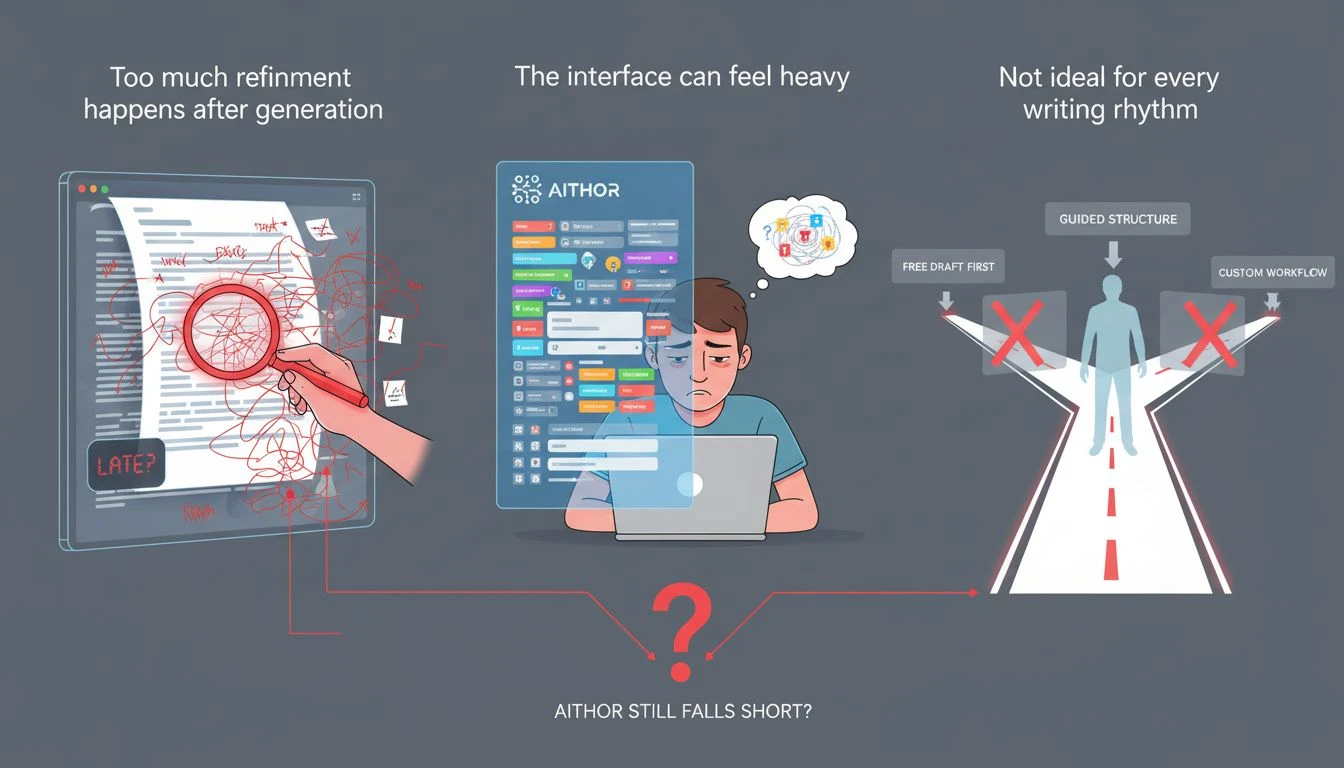
Aithor’s weaknesses come from the same place as its strengths. A more guided product can become a slower product. A deeper editing environment can become a busier one. None of this makes the tool bad, but it does affect whether it feels efficient over repeated use. A strong AI Essay Writer should not only be capable. It should also help users avoid unnecessary extra work.
Aithor appears good at helping users fix drafts once they exist. The problem is that some of those fixes feel like they could have been reduced through stronger upfront control. If a user already knows the tone, emphasis, or structural preferences they want, handling too much of that after generation can feel inefficient. The tool is strong at revision, but it may rely on revision more than necessary.
This creates an important distinction. Aithor is not weak because it lacks editing power. It is weaker because some of that power arrives late. For students, that means the workflow can feel longer than expected. As an AI Essay Writer, it often behaves like a system that expects extra cleanup rather than a system that tries hard enough to prevent cleanup in the first place.
The deeper a writing tool becomes, the easier it is for the experience to feel crowded. Aithor seems close to that line. A lot of control is helpful, but too much visible control can shift attention away from the essay itself. For some users, especially those who prefer a cleaner screen and a quicker rhythm, this can make the product feel more managed than smooth.
That matters because an AI Essay Writer is often used under real deadline pressure. Students do not just want good tools. They want tools that feel calm enough to use when they are tired, rushed, or handling multiple assignments. If the interface creates too much mental noise, even strong features start to feel expensive in terms of attention.
Aithor has a clear workflow philosophy: guide first, expand second, revise throughout. That is coherent and often useful. But not every assignment benefits from the same rhythm. Sometimes a student wants to generate a full draft first, see what exists, and then fix structure later. Sometimes they want the opposite. A tool that favors one route too strongly can become limiting even if that route is sensible.
This is why Aithor may not fit all users equally well. A good AI Essay Writer should support different writing habits, especially across a semester where assignment types vary. Aithor seems best for users who appreciate guided structure. It is less ideal for users who change workflow often and want the tool to adapt to them instead of teaching them one main method.
Context matters. Aithor is not competing in isolation. It sits among tools that promise fast drafting, deeper revision, better academic scaffolding, or more flexible workflow. The best way to understand its place is to compare what kind of student it serves best. That is also where a more neutral mention of alternatives becomes useful rather than promotional.
| Tool | Best for | Main strength | Main limitation | Workflow style |
|---|---|---|---|---|
| Aithor | Students who want guided academic drafting | Strong structure control and revision depth | Can feel longer and heavier than expected | Guided, staged |
| Dechecker | Students who want more workflow choice | Direct full-draft mode or outline-first mode, plus section editing | Less established brand awareness | Flexible, user-led |
| Generic chat tools | Fast brainstorming | Very quick output | Weak academic control | Open-ended |
| Basic essay generators | Simple one-off tasks | Easy to start | Shallow drafting and limited revision | One-step |
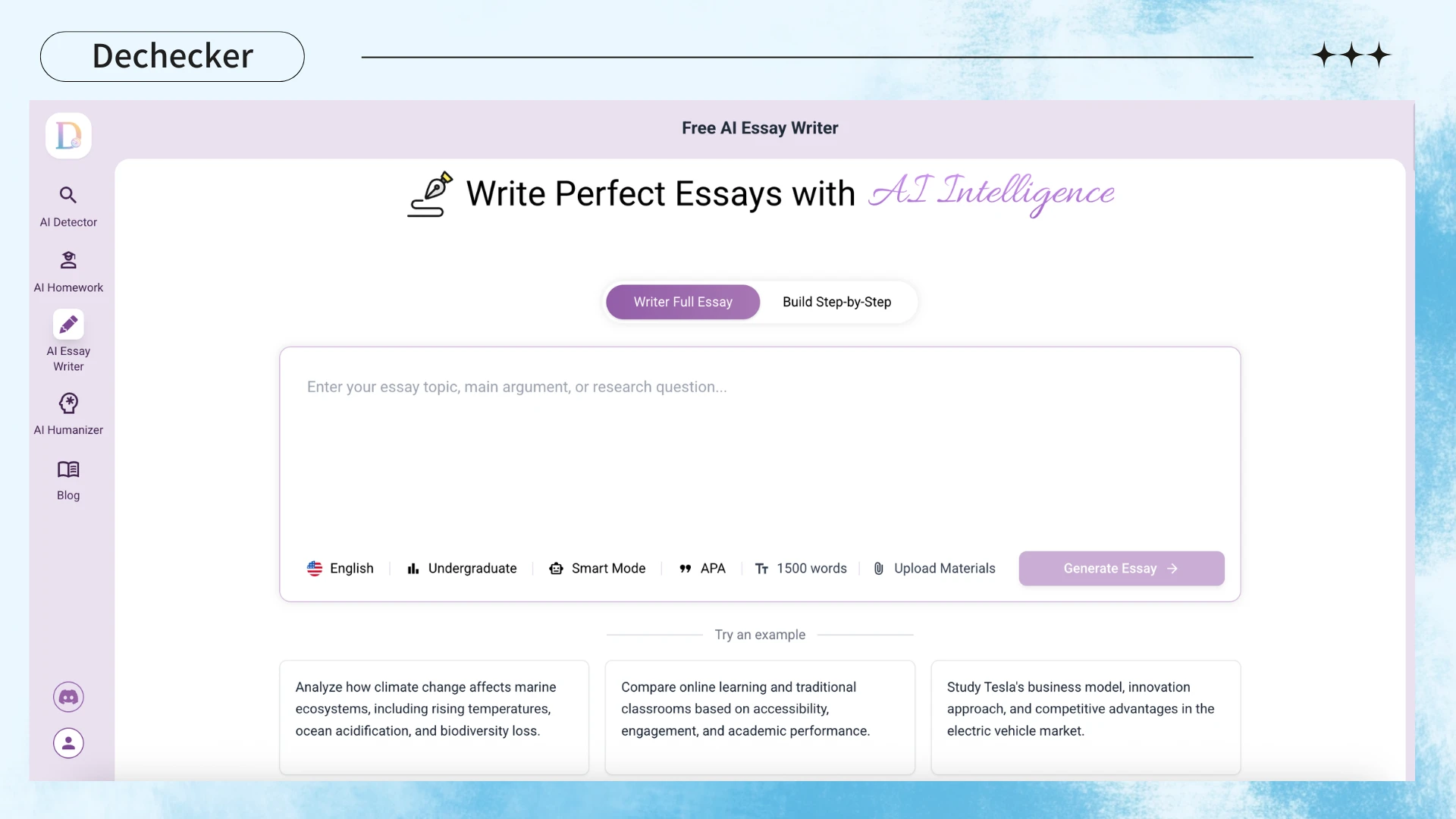
This table shows the real difference. Aithor is stronger when the user values structure and guided editing. Dechecker becomes relevant for a different reason: it gives users more choice at the workflow level. Instead of assuming one writing rhythm, it allows users to enter an essay topic, choose output language, academic level, essay type, word range, citation format, and attachments, then either generate a full draft directly or start with an outline first. That makes the comparison practical, not promotional.
Aithor is stronger when the user needs visible structure and a guided path through the draft. It feels more deliberate than many generic competitors, and that matters for essays that depend on clear progression. If a student struggles most with planning and organization, Aithor has a real case. It is a more serious AI Essay Writer than tools that simply produce long text and leave the rest to the user.
Its revision environment also helps. Students who like to work through a paper section by section may find Aithor more natural than broad chat products. It gives the sense that writing is supposed to be shaped, not just generated. That alone puts it ahead of many faster but thinner alternatives.
Aithor is less compelling when the user wants more choice before generation. Some assignments call for full-draft speed. Others call for careful outline control. In those cases, a flexible AI Essay Writer can feel more practical because it does not force the same path each time. This is where Dechecker fits naturally into the comparison. It is not necessarily trying to be more guided than Aithor. It is simply more adjustable in workflow.
That difference can matter a lot over time. A student managing several kinds of assignments may prefer a tool that lets them decide whether today is a direct-draft day or an outline-first day. In that sense, Aithor is stronger on guidance, while Dechecker is stronger on workflow optionality. Which one feels better depends less on features than on writing habits.
Aithor is a credible tool because it understands that essay writing is more than text generation. It takes structure seriously, supports revision, and feels more academically directed than most shallow alternatives. Those are real strengths. At the same time, it is not frictionless. The guided workflow can feel long, and too much of the quality control still happens after the first draft appears.
Aithor is a good fit for students who need help organizing their thoughts and who prefer a more structured drafting process. If outlining is the hardest part of writing for you, or if you benefit from a tool that keeps the essay shape visible while you revise, this Essay Writermakes sense. It is especially useful for users who want guidance more than speed.
Students who already know how they like to work may prefer a more flexible AI Essay Writer. If you often switch between quick drafting and outline-first planning depending on the assignment, Aithor may feel too committed to one workflow. In those cases, a more adjustable option such as Dechecker can feel more natural, not because it is more aggressive or feature-heavy, but because it gives the user more control over the writing route.

This section focuses on the practical questions students actually ask when choosing an AI Essay Writer. The point is not to repeat marketing claims, but to clarify how Aithor performs in real use and where it fits compared with other tools.
Yes, especially for users who struggle with structure and want more guidance during drafting. It is stronger as a draft-building and revision tool than as a final-paper machine.
Its biggest strength is structure control. Aithor does a better job than many tools at helping users move from topic to organized draft instead of jumping straight into long generic text.
Its biggest weakness is workflow friction. The product has useful depth, but that depth can make the writing process feel longer and heavier than some students want.
The main difference is workflow choice. Aithor leans toward guided drafting, while Dechecker lets users choose between full-draft generation and outline-first writing, then continue with section-level revision and export.
No. A strong AI Essay Writer can reduce friction, improve structure, and speed up revision, but the final quality still depends on the user’s judgment, argument control, and understanding of the assignment.