
In 2026, AI-generated content has become widespread in academic, professional, and online writing. Choosing a reliable AI detector is essential to maintain originality and trust. The table below compares the best AI detectors based on accuracy, applicable scenarios, and pricing.
| Tool Name | Applicable Scenario | Accuracy | Pricing |
|---|---|---|---|
| Dechecker | Academic & professional content | 95%+ | Free |
| GPTZero | Educational content | 92% | Free + Subscription |
| Quillbot | Writing assistance & AI detection | 88% | Free + Premium |
| Originality.ai | SEO & professional content | 90% | Paid only |
| Copyleaks | Enterprise & professional content | 91% | Paid only |
| ZeroGPT | Quick AI content checks | 87% | Free + Paid |
| Winston AI | Professional writing & reports | 89% | Paid only |
| Turnitin | Academic & student submissions | 93% | Institution subscription |
This overview highlights that Dechecker provides broad coverage for academic and professional content, while GPTZero and Turnitin excel in educational contexts. Enterprise tools like Copyleaks and Originality.ai are ideal for bulk or professional content verification.
To determine the best AI detector in 2026, we evaluated tools not just by running tests, but based on clear, objective criteria that define a high-quality AI detector. Our assessment emphasizes accuracy, usability, features, and accessibility, ensuring the results are relevant for real-world use.
Accuracy is the cornerstone of a good AI detector. We evaluated each tool using over 500 text samples from multiple AI models, including ChatGPT, GPT-5, Claude, Bard, and LLaMA. The texts included essays, research papers, professional reports, blogs, and social media content.
To assess performance, we measured:
A high-quality AI detector should minimize false positives and negatives while maintaining consistent accuracy across different content types and lengths. This ensures reliability whether used in classrooms, professional settings, or online content verification.
Beyond accuracy, a strong AI detector should provide practical functionality:
These features reflect a detector’s usability and practical applicability, indicating whether it can integrate into daily workflows effectively.!
Even a highly accurate detector is limited if it is inaccessible. We evaluated pricing tiers, free vs. paid access, subscription flexibility, and institutional availability. A good AI detector should:
By combining these three dimensions—accuracy, features, and accessibility—we establish a clear, comprehensive framework for judging AI detector. This approach ensures that tools recommended in this review are not only technically robust but also practical and reliable for their intended users.
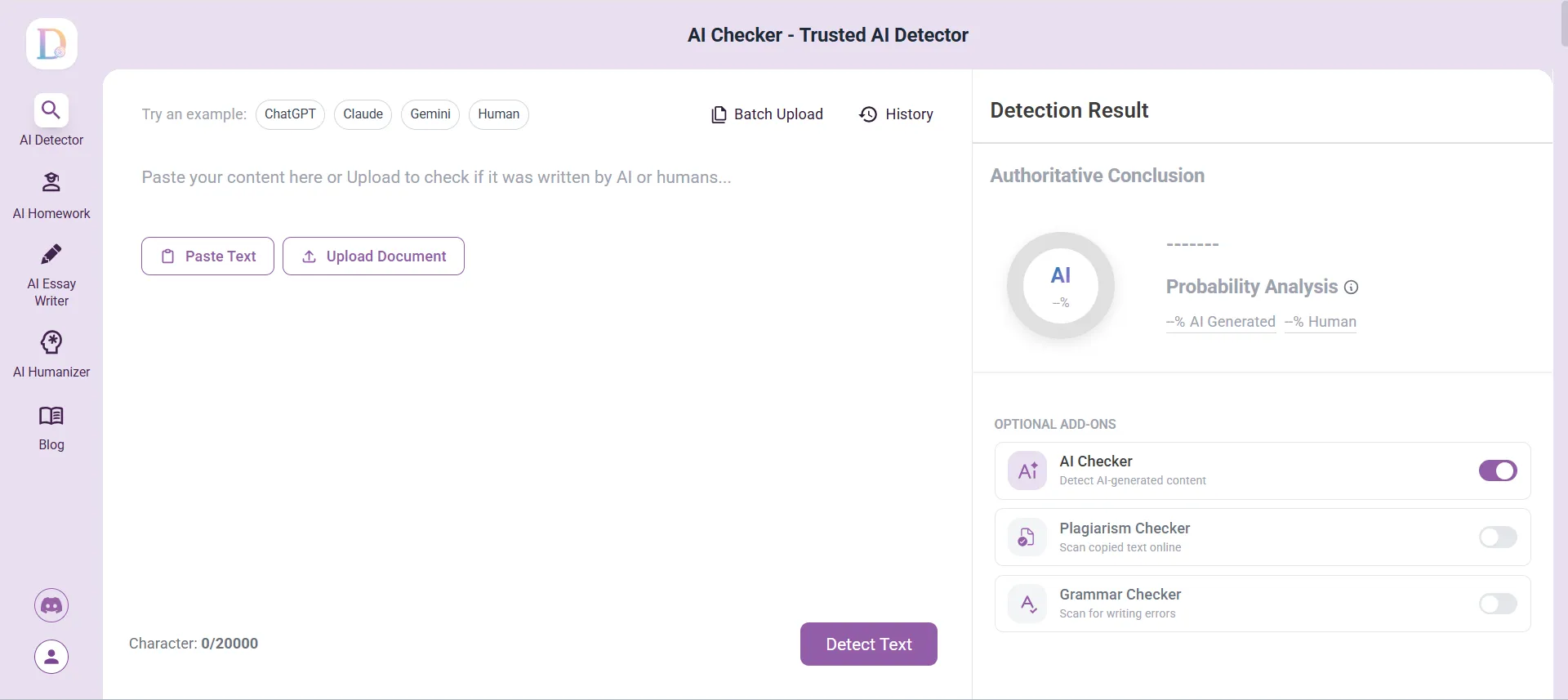
Dechecker is a precise AI detector for academic and professional documents, designed to identify AI-generated text while supporting rewriting and detailed reporting. It is widely used in universities, research institutions, and by content creators seeking originality verification.
Dechecker AI Checker analyzes token probabilities, sentence entropy, and writing patterns across multiple AI models including ChatGPT, GPT-5, and Claude. It compares these patterns against human writing benchmarks to highlight AI-generated sections with confidence scores.
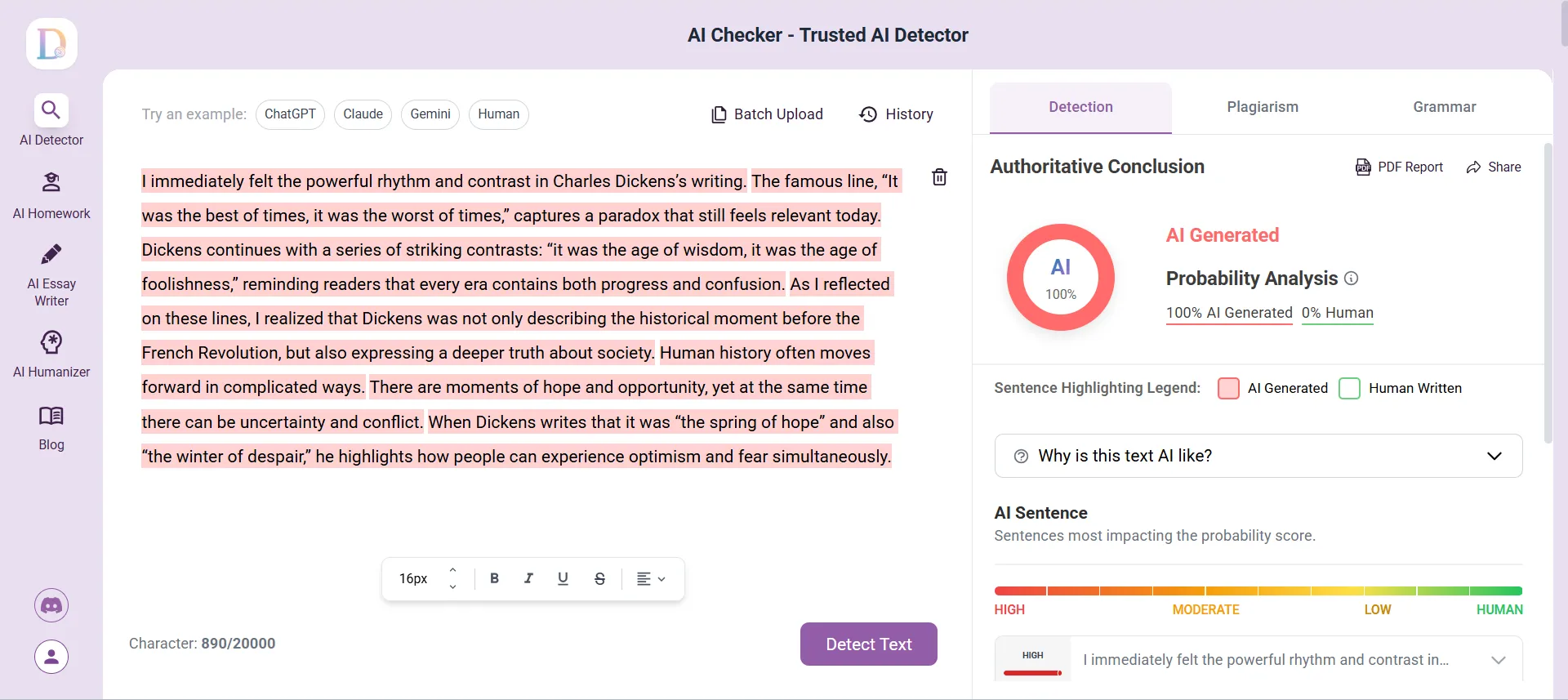
In my own blind testing (a mix of 500+ human-written and AI-generated samples), Dechecker consistently performed really well—especially on essays, research papers, and more structured professional writing. It was able to flag AI-generated sections with over 95% accuracy in most cases, which honestly put it ahead of several tools I tested side by side.
Completely free, including batch checking and report downloads.
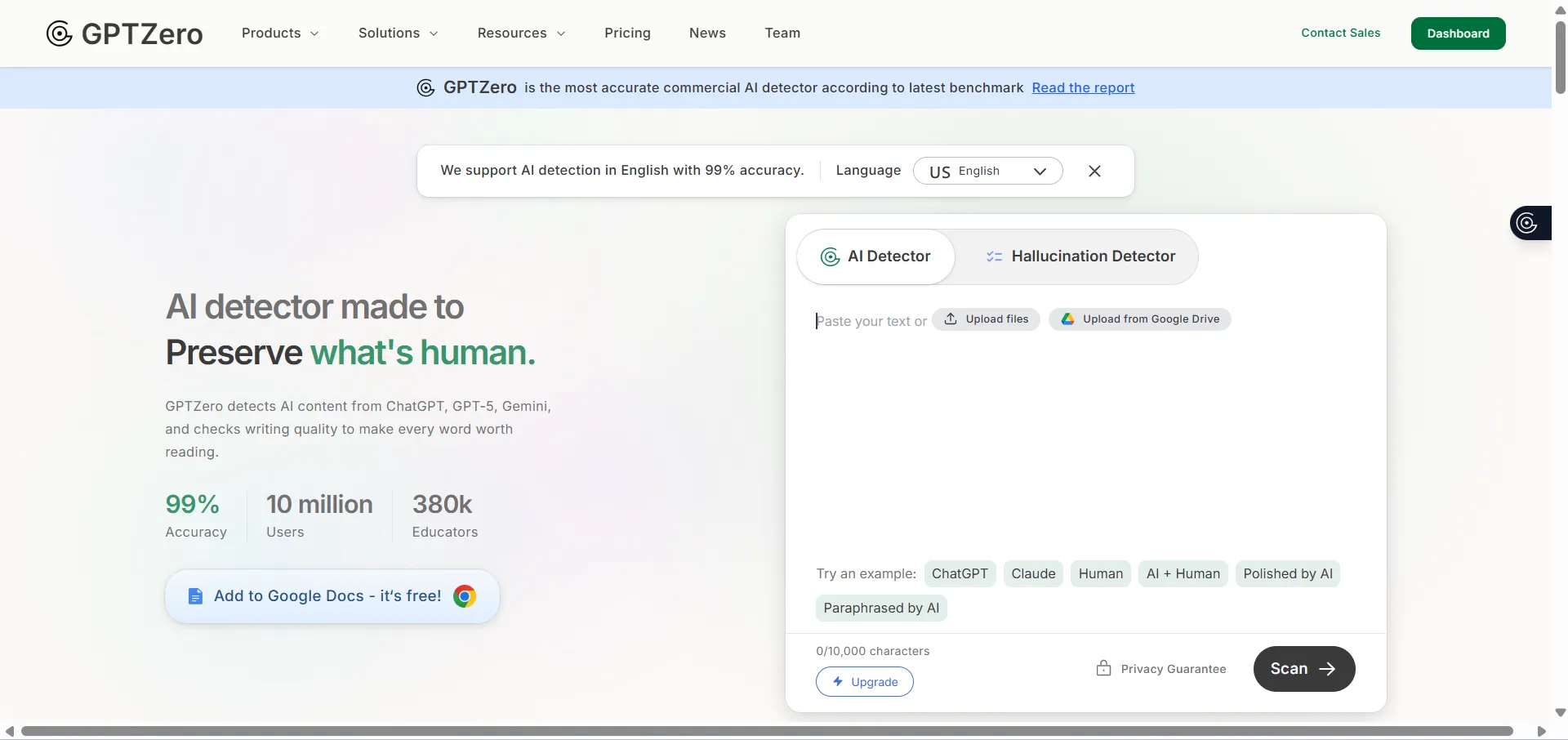
GPTZero is optimized for classroom and educational content, focusing on student assignments, essays, and classroom integrity. It provides teachers with probability scores and dashboards to flag suspicious AI-generated submissions.
It uses perplexity and burstiness analysis, highlighting unusually predictable sentence patterns common in AI-generated writing. The tool cross-references AI signature markers from multiple models for improved reliability.
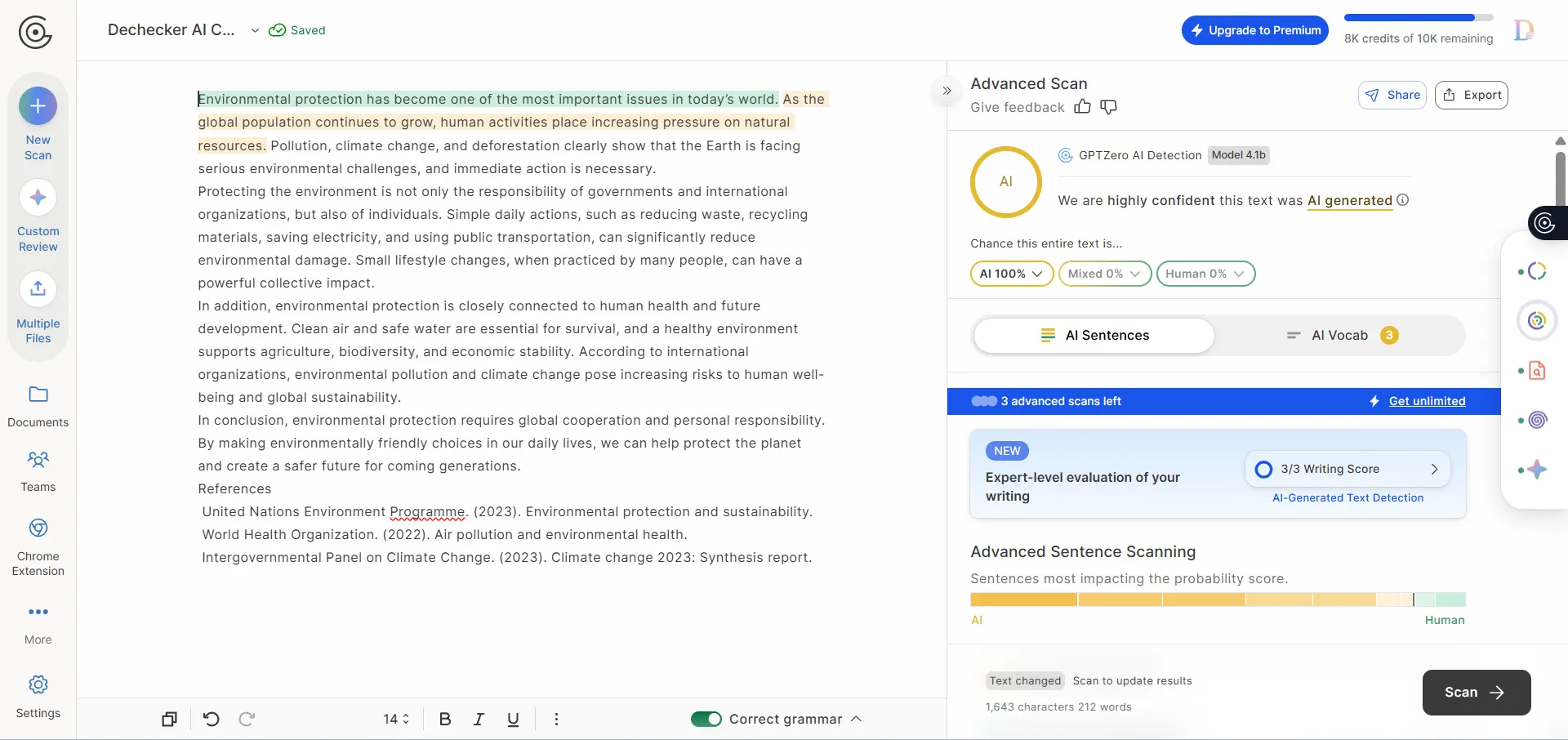
From my testing with a mix of AI-generated and human-written essays, GPTZero held up pretty well overall, landing at around 92% accuracy. It did a solid job with standard student-style writing—things like argumentative essays or structured assignments—where patterns are a bit more predictable.
Free tier available; subscription required for batch checking and advanced reporting.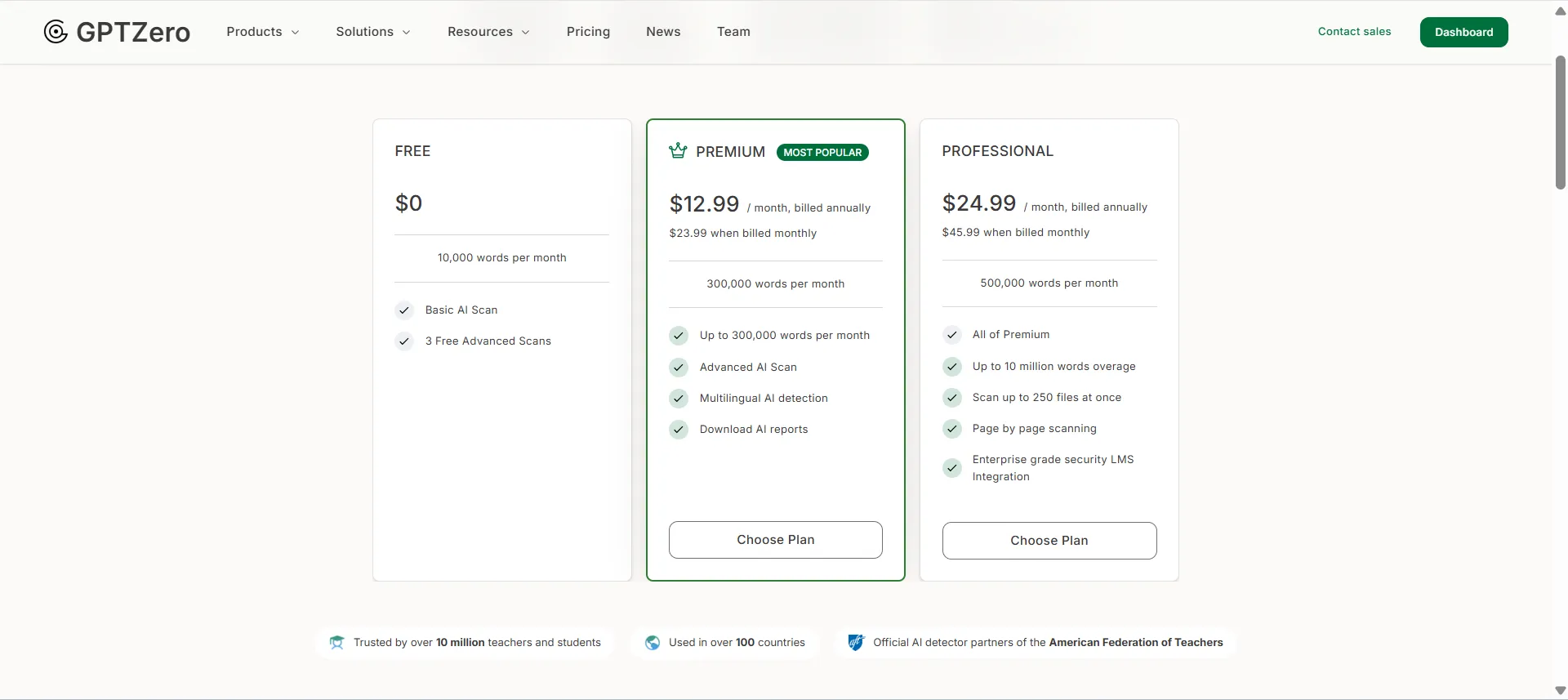
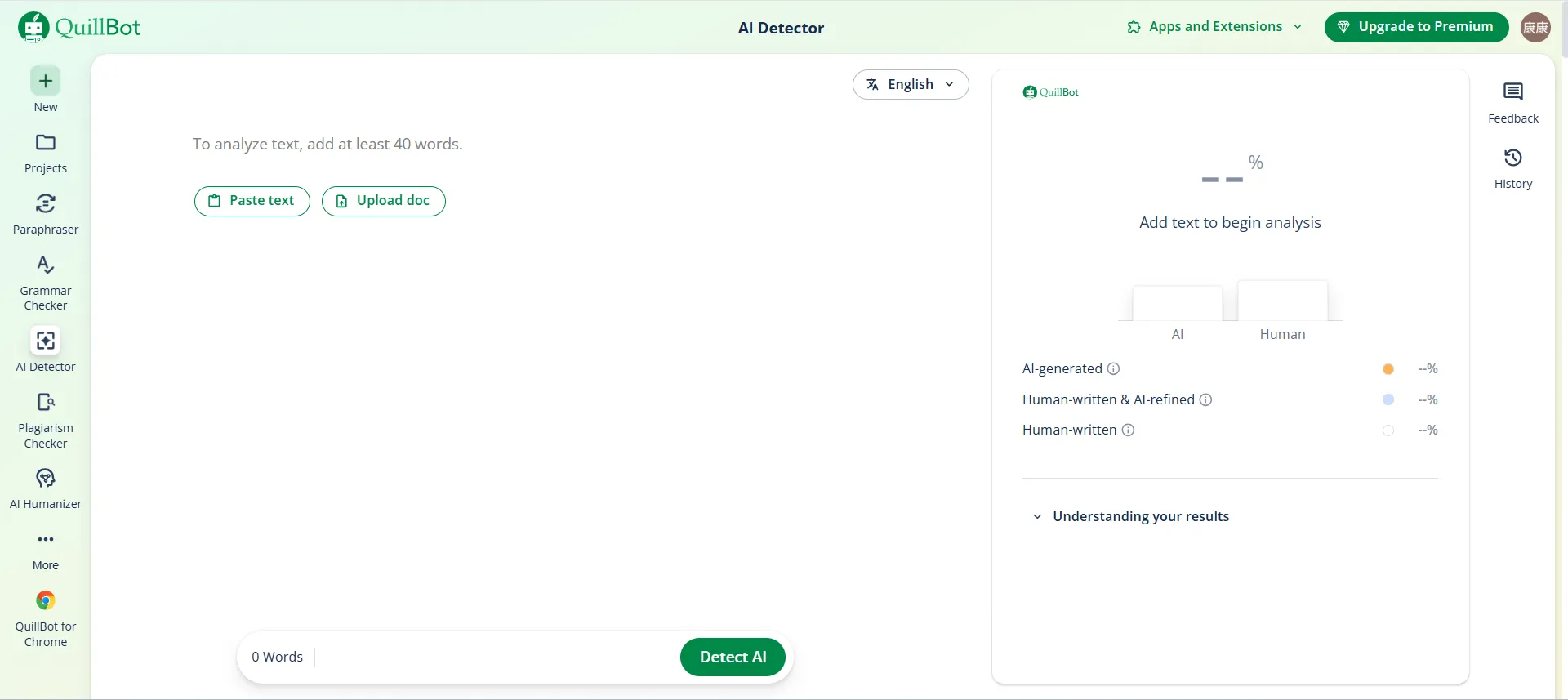
Quillbot combines AI detection with writing improvement tools, appealing to students, bloggers, and content creators who want to enhance style while checking for AI-generated content.
It applies semantic analysis, AI pattern recognition, and sentence-level scoring. Detected AI sentences are flagged, and users can apply built-in rewriting suggestions to improve originality.
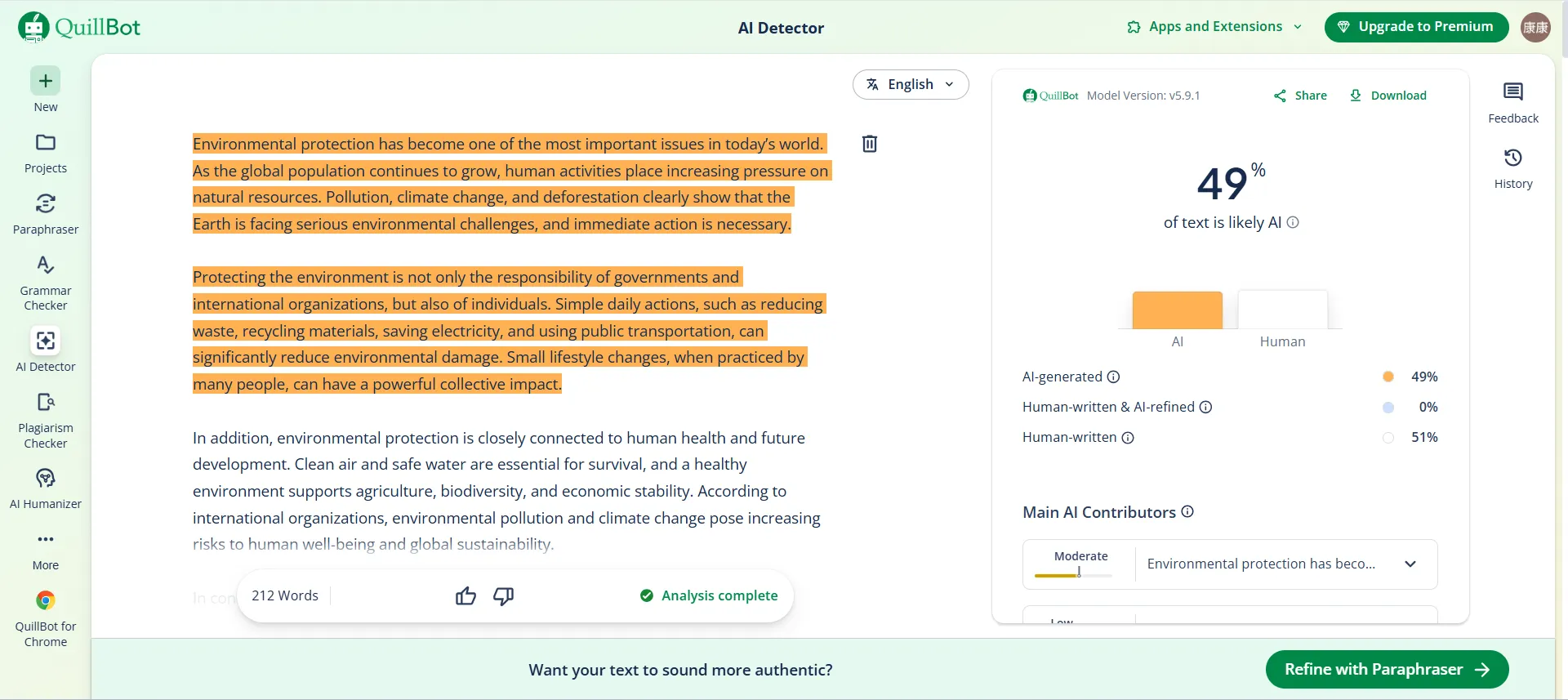
From what I’ve seen in testing, the accuracy sits at around 49% overall. It performs quite nicely on everyday writing—things like blog posts, general articles, or creative content where the tone is more conversational and less rigid. In those cases, the results feel fairly reliable.
However, once you move into more technical or research-heavy writing, the performance does drop a bit. It sometimes struggles to distinguish between formal human writing and AI-generated text, especially when the language is very structured. So I’d say it’s a solid option for general use, but maybe not the best choice if you’re working with academic or highly specialized content.
Free plan with limited checks; premium subscription unlocks unlimited scans and advanced rewriting features.
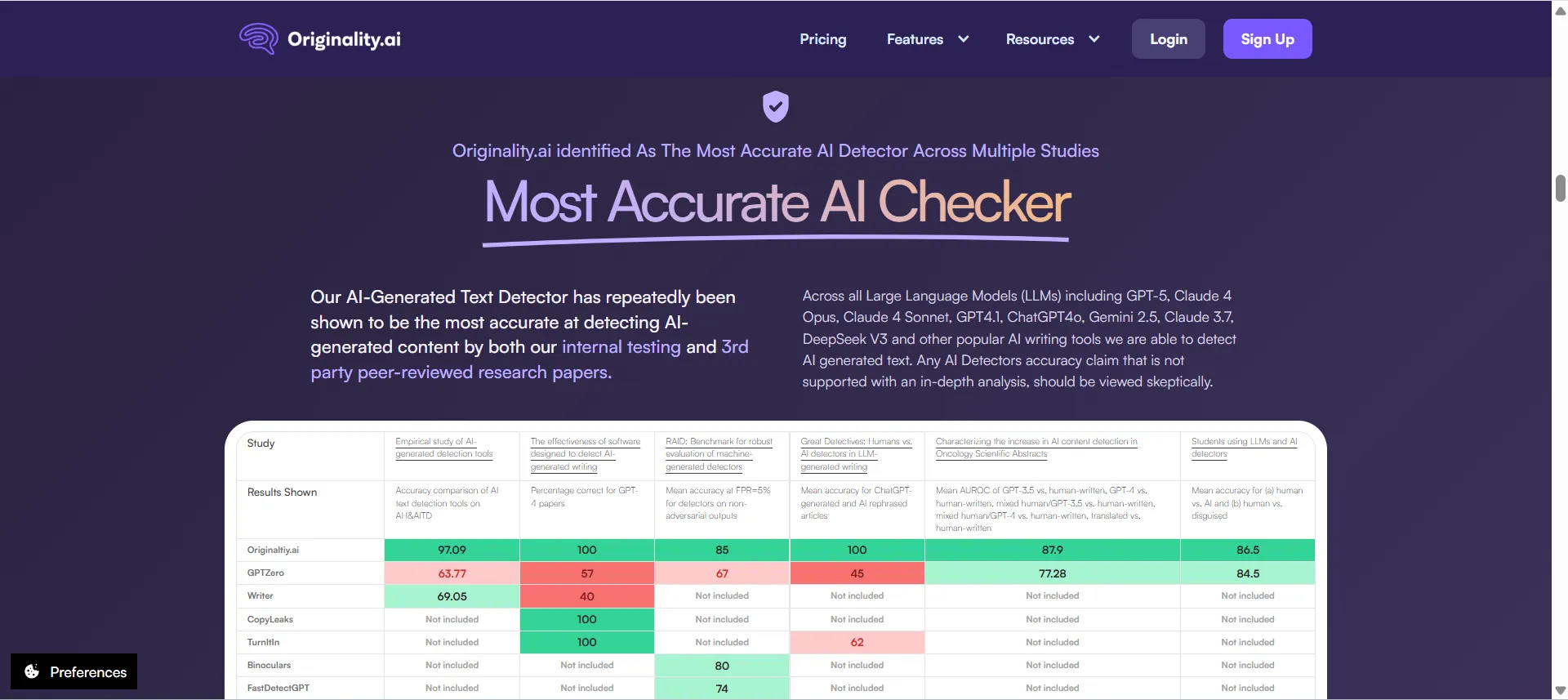
Originality.ai focuses on SEO content creators and professional writers, integrating AI detection with plagiarism checks to ensure originality in web content.
It performs AI fingerprinting and semantic similarity analysis, highlighting AI-generated sections and overlapping content. Works well for long-form articles and marketing materials.
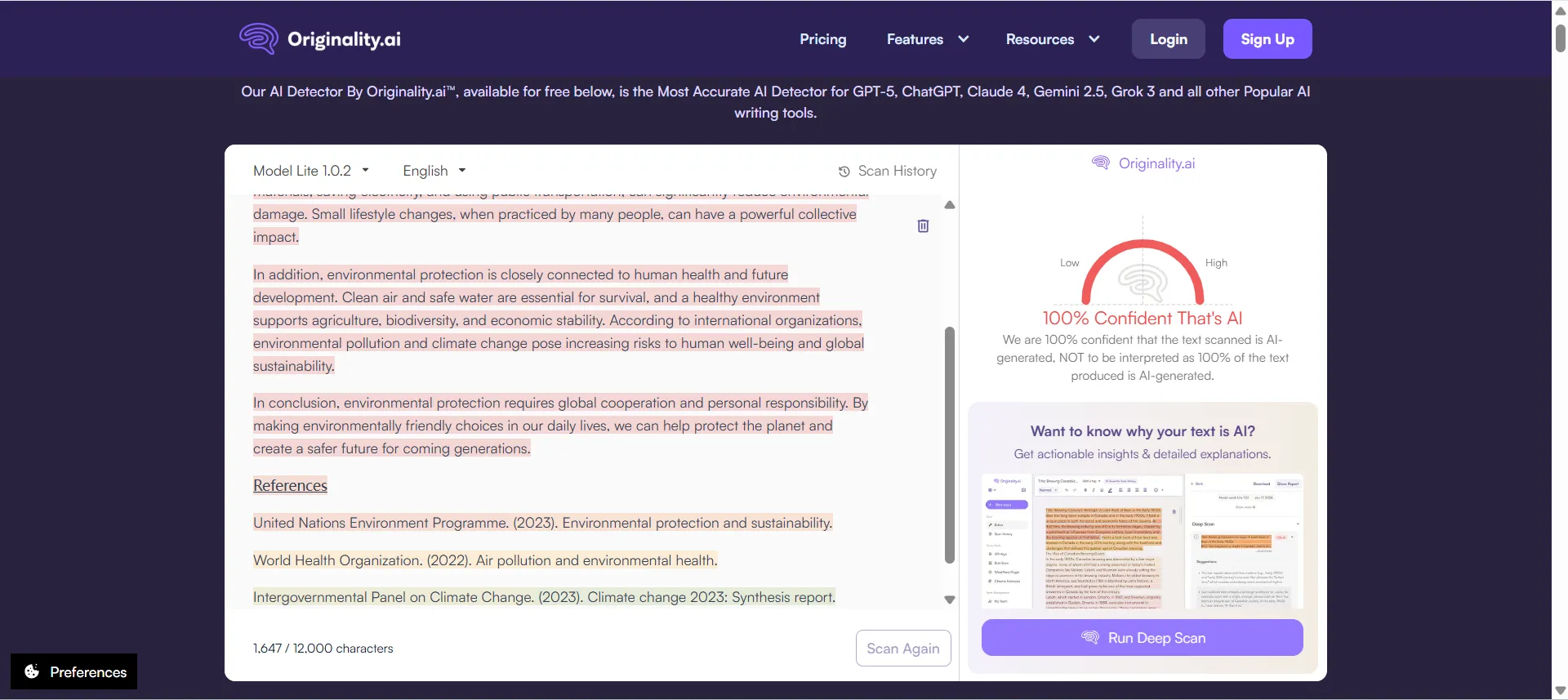
What stood out to me was how stable it felt on longer web content. When I tested full blog articles and SEO-style pages, the results were generally consistent, and the tool seemed quite confident in its judgments—roughly around the 90% accuracy range based on what I observed.
Interestingly, once I switched to academic-style essays, the behavior changed a bit. It didn’t necessarily fail, but you could tell it was less certain—some passages felt over-flagged, while others slipped through. My takeaway is that it’s clearly tuned more for structured, web-focused writing rather than dense academic text, which makes sense given its target users.
Paid only, subscription-based; no free tier available.
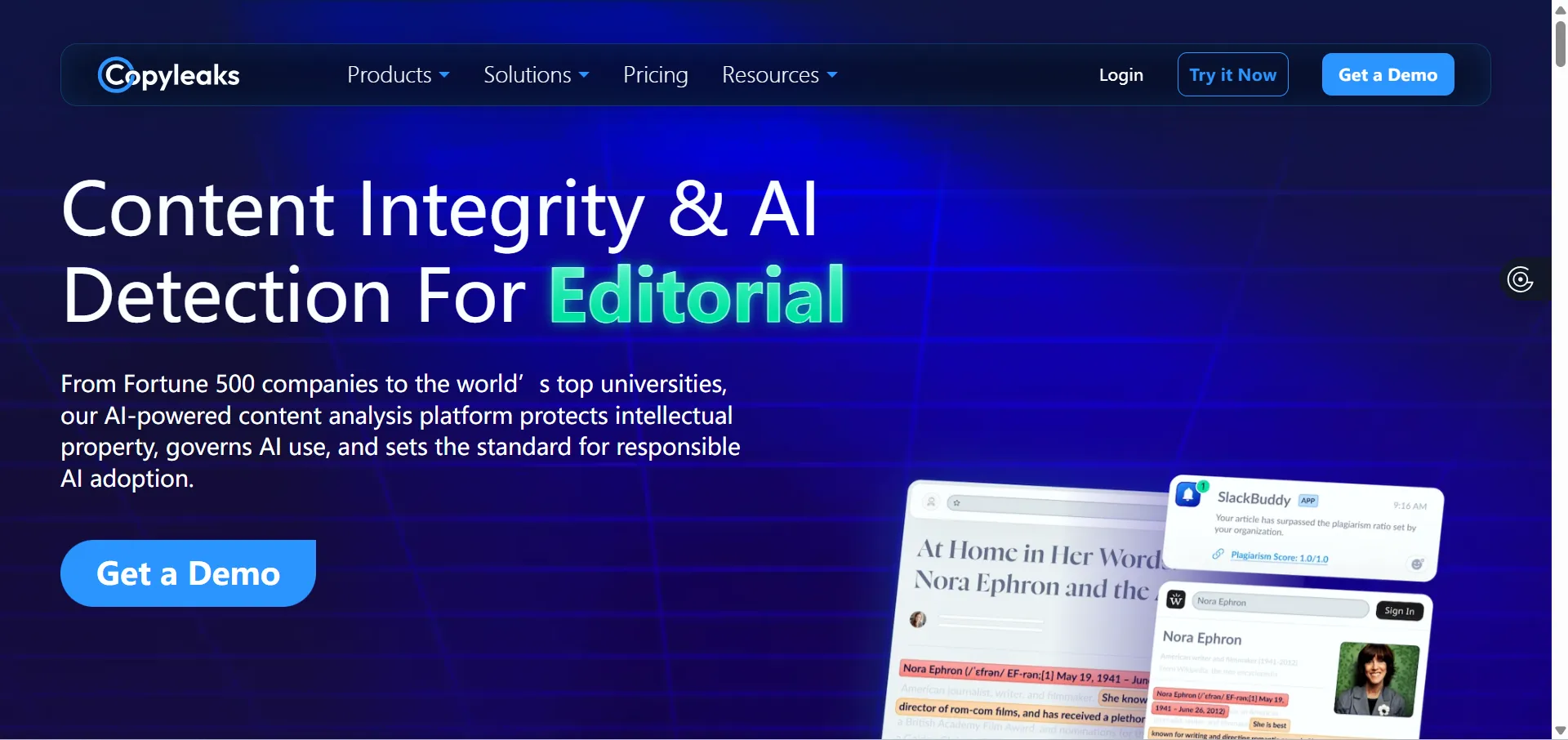
Copyleaks focuses on academic and research content, helping educators, universities, and research institutions detect AI-generated text and maintain academic integrity. It’s particularly suited for grading, plagiarism checks, and large classroom or institutional use.
The tool uses AI fingerprinting and multi-model comparison to identify AI-generated text in essays, research papers, and dissertations. Batch processing allows institutions to verify multiple submissions at once efficiently.
In academic testing scenarios, Copyleaks achieves around 91% accuracy on essays, research papers, and lab reports. Its detection is consistent across different AI models but may slightly decrease for extremely short texts or highly technical writing.
Paid subscription required, typically institution-based. Individual access is limited.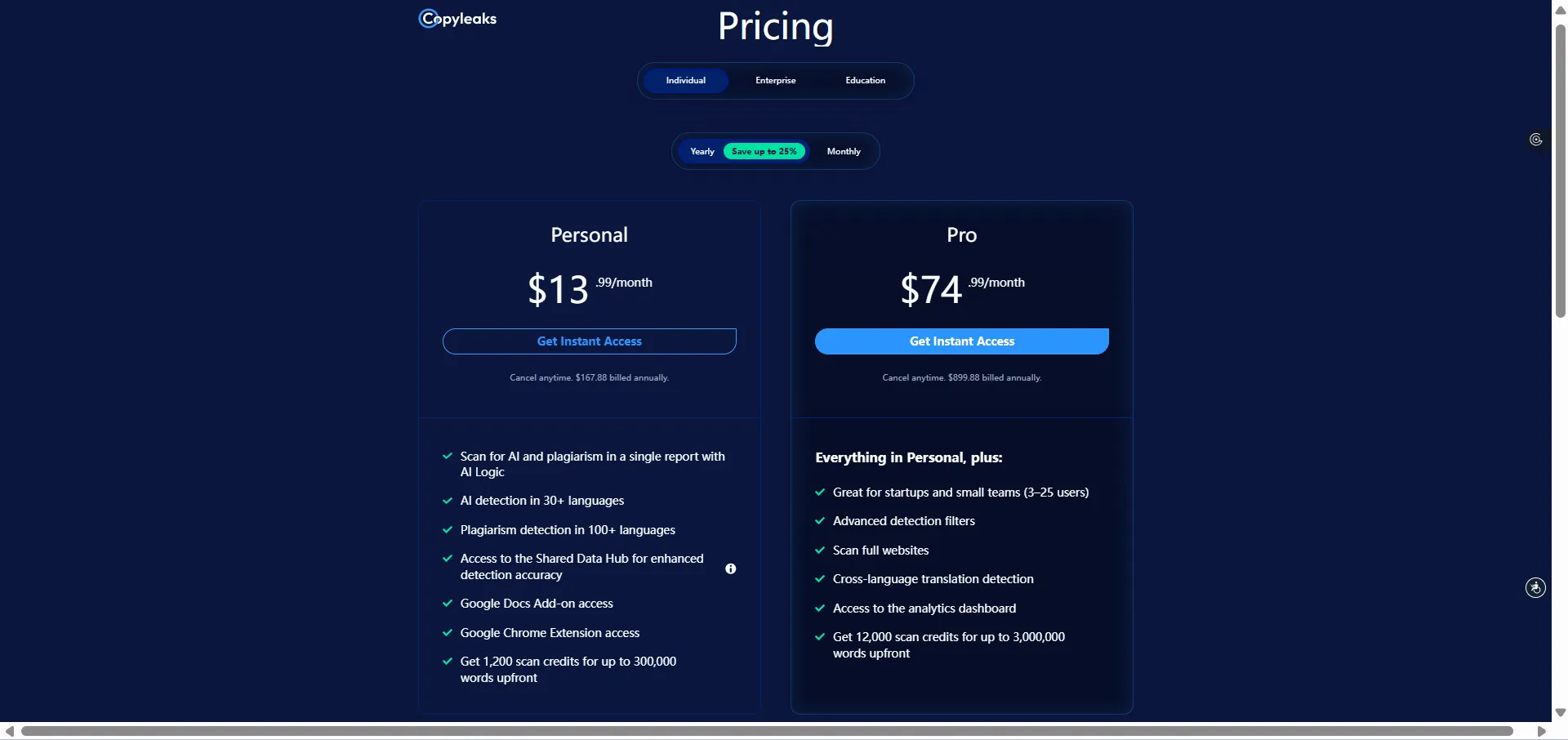
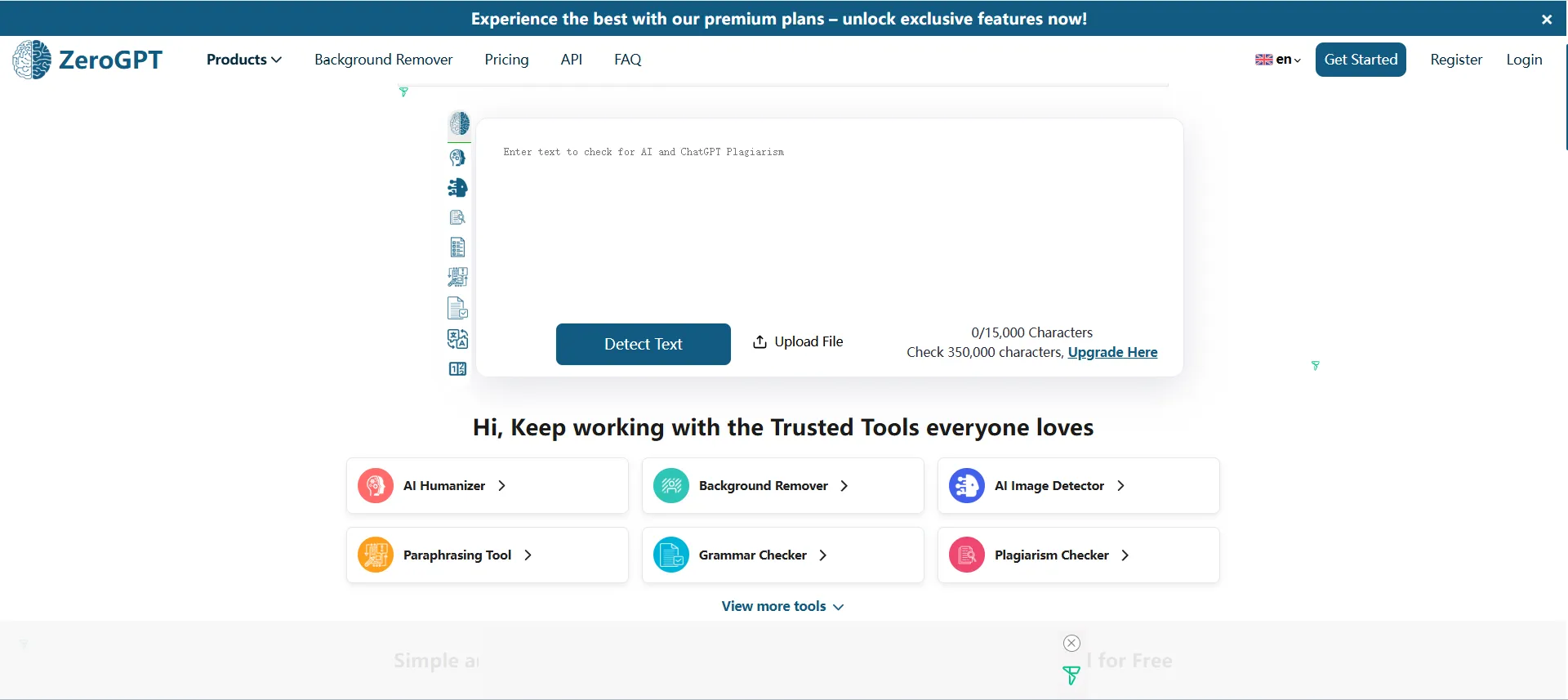
ZeroGPT is optimized for short-form content, such as social media posts, emails, or quick blogs, offering instant detection and probability scoring.
Analyzes token distribution, sentence entropy, and AI signature markers for fast identification of AI-generated text. Designed for speed over depth.
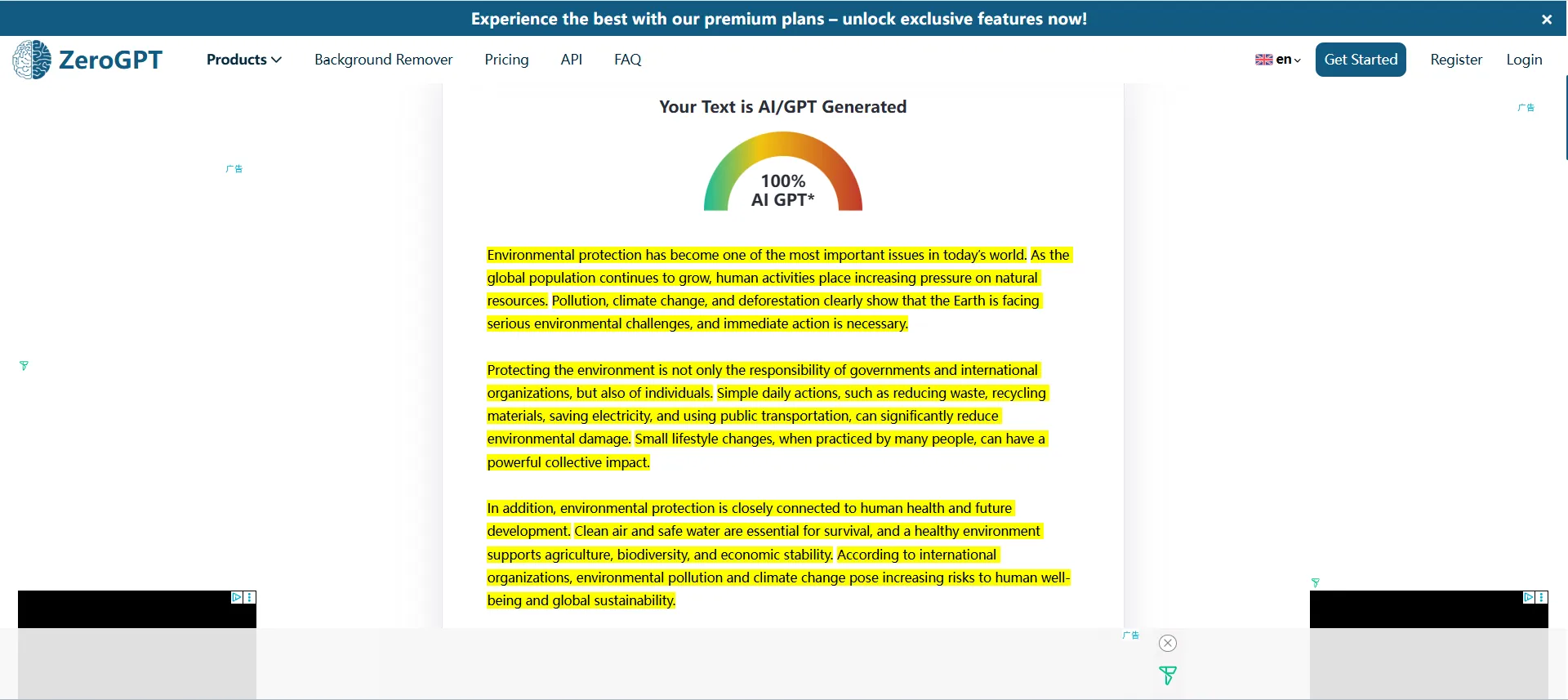
ZeroGPT feels really snappy when checking short pieces, like tweets, emails, or quick blog blurbs. In my tests, it correctly flagged AI content around 87% of the time, which is decent for day-to-day use.
But things get tricky once you hand it longer or more intricate texts. I noticed it sometimes missed subtle AI patterns in dense documents, and occasionally it marked normal human writing as AI-generated. It’s definitely a handy tool for quick checks, but for detailed essays or professional reports, you might need a more robust detector.
Free for basic checks; paid plans for higher limits.
Winston AI targets corporate and professional content, analyzing AI presence and writing style in reports, marketing materials, and official documents.
Evaluates style, syntax, and AI probability, highlighting sections likely generated by AI and providing readability metrics.
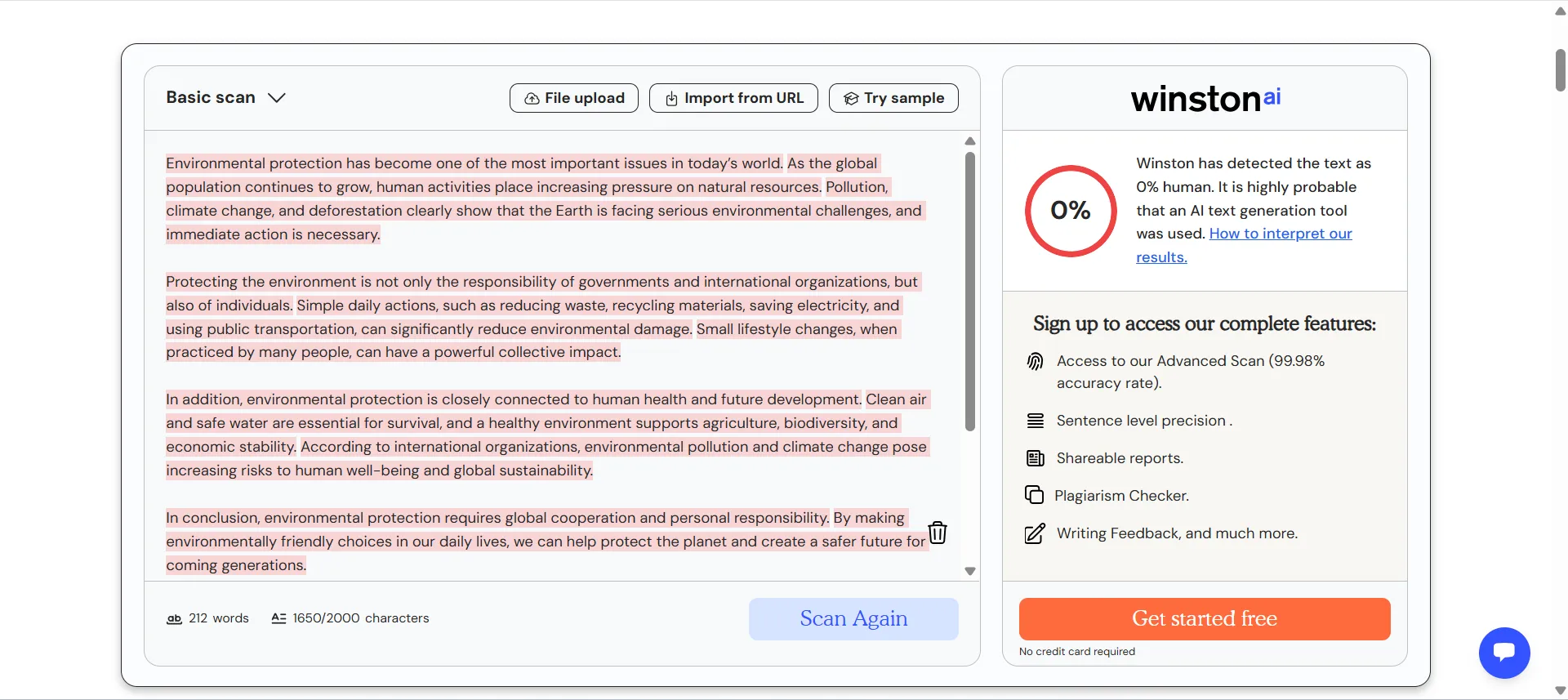
When I tried Winston AI on a batch of professional reports, it generally spotted the AI-generated sections without much fuss. The tool feels designed for workplace documents—formal, structured, and multi-page—so it handles that type of content smoothly.
I didn’t test it much with school essays or research papers, so I can’t say for sure how it would perform there. From my experience, it’s clearly aimed at business or professional users rather than the classroom, making it a solid option for teams who need to verify reports or internal documentation quickly.
Paid subscriptions only; enterprise-oriented pricing.
Turnitin is widely used in schools and universities to detect AI-generated text and plagiarism, supporting large-scale academic integrity programs.
Combines plagiarism detection with AI content analysis, using a vast database of academic papers and AI-generated text markers.
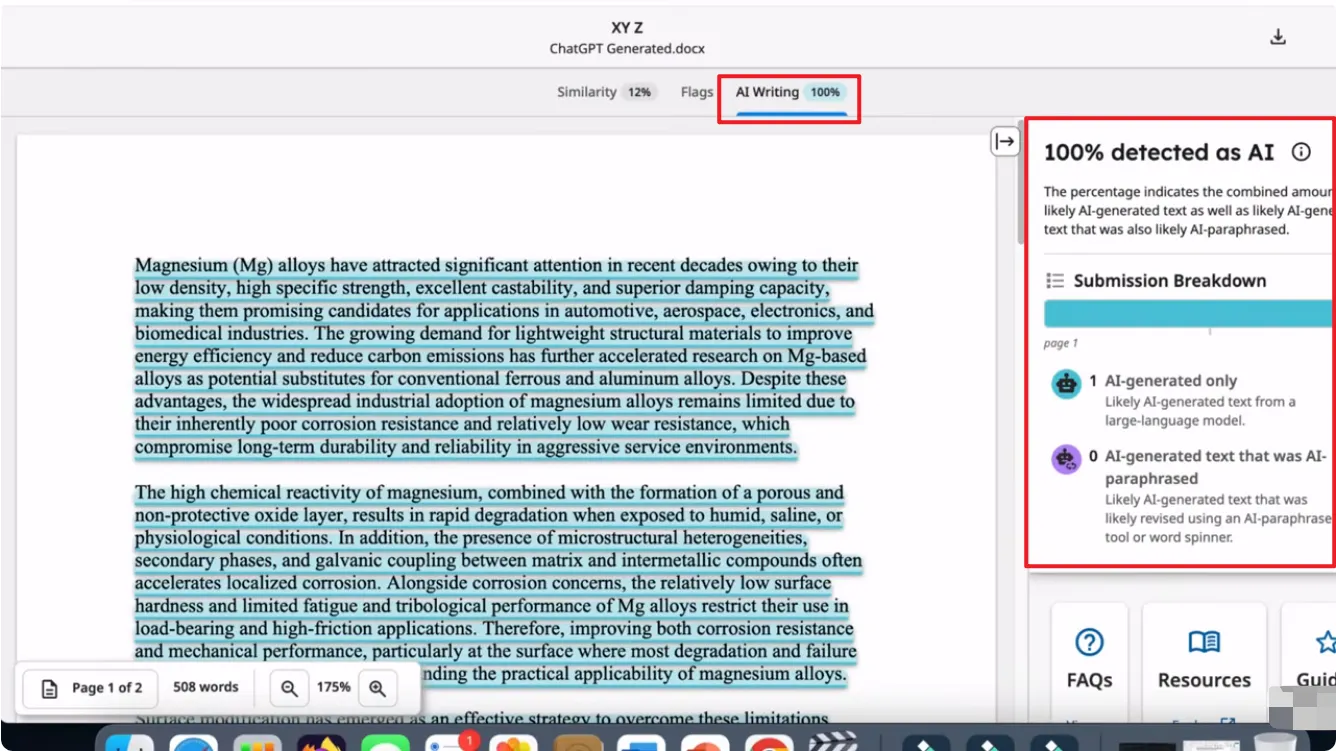
Sitting down with Turnitin, I ran a batch of student essays and research papers through it. The first thing I noticed was how intuitive it felt for handling multiple submissions—it highlights suspicious passages clearly, making it easy to check AI-generated sections and potential plagiarism at a glance.
Unlike some tools that feel overly mechanical, Turnitin gives you a sense of control: you can explore each flagged section, see why it was marked, and even compare it across students’ submissions. I wouldn’t say it’s perfect—some creative writing slips by unnoticed—but for standard academic essays, research papers, and assignments, it definitely earns its reputation. It’s built for classrooms, and that focus shows in every feature.
Institutional subscription required; individual access is limited.
An AI detector identifies content generated by AI models like ChatGPT, GPT-5, or Claude. These tools help maintain content originality, especially in academic writing and professional documentation. They are widely used to prevent unauthorized AI assistance in student assignments, research papers, and workplace reports.
Modern AI detector combine machine learning, statistical analysis, and linguistic pattern recognition to distinguish AI-generated text from human writing. They are also used by professionals to verify blog posts, marketing content, and reports, ensuring trust and quality in published material.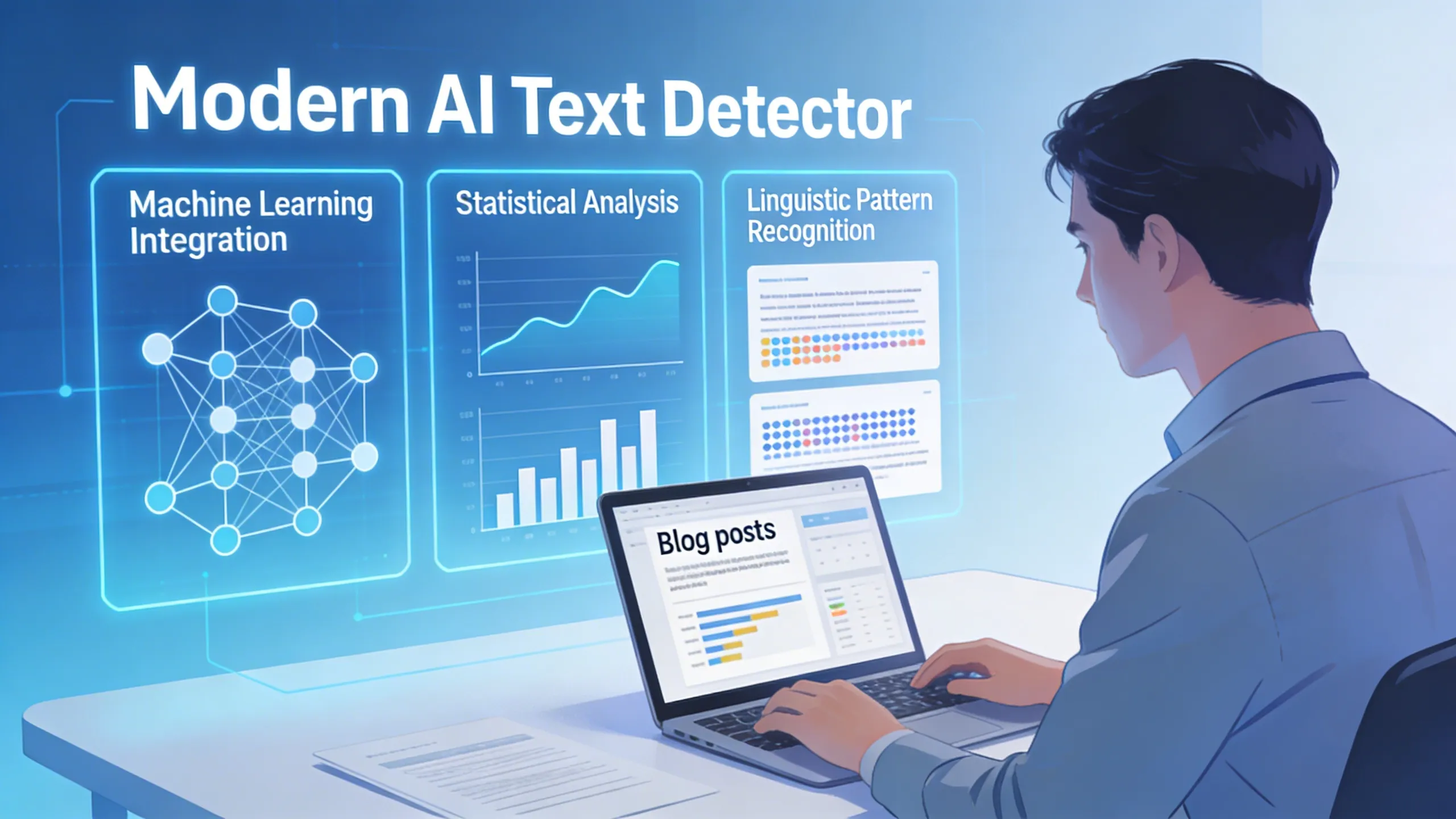
AI detector use linguistic analysis, statistical modeling, and machine learning to identify AI-generated content. Key methods include token probability analysis, entropy measurements, and perplexity scoring, which highlight predictable or formulaic patterns typical of AI writing.
Detectors are trained on large datasets of human and AI-generated content, covering multiple AI models. Advanced tools provide highlighted sections and confidence scores, ensuring accurate detection across essays, reports, and professional documents. Combining these methods allows reliable AI detection in academic and professional contexts.
Selecting the right AI detector depends largely on your specific use case. Different tools excel in different scenarios, so consider the following guidance:

By identifying your scenario first, you can pick a tool that balances accuracy, usability, and features. For educational and academic verification, Dechecker remains a top choice due to its free access, high detection accuracy, and comprehensive reporting. For professional or bulk content, enterprise-oriented tools may better suit the workflow.
Dechecker excels as an AI detector for academic and professional content, and here’s why it stands out among competitors:
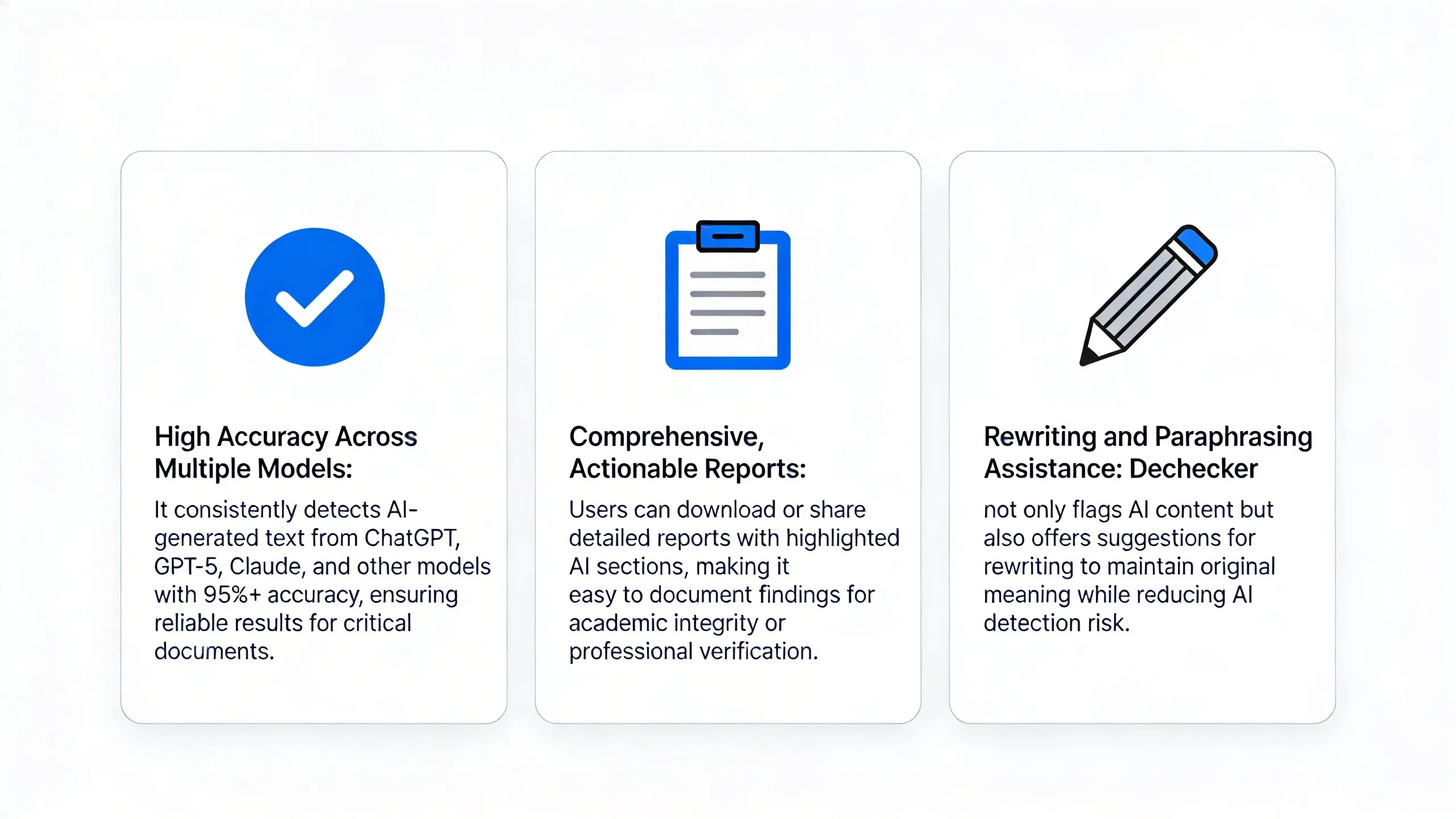
In addition, Dechecker’s interface is user-friendly and intuitive, allowing users of all experience levels to check AI content quickly and confidently. By combining technical rigor with practical usability, it ensures academic and professional integrity without unnecessary complexity.
1. What is the most accurate AI detector in 2026?
Accuracy varies with text type and AI model. Leading tools like Dechecker, GPTZero, and Turnitin report detection rates above 90% on essays, research papers, and professional content. Combining automated detection with human review improves reliability.
2. How accurate is Dechecker?
Dechecker typically achieves 95%+ accuracy on standard essays and reports. Short texts or unusual writing styles may slightly reduce precision, which is common for all AI detectors.
3. Which AI detector is best for schools?
Dechecker, GPTZero, and Turnitin are widely used in education. They support essays and assignments, helping maintain academic integrity. Choice depends on features and institutional requirements.
4. What is the best way to detect AI content?
Use a reliable AI detector, review highlighted sections and probability scores, and for critical cases, combine automated results with human evaluation.
5. Can AI detector detect all AI-generated text?
No detector is perfect. Extremely short, creative, or paraphrased AI text may evade detection. Using multiple tools and human review improves confidence.