

- What Is GPTZero?
- How GPTZero Works: The Core Detection Logic
- Where GPTZero Performs Well
- The Core Limitations of GPTZero
- Core User Groups and Real-World Use Cases of GPTZero
- GPTZero Pricing: Plans and Subscription Options
- GPTZero Alternatives and the Shift in AI Checker Design
- How to Check Your Text
- The Dechecker Experience: From Detection to Improvement
- GPTZero vs Dechecker: A Practical Comparison
- Final Thoughts: The Future of AI Checkers
GPTZero Review: Is This AI Checker Still Trustworthy?
AI-generated content is no longer experimental. It has become a default productivity tool for students, marketers, developers, founders, and writers across nearly every industry. As AI writing tools improve, so does the pressure to verify content authenticity. This is exactly where an ai checker becomes essential.
GPTZero is one of the earliest and most widely known AI detection tools. It is often referenced in academic discussions, content moderation debates, and enterprise compliance workflows. But as AI models become more human-like and hybrid writing becomes the norm, a serious question emerges:
Is GPTZero still a reliable ai checker in 2025?
This review takes a deep, experience-based look at GPTZero — not from a marketing perspective, but from the standpoint of real-world usage. We will examine how it works, where it succeeds, where it fails, and why newer alternatives like Dechecker are gaining attention.
What Is GPTZero?
GPTZero is an ai checker designed to estimate whether a piece of text was written by an AI model such as ChatGPT, GPT-4/5, Claude, Gemini, or LLaMA. It analyzes linguistic patterns rather than metadata or user behavior.
Originally, GPTZero was built to address academic integrity concerns. As generative AI became mainstream, the tool expanded into a broader AI detection platform used by educators, publishers, recruiters, and content teams.
At its core, GPTZero does not attempt to identify authorship with certainty. Instead, it calculates the statistical likelihood that a text matches known AI-generated language patterns.
This probabilistic nature is important. No ai checker can prove authorship absolutely. GPTZero positions itself as a signal provider, not a final judge.
How GPTZero Works: The Core Detection Logic
To understand GPTZero’s strengths and weaknesses, it’s important to understand how AI detection actually works.
GPTZero relies on several linguistic indicators, the most important being predictability, sentence variation, and structural consistency.
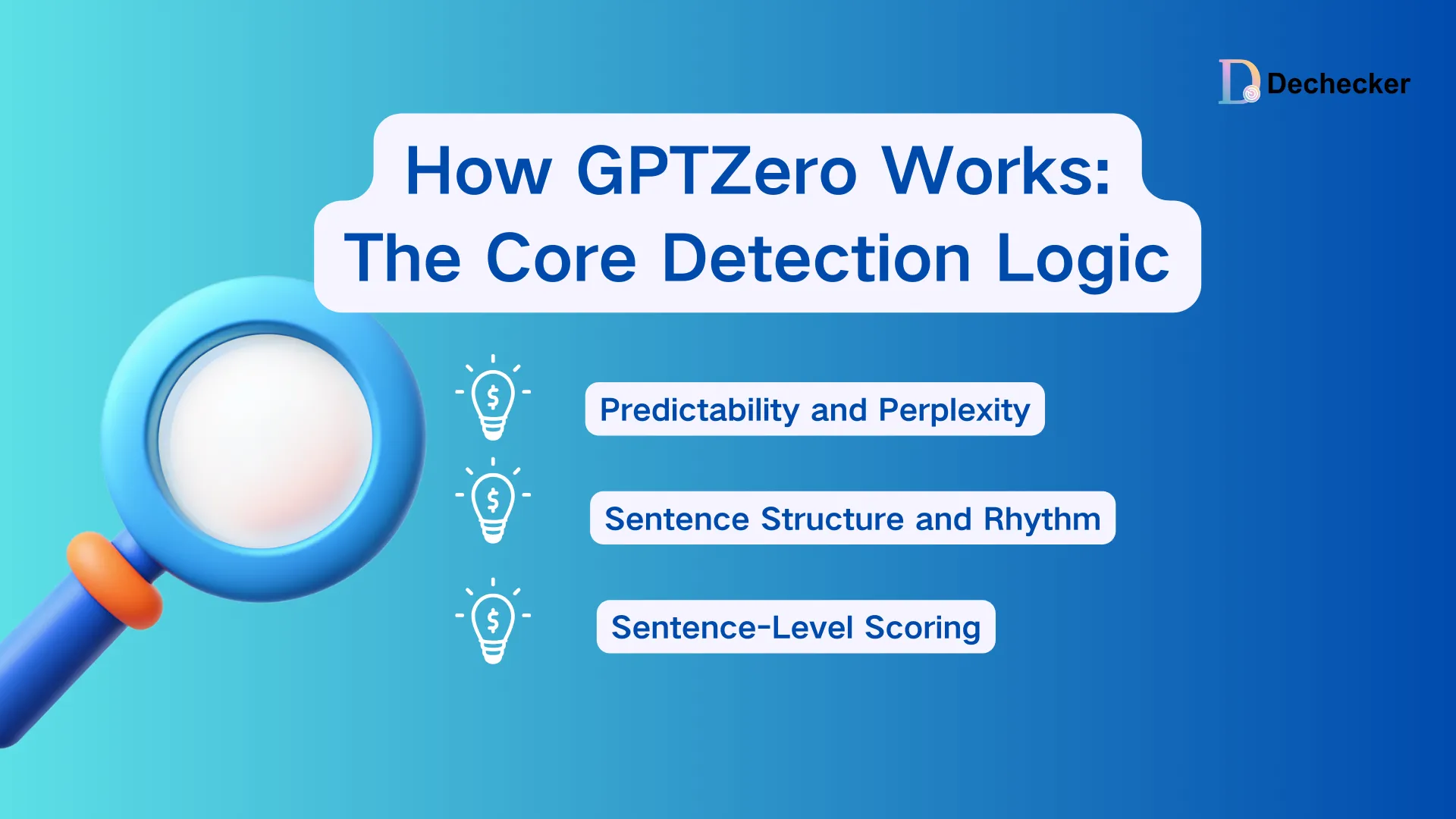
Predictability and Perplexity
Perplexity measures how predictable a sequence of words is to a language model. Human writing is often uneven, emotionally driven, and sometimes inefficient. AI writing, by contrast, tends to be optimized for clarity and coherence.
This optimization creates a problem: AI text often becomes statistically predictable.
GPTZero flags text with unusually low perplexity as potentially AI-generated. This works well for raw AI output but becomes less reliable once humans edit or personalize the content.
Sentence Structure and Rhythm
Human writing tends to fluctuate. Short sentences are followed by long ones. Informal phrasing appears next to formal explanations. AI writing, even when high quality, often maintains a consistent rhythm.
GPTZero analyzes sentence length distribution and syntactic regularity. When variation is low, the ai checker increases the AI likelihood score.
Sentence-Level Scoring
One of GPTZero’s most valuable features is sentence-level analysis. Instead of producing only a global score, GPTZero highlights individual sentences and estimates how AI-like each one appears.
This allows users to identify problematic sections rather than discarding entire documents.
Where GPTZero Performs Well
GPTZero still excels in several important scenarios, especially when its original design assumptions hold true.
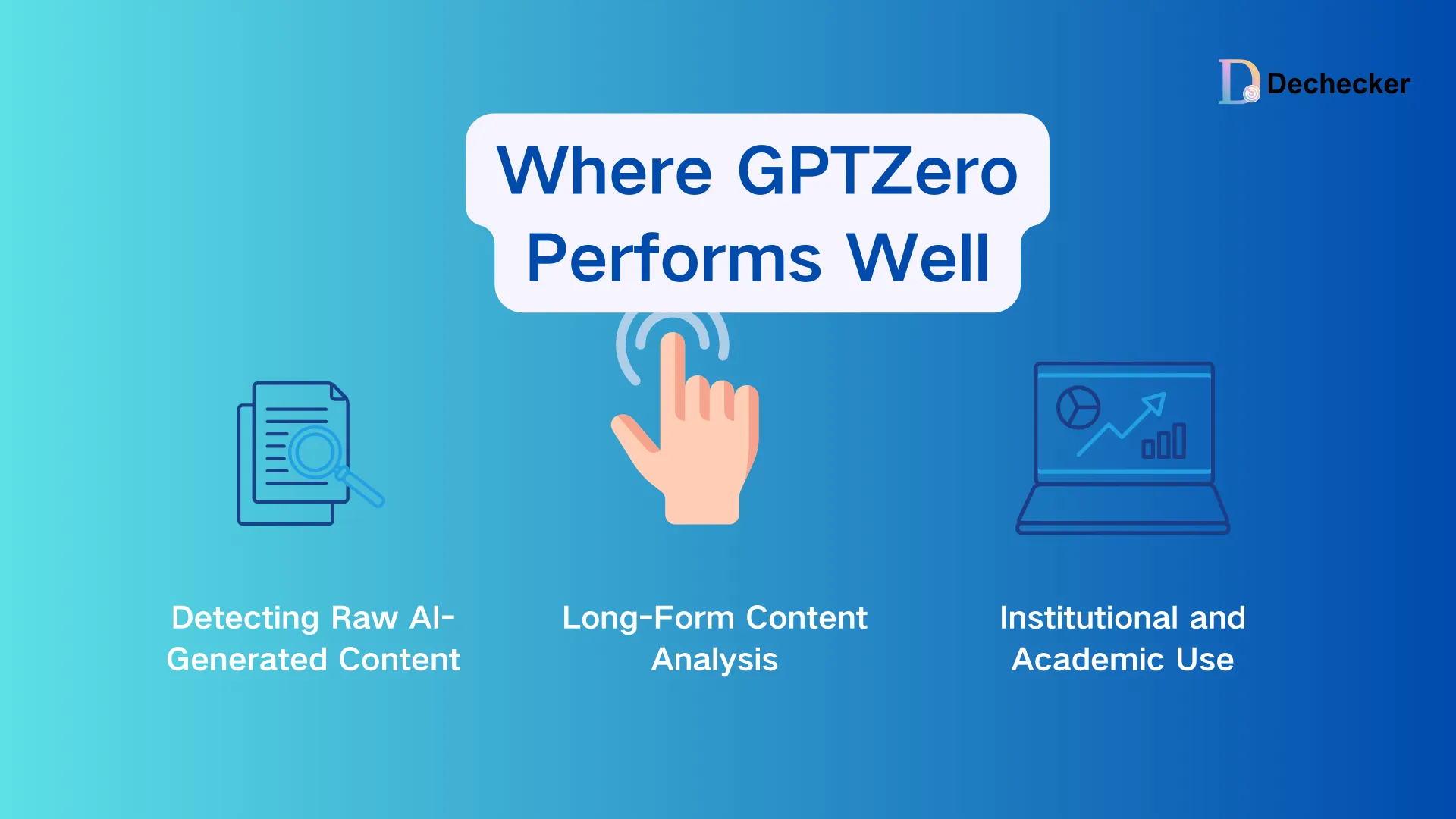
Detecting Raw AI-Generated Content
When analyzing content that was generated directly from AI tools with minimal editing, GPTZero performs extremely well. This includes:
- Essays generated entirely by ChatGPT
- AI-written summaries or reports
- Automatically generated blog drafts
- Low-effort paraphrased content
In these cases, linguistic signals are strong and consistent. GPTZero’s confidence scores tend to align with human intuition.
Long-Form Content Analysis
Like most ai checker tools, GPTZero performs better with longer content. Longer texts provide more linguistic data, making statistical patterns easier to detect.
Short content such as tweets, captions, or headlines often produces unreliable results. GPTZero is far more effective with essays, articles, and reports exceeding several hundred words.
Institutional and Academic Use
GPTZero remains popular in academic and institutional environments because:
- It provides transparent sentence-level feedback
- It integrates with Google Docs
- It offers bulk and API options for organizations
In these contexts, GPTZero functions as a screening tool rather than an enforcement mechanism.
The Core Limitations of GPTZero
Despite its strengths, GPTZero faces limitations that are becoming more visible as AI writing evolves.
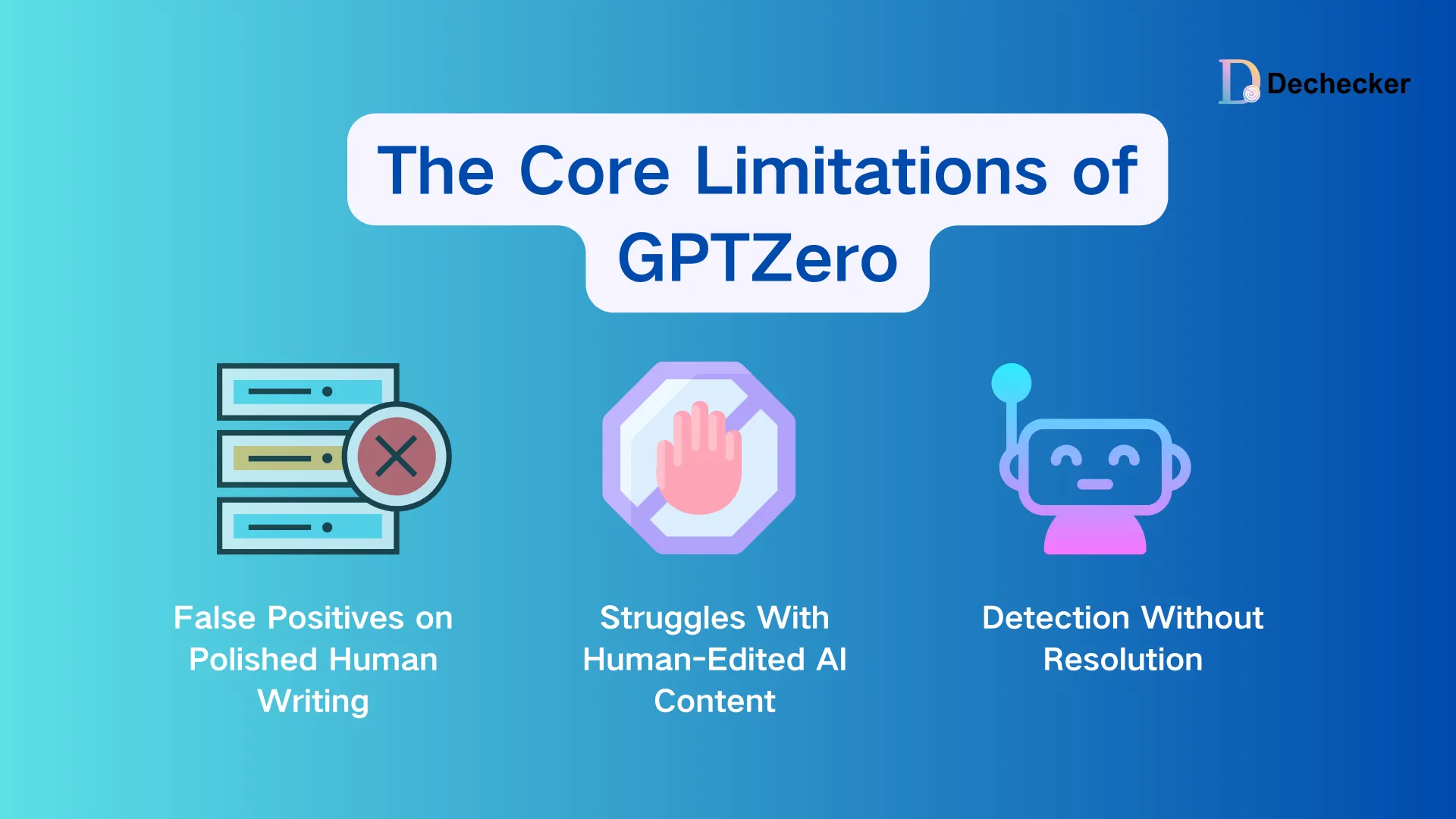
False Positives on Polished Human Writing
One of the most common criticisms of GPTZero is false positives.
Highly structured, professional, or SEO-optimized writing often resembles AI-generated text statistically. As a result:
- Experienced writers may be flagged
- Marketing content may appear AI-like
- Technical documentation can trigger high AI scores
This is not a flaw unique to GPTZero. It is a fundamental challenge for every ai checker based on linguistic probability.
Struggles With Human-Edited AI Content
The modern writing workflow is rarely binary. Most content today is:
- Drafted by AI
- Edited by humans
- Restructured, expanded, or personalized
In these hybrid cases, GPTZero’s accuracy drops significantly. Once human variation is introduced, AI signals become weaker and harder to isolate.
This is where many users feel frustrated: the content “feels” AI-assisted, but the ai checker cannot confidently detect it.
Detection Without Resolution
GPTZero tells you which sentences look AI-like, but it does not help you fix them.
Users are left asking:
- What exactly makes this sentence risky?
- How should I rewrite it?
- Which patterns should I avoid next time?
For creators and marketers, this creates friction. Detection alone does not improve content quality.
Core User Groups and Real-World Use Cases of GPTZero
GPTZero is used by very different audiences, and its real value changes depending on who is using it and why. As an AI checker, its effectiveness depends heavily on how it is integrated into real workflows rather than theoretical expectations. Below are the main user groups and how GPTZero functions as an AI checker in practice.

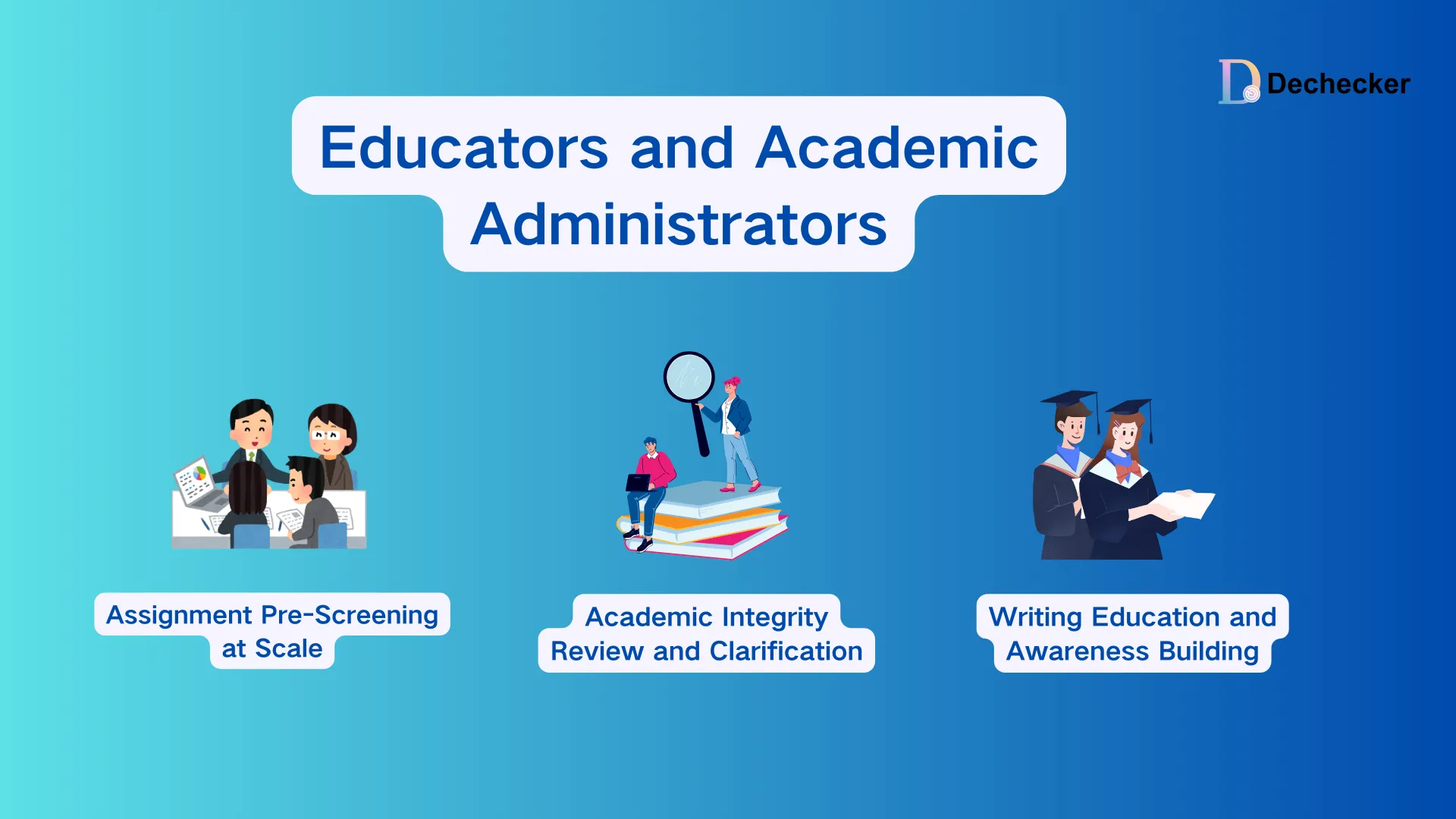
Educators and Academic Administrators
Assignment Screening and Academic Integrity Review
Who uses it
Teachers, teaching assistants, and academic integrity officers who manage large volumes of student submissions often rely on an AI checker to support academic review processes.
How it’s used in practice
After collecting essays or written assignments, educators run submissions through GPTZero as an AI checker to identify papers that significantly deviate from a student’s usual writing style or show strong signals of AI generation. Flagged submissions are not automatically treated as violations but are set aside for closer review, follow-up discussions, or oral clarification.
Content Creators and Marketing Teams
Pre-Publishing Content Quality Checks
Who uses it
SEO writers, content marketers, editorial teams, and freelancers who rely on AI tools for drafting but remain accountable for content quality frequently use an AI checker as part of their publishing workflow.
How it’s used in practice
Teams scan drafts with GPTZero to locate sections that appear overly generic, formula-driven, or lacking concrete examples. In this context, the AI checker helps surface AI-heavy segments that may need rewriting, added context, or a stronger human perspective before publication.
Recruiters and Hiring Managers
Writing Sample and Task Evaluation
Who uses it
Recruiters and hiring managers, especially for roles that emphasize written communication or remote collaboration, often introduce an AI checker during candidate evaluation.
How it’s used in practice
When candidates submit written tasks, personal statements, or take-home assignments, GPTZero is used as an AI checker to identify submissions that appear heavily AI-generated. Rather than disqualifying candidates outright, recruiters use these signals to shape follow-up interview questions about writing process, reasoning, and problem-solving.
Editors and Publishers
Manuscript and Submission Filtering
Who uses it
Editors, content reviewers, and publishing platforms handling high volumes of external submissions depend on an AI checker to reduce early-stage screening workload.
How it’s used in practice
GPTZero is applied during initial screening stages as an AI checker to filter out mass-produced or low-effort AI-generated submissions. Content that triggers strong AI signals may be deprioritized or rejected before entering the full editorial workflow, allowing editors to focus on higher-value material.
GPTZero Pricing: Plans and Subscription Options
GPTZero offers a freemium pricing model with both free and paid plans.
- A free plan is available but very limited (e.g., limited scans and tools each month).
- Paid plans (e.g., Pro at around $12.99/month or a one-time Lifetime payment) unlock unlimited detection and advanced features.

GPTZero Alternatives and the Shift in AI Checker Design
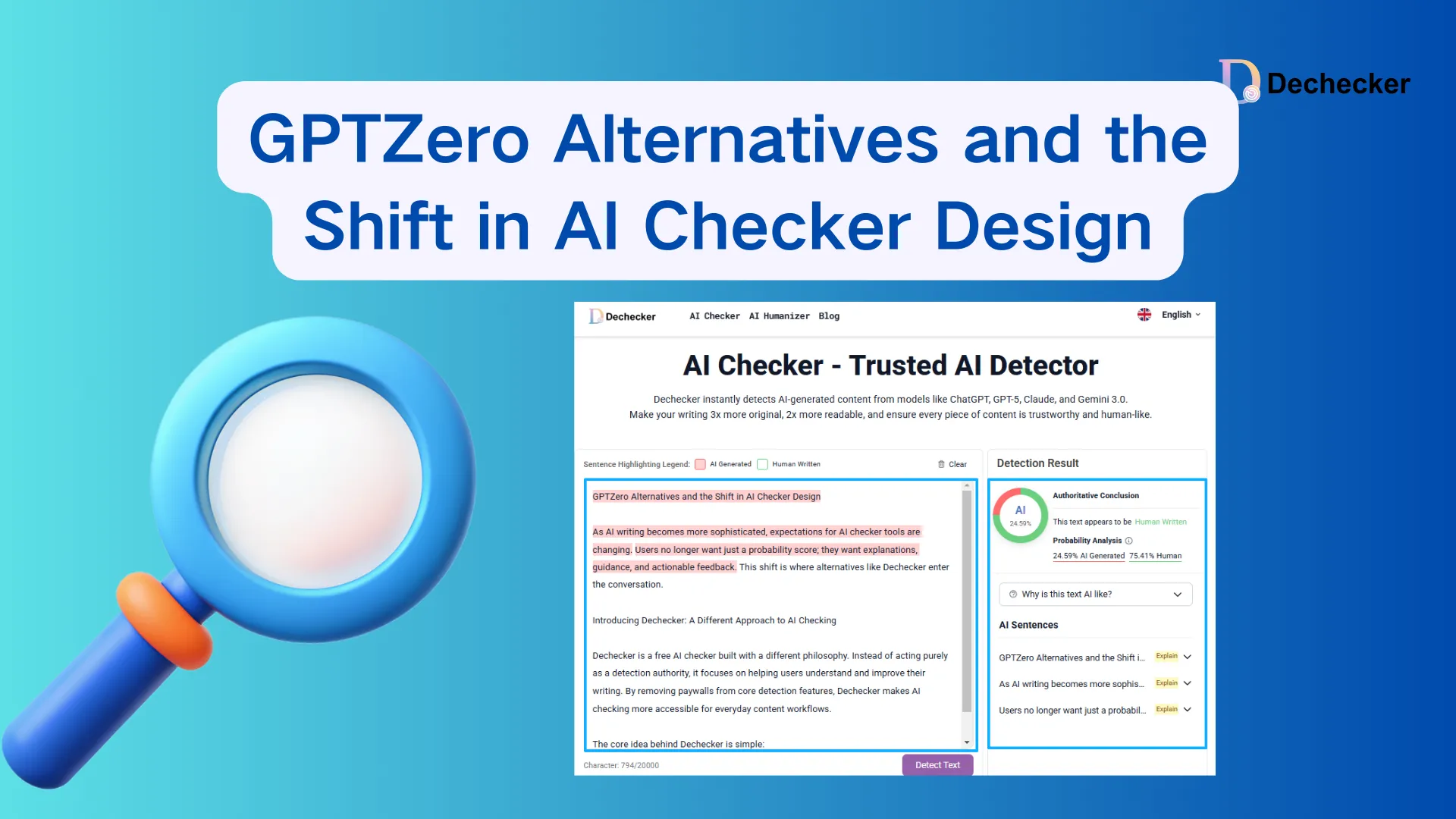
As AI writing becomes more sophisticated, expectations for AI checker tools are changing. Users no longer want just a probability score; they want explanations, guidance, and actionable feedback. This shift is where alternatives like Dechecker enter the conversation.
Introducing Dechecker: A Different Approach to AI Checking
Dechecker is a free AI checker built with a different philosophy. Instead of acting purely as a detection authority, it focuses on helping users understand and improve their writing. By removing paywalls from core detection features, Dechecker makes AI checking more accessible for everyday content workflows.
The core idea behind Dechecker is simple:
Detection is only useful if it leads to better content.
How to Check Your Text
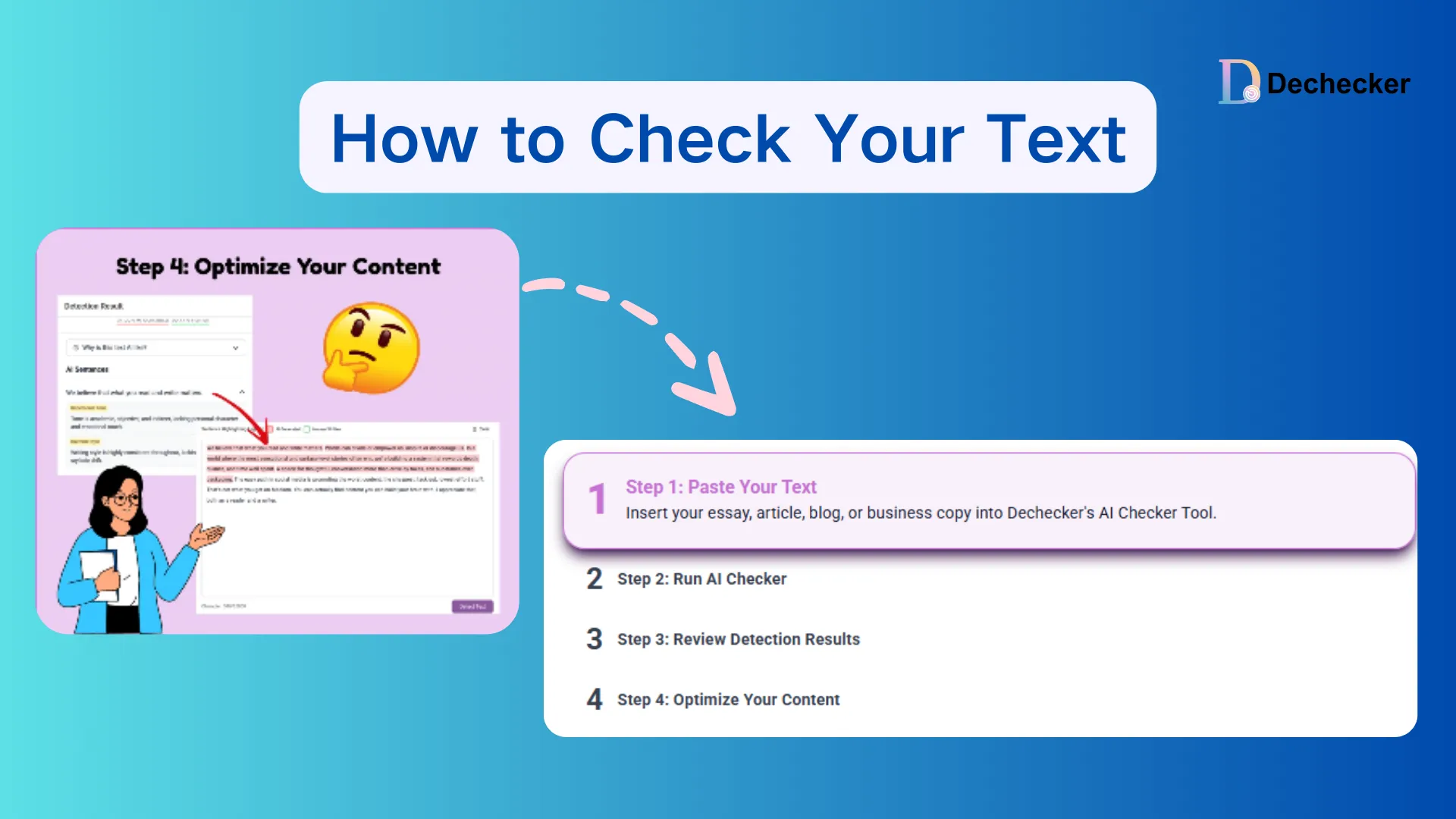
Checking whether your content shows AI-generated patterns doesn’t have to be complicated. With Dechecker, the process is designed to fit naturally into real writing workflows—from draft review to final optimization.
In just four simple steps, you can analyze your text and refine it into more original, human-like content.
Step 1: Paste Your Text
Copy and paste your essay, blog post, academic writing, or business copy into Dechecker’s AI Checker. The tool supports both short excerpts and long-form content, making it suitable for different use cases.
Step 2: Run the AI Checker
Start the analysis with a single click. Dechecker scans your text for structural, stylistic, and probabilistic signals commonly associated with AI-generated writing.
Step 3: Review Detection Results
Examine the detailed detection feedback to understand which parts of your content may trigger AI flags. Instead of a simple yes-or-no judgment, the results help you see where the risks come from.
Step 4: Optimize Your Content
Use the insights to revise flagged sections, adjust phrasing, add personal reasoning, or improve narrative flow—transforming your draft into content that reads more naturally and confidently human.
The Dechecker Experience: From Detection to Improvement
Clear Detection With Context
Like GPTZero, Dechecker provides an overall AI probability score and sentence-level highlights. As an AI checker, Dechecker goes a step further by emphasizing explanation rather than raw scoring.
Each flagged sentence is accompanied by insights into:
- Why it appears AI-like
- Which linguistic signals triggered detection
- How predictability or structure influenced the score
This approach helps users build intuition and understand how an AI checker evaluates writing, instead of blindly trusting numbers.
Guided Rewrite Suggestions
The most significant difference between GPTZero and Dechecker lies in what happens after detection. While many AI checker tools stop at labeling content, Dechecker continues the process by helping users improve it.
Dechecker actively assists users in rewriting flagged sentences. Suggestions are context-aware and aim to preserve meaning while increasing human-like variation. Rather than generic paraphrasing, this AI checker focuses on:
- Sentence rhythm
- Natural phrasing
- Structural diversity
By combining detection with guided revision, Dechecker reduces manual editing time and helps users produce higher-quality writing with confidence.
Learning Effect Over Time
Repeated use of Dechecker creates a feedback loop. Users begin to understand what patterns trigger AI detection and adjust their writing proactively.
Over time, the ai checker becomes an educational tool rather than a gatekeeper.
GPTZero vs Dechecker: A Practical Comparison
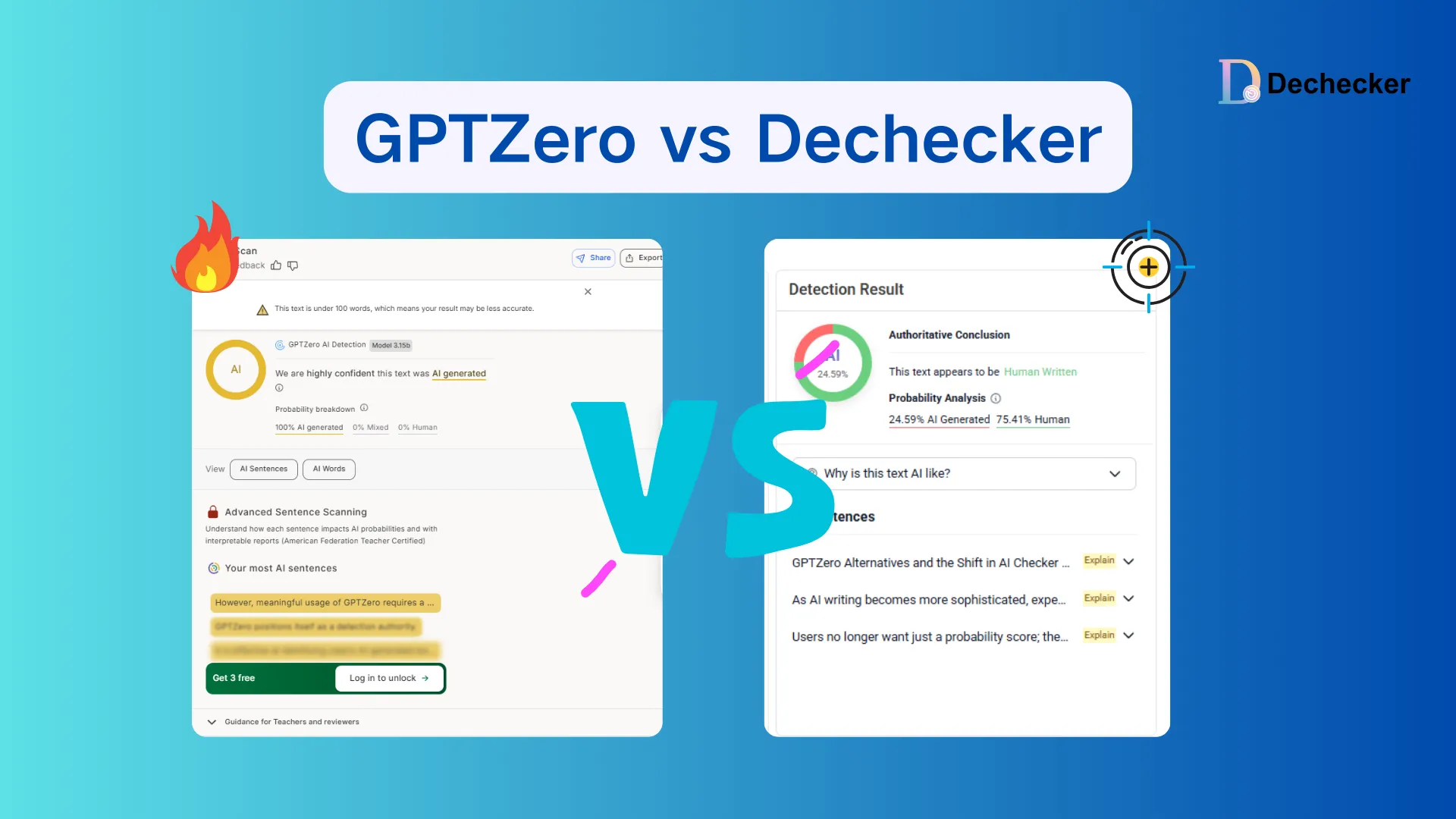
GPTZero positions itself as a detection authority. It is effective at identifying clearly AI-generated text and is commonly used in academic or institutional screening. However, meaningful usage of GPTZero requires a paid plan—the free version is heavily limited and mainly suitable for occasional checks rather than regular workflows.
Dechecker takes a different approach. It is designed for modern content creation, where AI assistance is common and most writing is hybrid. Instead of simply labeling content, Dechecker focuses on helping users understand which parts of a text appear AI-like and how to improve them. Crucially, Dechecker is completely free to use, with no subscription barrier for core AI checking and optimization.
In simple terms, GPTZero answers the question:
“Is this text likely written by AI—and are you willing to pay to find out?”
Dechecker answers a more practical question:
“Which parts of my text look AI-generated, how can I fix them, and how can I do that without paying?”
Final Thoughts: The Future of AI Checkers
AI detection will never be perfect. As AI writing continues to improve, the line between human and machine becomes increasingly blurred. Simply running a check for AI writing is no longer enough to address how content is actually created today.
The most valuable AI checker tools will not be those that claim absolute certainty, but those that help users navigate ambiguity intelligently. They go beyond labeling text and instead provide insight into why certain patterns appear and how writers can respond.
GPTZero remains an important player in AI detection. But tools like Dechecker represent the next evolution—moving beyond judgment and toward collaboration. Rather than treating AI checking as a pass-or-fail test, they help users understand their writing choices.
If your goal is not just to check for AI writing, but to write better content overall, the future points toward tools that combine detection with guidance.
Try Dechecker to experience a more practical approach to AI checking.
| Item | GPTZero | Dechecker |
|---|---|---|
| AI Detection | ✔️ | ✔️ |
| Probability Score | ✖️ | ✔️ |
| Rewrite Guidance | ✔️ | ✔️ |
| Human-like Optimization | ✔️ | ✔️ |
| Workflow Friendly | ✔️ | ✔️ |
| Free to Use | ✖️ | ✔️ |