

- What is AI Checker?
- Why is AI Checker So Important?
- How AI Checker Tools Work
- Who Frequently Uses AI Checker Tools?
- Alternative solutions
- AI Checker Tools Comparison Table
- Are AI Checkers Replacing Human Judgment?
- Conclusion
Top 5 AI Checker Tools review
In a world where AI writing tools are everywhere—essays, blog posts, emails, and even code—knowing who actually wrote the content has become harder than ever. A student submits an assignment, a marketer publishes an article, a company reviews a report, and the same question keeps coming up: Is this human-written or AI-generated? The real challenge today isn’t creating content — it’s verifying and trusting it. That’s where AI Checker tools come in.
In this blog, we’ll walk you through the top AI checker tools and help you understand which one fits your needs best — whether you’re checking academic work, SEO content, or professional writing.
What is AI Checker?
An AI checker is a tool designed to analyze text and determine the likelihood that it was generated by artificial intelligence. It examines patterns such as sentence structure, predictability, and language flow that are commonly associated with AI-written content. Modern AI checker tools go beyond detecting pure AI output — they also evaluate human-edited AI text, which is now the most common writing style. The result is a clear assessment that helps users understand the risk level of their content before submission or publishing.
Why is AI Checker So Important?
AI writing is now deeply integrated into education, marketing, and everyday work. As a result, the risks around content verification are growing. An AI checker plays a critical role in helping users stay safe and credible.
- Prevents false accusations
Human-written or lightly edited content can be wrongly flagged as AI. A reliable AI checker helps identify this risk early and avoids unnecessary rewrites or penalties. - Protects academic and professional credibility
For students and professionals, being accused of using AI improperly can damage trust. An AI checker acts as a safety check before submission or review. - Saves time and effort
Instead of guessing or rewriting blindly, users can test content once and make targeted improvements based on AI checker results. - Supports responsible AI use
AI is a tool, not a shortcut. An AI checker helps users understand how much AI influence is present and use it in a transparent, controlled way.
How AI Checker Tools Work
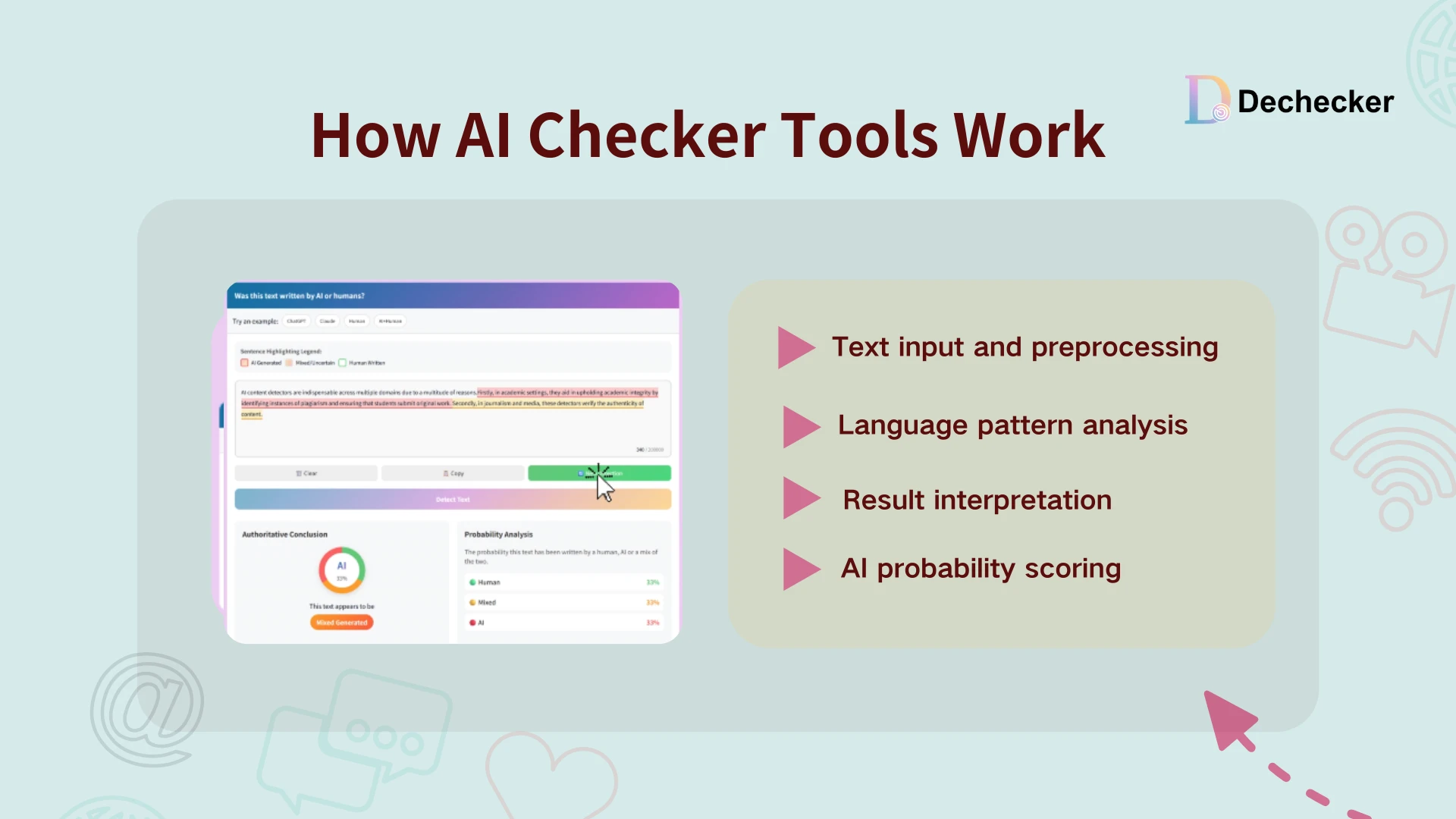
Although the technology behind AI detection is complex, the user experience is simple and fast. Most AI checker tools follow these key steps:
- Text input and preprocessing
Users paste or upload text, and the AI checker cleans and prepares it for analysis by breaking it into sentences and patterns. - Language pattern analysis
The tool examines sentence structure, repetition, predictability, and tone to identify traits commonly found in AI-generated writing. - AI probability scoring
Based on the analysis, the AI checker assigns a risk score or percentage that shows how likely the text is AI-generated. - Result interpretation
Users review the results to decide whether edits are needed, whether the content is safe to submit, or if further human revision is required.
Who Frequently Uses AI Checker Tools?
AI checker tools are used by many different groups who need to verify content accuracy and credibility before submission or publishing.
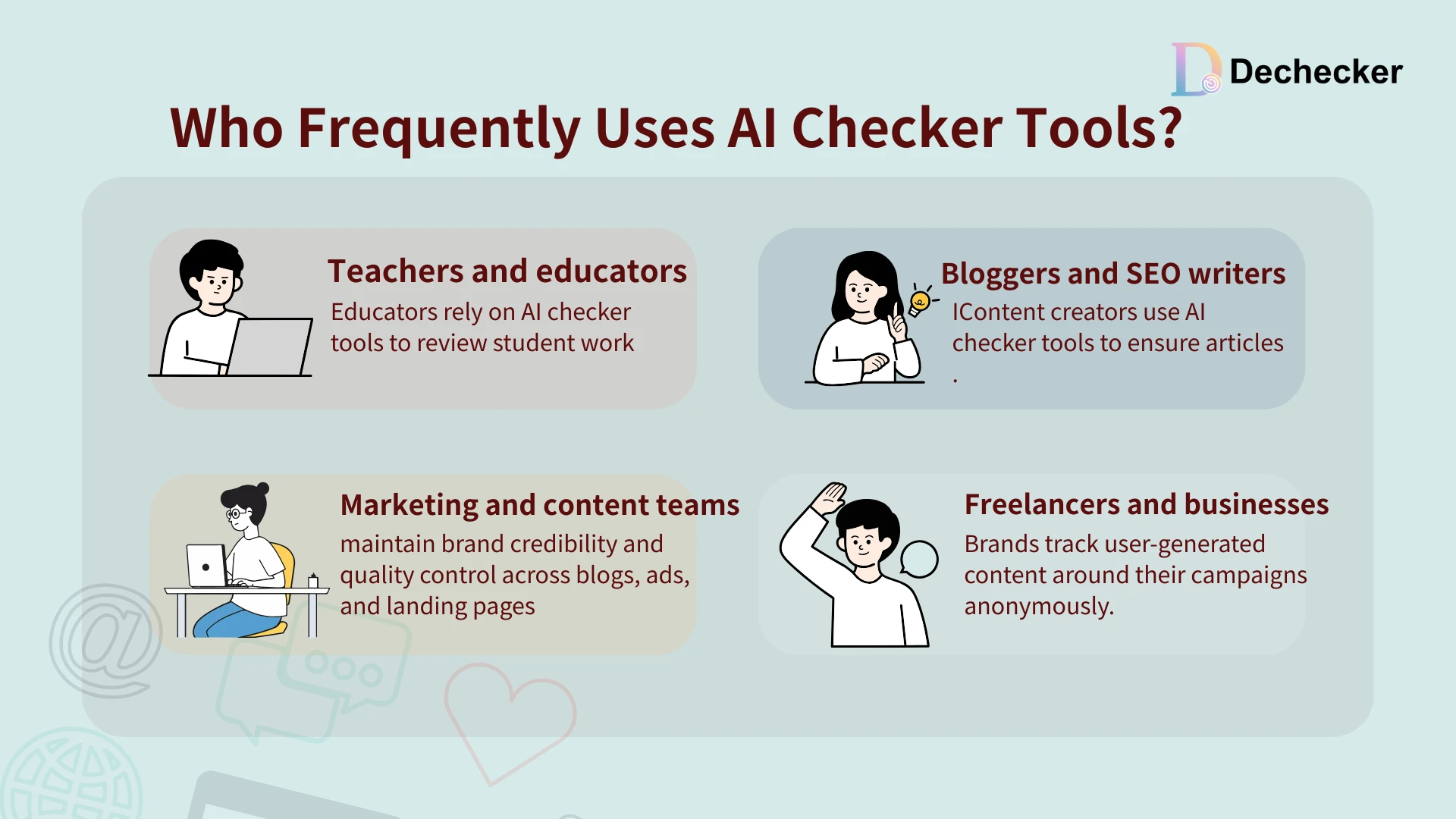
- Teachers and educators
Educators rely on AI checker tools to review student work, identify potential AI usage, and maintain academic integrity without manually analyzing every assignment.
Students use AI checker tools to review essays and assignments before turning them in, especially when AI tools were used for brainstorming or rewriting. This helps reduce the risk of academic penalties. - Bloggers and SEO writers
Content creators use AI checker tools to ensure articles will not be flagged as AI-generated by platforms or clients, protecting rankings and trust. - Marketing and content teams
Teams managing large volumes of content use AI checkers to maintain brand credibility and quality control across blogs, ads, and landing pages. - Freelancers and businesses
Freelancers and companies use AI checker tools to verify deliverables before client review, ensuring transparency and long-term trust.
Alternative solutions
Dechecker
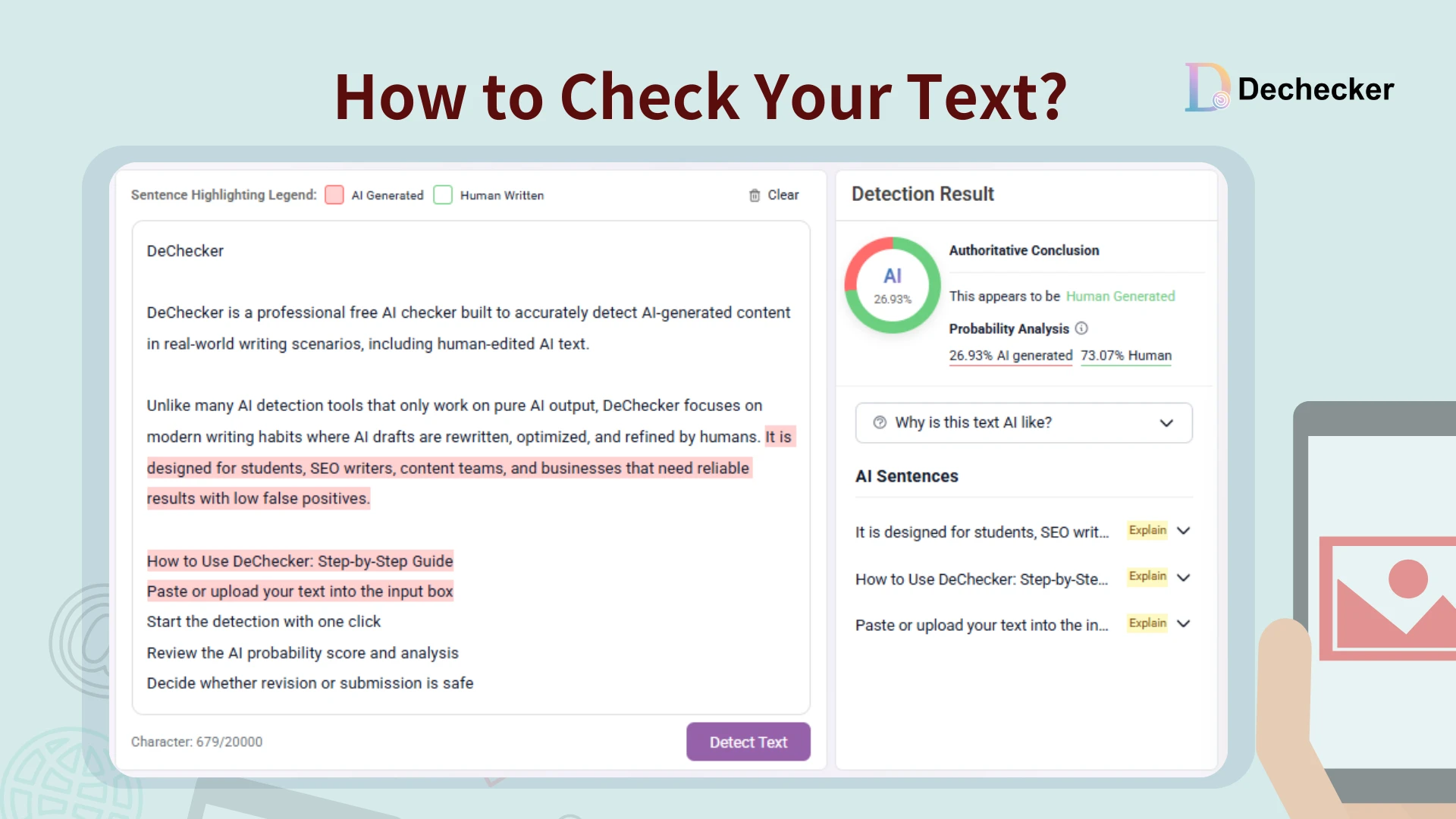
Dechecker is a professional free AI checker built to accurately detect AI-generated content in real-world writing scenarios, including human-edited AI text.
Unlike many AI detection tools that only work on pure AI output, Dechecker focuses on modern writing habits where AI drafts are rewritten, optimized, and refined by humans. It is designed for students, SEO writers, content teams, and businesses that need reliable results with low false positives.
How to Use Dechecker: Step-by-Step Guide
- Paste or upload your text into the input box
- Start the detection with one click
- Review the AI probability score and analysis
- Decide whether revision or submission is safe
Key Features
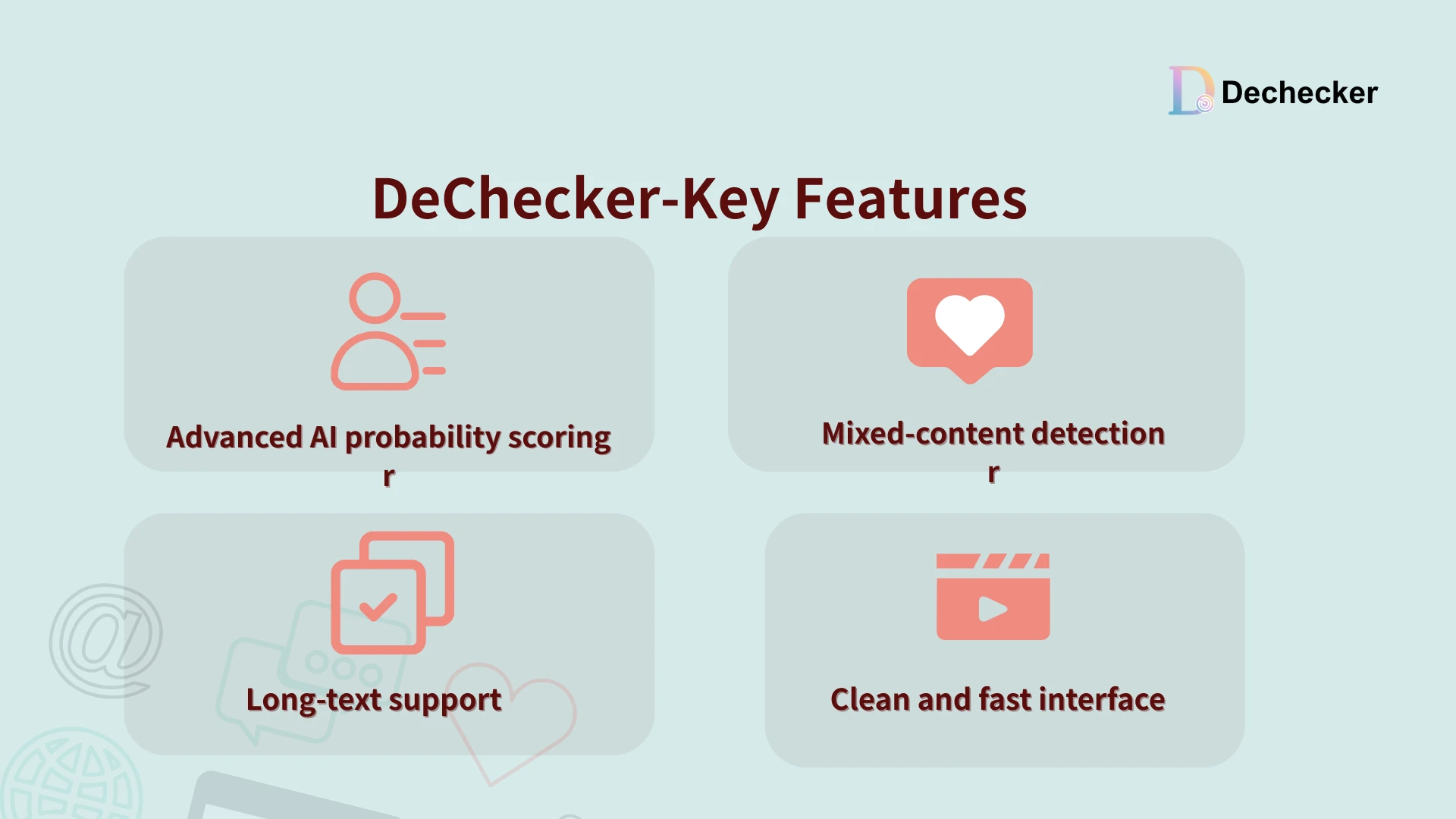
- Advanced AI probability scoring: Provides a clear percentage-based result instead of vague labels, making decisions easier and more transparent.
- Mixed-content detection: Accurately analyzes content that combines AI writing with human editing, which is the most common use case today.
- Long-text support: Handles blog posts, essays, and reports without breaking structure or context.
- Clean and fast interface: Focuses on speed and clarity, with no unnecessary distractions.
Advantages
- Very low false positive rate on human-written content
- Designed for SEO, academic, and professional writing
- Easy to understand results, even for non-technical users
- Suitable for both individual users and teams
Disadvantages
- Advanced usage requires a paid plan
- Not focused on classroom analytics features
Price
Free trial available
QuillBot
QuillBot AI Content Detector is a lightweight AI checker designed for quick and simple detection, especially for short-form text.
It is often used by casual users who already use QuillBot’s rewriting and grammar tools and want a fast way to check AI involvement.
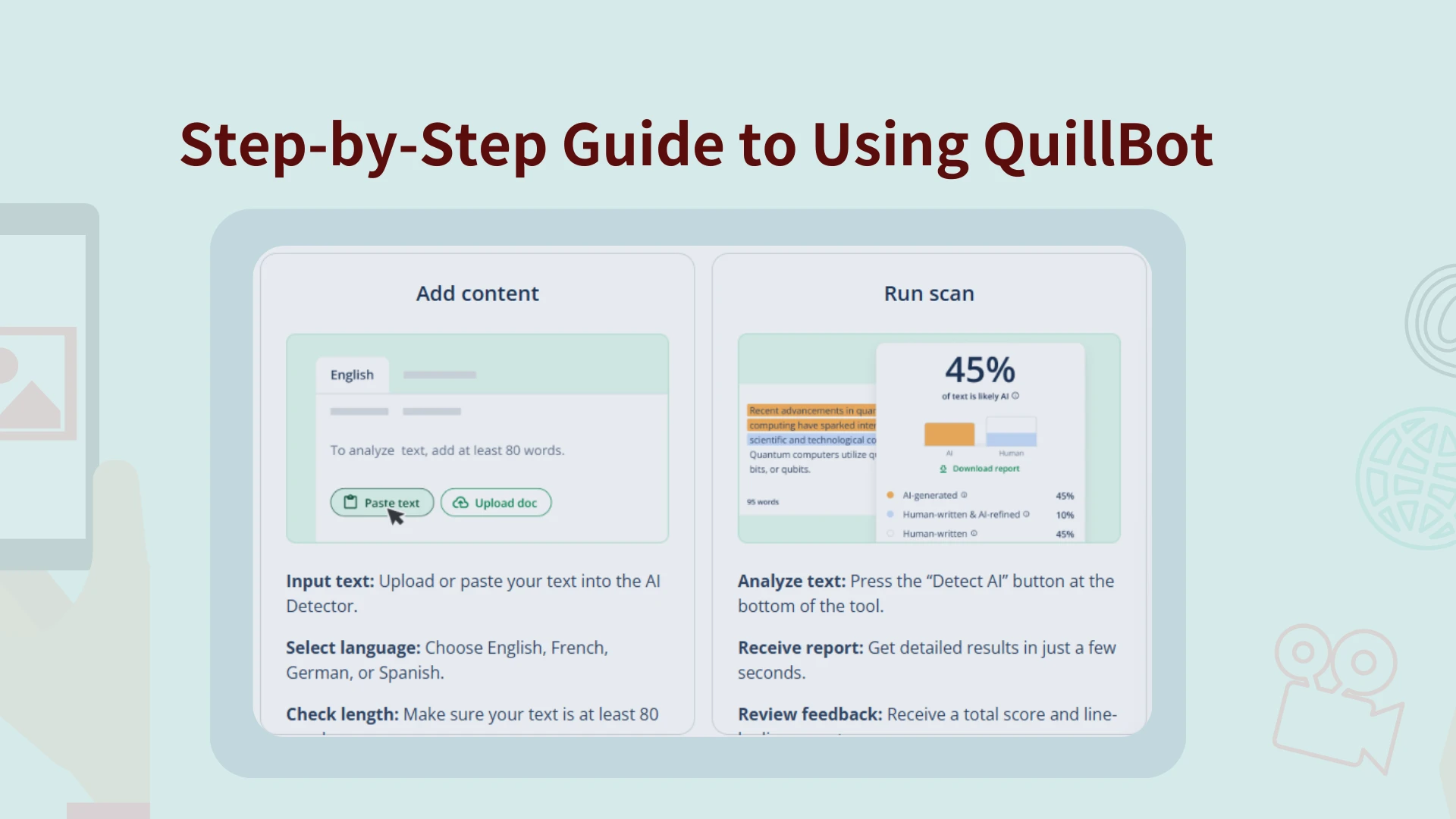
How to Use QuillBot AI Detector
- Paste text into the detector
- Run the AI check
- View basic AI likelihood results
Key Features
- Lightweight AI detection engine: Analyzes basic language patterns and predictability signals to quickly identify whether text shows signs of AI-generated writing, making it suitable for fast checks rather than deep analysis.
- Low-friction user experience: Designed with a clean, minimal interface that requires no setup or learning curve, allowing first-time users to run an AI check immediately without configuration or technical knowledge.
Advantages
- Easy to access and use
- Suitable for short content checks
- Integrates well with other QuillBot tools
Disadvantages
- Limited accuracy on mixed AI + human content
- Results lack detailed explanation and probability breakdown
- Not suitable for long or SEO-focused content
Price
Completely free
ZeroGPT
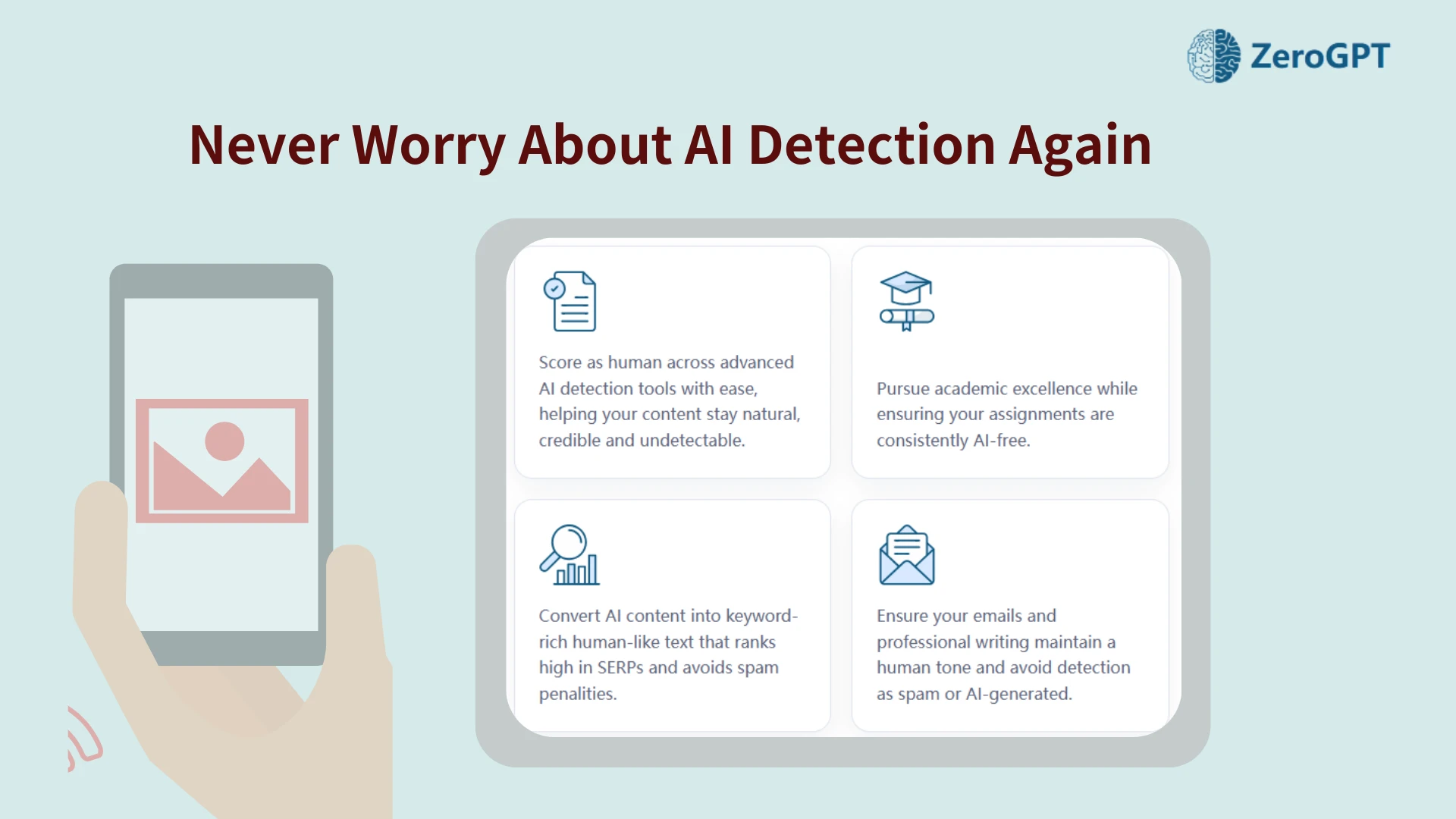
ZeroGPT is a popular AI checker known for its free access and ability to process longer text.
It is commonly used for rough screening rather than final verification.
How to Use ZeroGPT
- Paste your content
- Run detection
- Review AI likelihood output
Key Features
- Long-text detection capability: Supports the analysis of large blocks of text such as full articles, essays, or reports, allowing users to check AI involvement without splitting content into smaller sections.
- Barrier-free access: Offers basic AI checking functionality without requiring account registration or login, enabling users to run quick checks instantly and with minimal friction.
Advantages
- Easy to try with no signup
- Fast processing
- Useful for quick checks
Disadvantages
- High false positive rate
- Results can be inconsistent
- Not reliable for professional or academic decisions
Price
Completely free
GPTZero
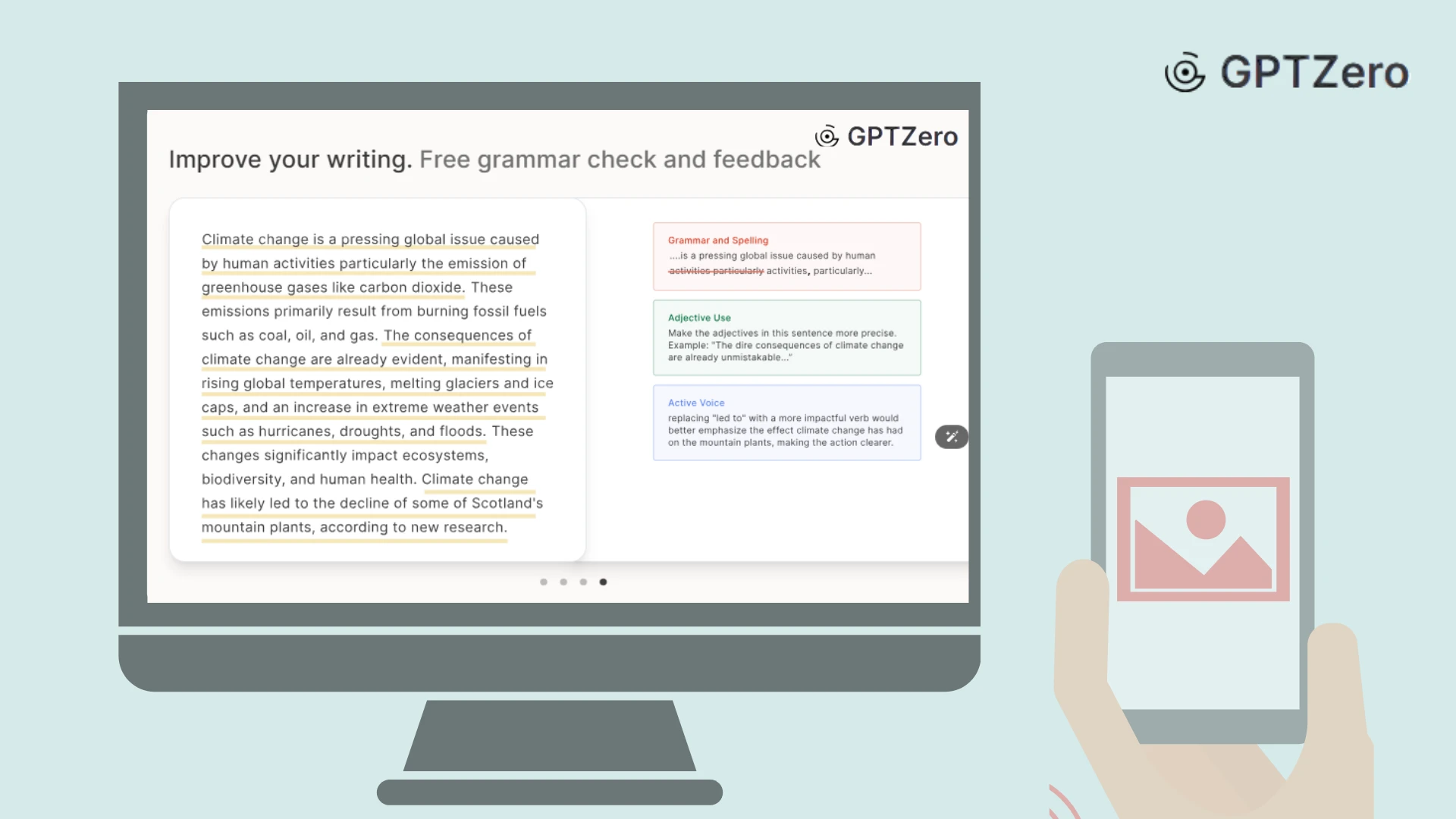
GPTZero is an AI checker originally built for educational use, focusing on sentence-level analysis.
It is widely adopted in schools and classrooms.
How to Use GPTZero
- Upload or paste text
- Run AI detection
- Review sentence-level indicators
Key Features
- Sentence-level AI analysis: Evaluates AI likelihood at the sentence level, highlighting specific lines that may show AI-generated patterns, which helps reviewers understand where potential issues occur rather than only seeing a global result.
- Education-oriented workflow design: Structured to fit academic review scenarios, making it easier for teachers and institutions to assess student submissions and maintain academic integrity across multiple documents.
Advantages
- Useful for teachers and educators
- Detailed structural analysis
- Recognized academic tool
Disadvantages
- Requires installing a Chrome extension and cannot be used directly on the web
- Often flags human writing as AI
- Not suitable for SEO or marketing content
- Can be overly strict
Price
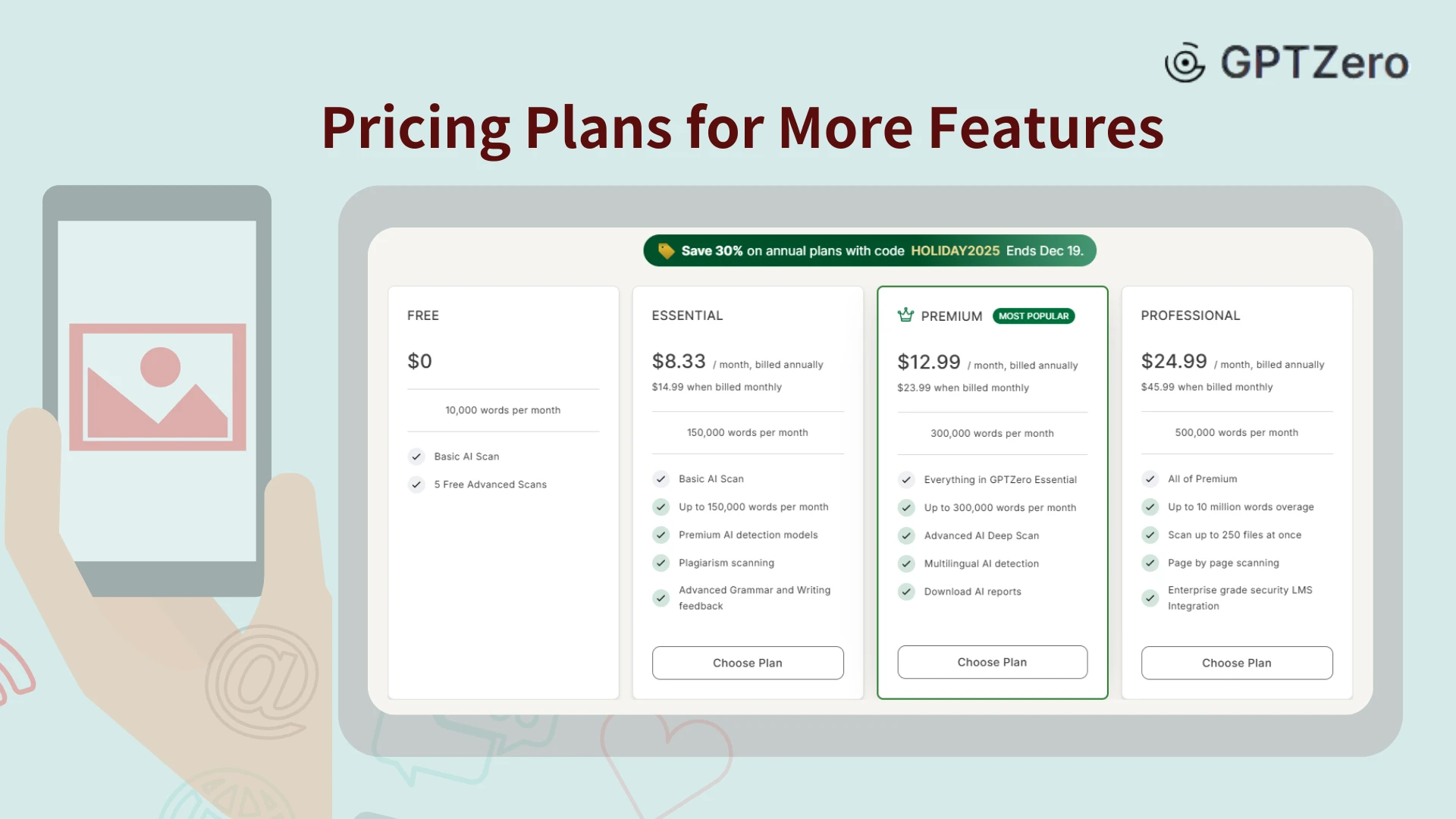
- 5 free usage opportunities;
- more usage needs require purchasing a higher-tier plan.
Scribbr
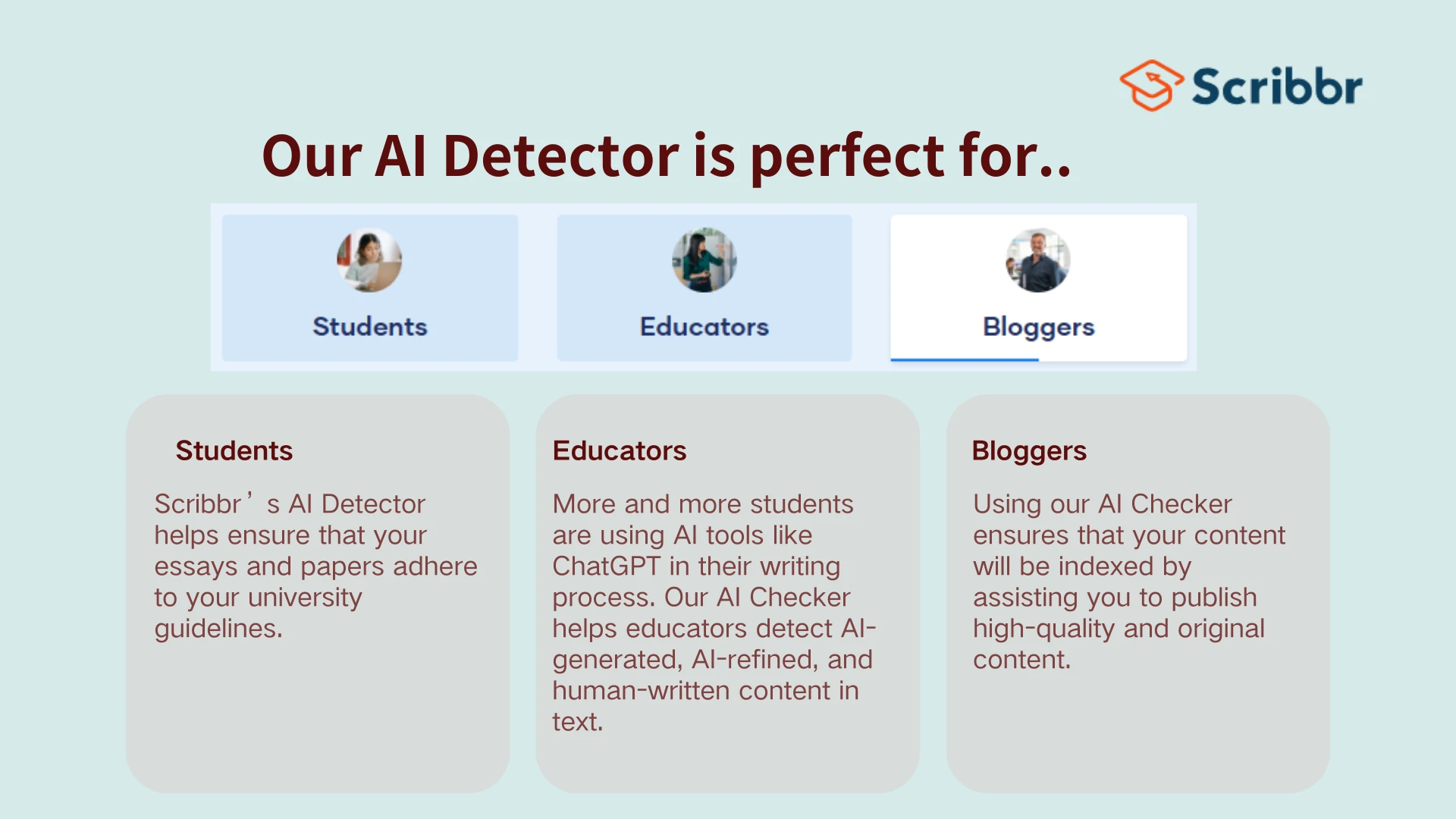
Scribbr AI Detector is designed for academic users who need a simple AI check alongside plagiarism tools.
It focuses on clarity rather than advanced detection depth.
How to Use Scribbr AI Detector
- Paste academic text
- Run detection
- View basic AI assessment
Key Features
- Academic-focused detection model: Optimized specifically for essays, research papers, and formal academic writing, with detection logic tailored to structured, citation-heavy content rather than casual or creative text.
- Clear and readable result presentation: Presents AI detection outcomes in a straightforward, easy-to-interpret format, allowing users to quickly understand the risk level without needing technical knowledge or detailed analysis.
Advantages
- Trusted academic brand
- Good for basic essay checks
- Clean and simple interface
Disadvantages
- Limited flexibility
- Weak performance on creative or blog-style writing
- Not ideal for mixed-content detection
Price
Free with limitations
AI Checker Tools Comparison Table
| Tool | Accuracy | False Positives | Best For | Best For |
|---|---|---|---|---|
| Dechecker | High | Low | SEO writers, students, content teams | ✅ |
| QuillBot | Medium | Medium | Casual users, short text checks | ✅ |
| ZeroGPT | Medium | High | Quick screening, long text | ✅ |
| GPTZero | Medium | High | Teachers, academic review | ❌ |
| Scribbr | Medium | Medium | Academic writing | ✅ |
Are AI Checkers Replacing Human Judgment?
With the rapid growth of AI checker tools, a common question appears: if a tool can check for AI writing in seconds, do human review and judgment still matter?
The answer is yes — absolutely.
An AI checker should be seen as a warning system, not a final judge. It helps check for AI writing by quickly highlighting potential risks, unusual patterns, or signals that may indicate AI involvement. However, deciding whether those signals are fair, accurate, or problematic still requires human understanding and context.
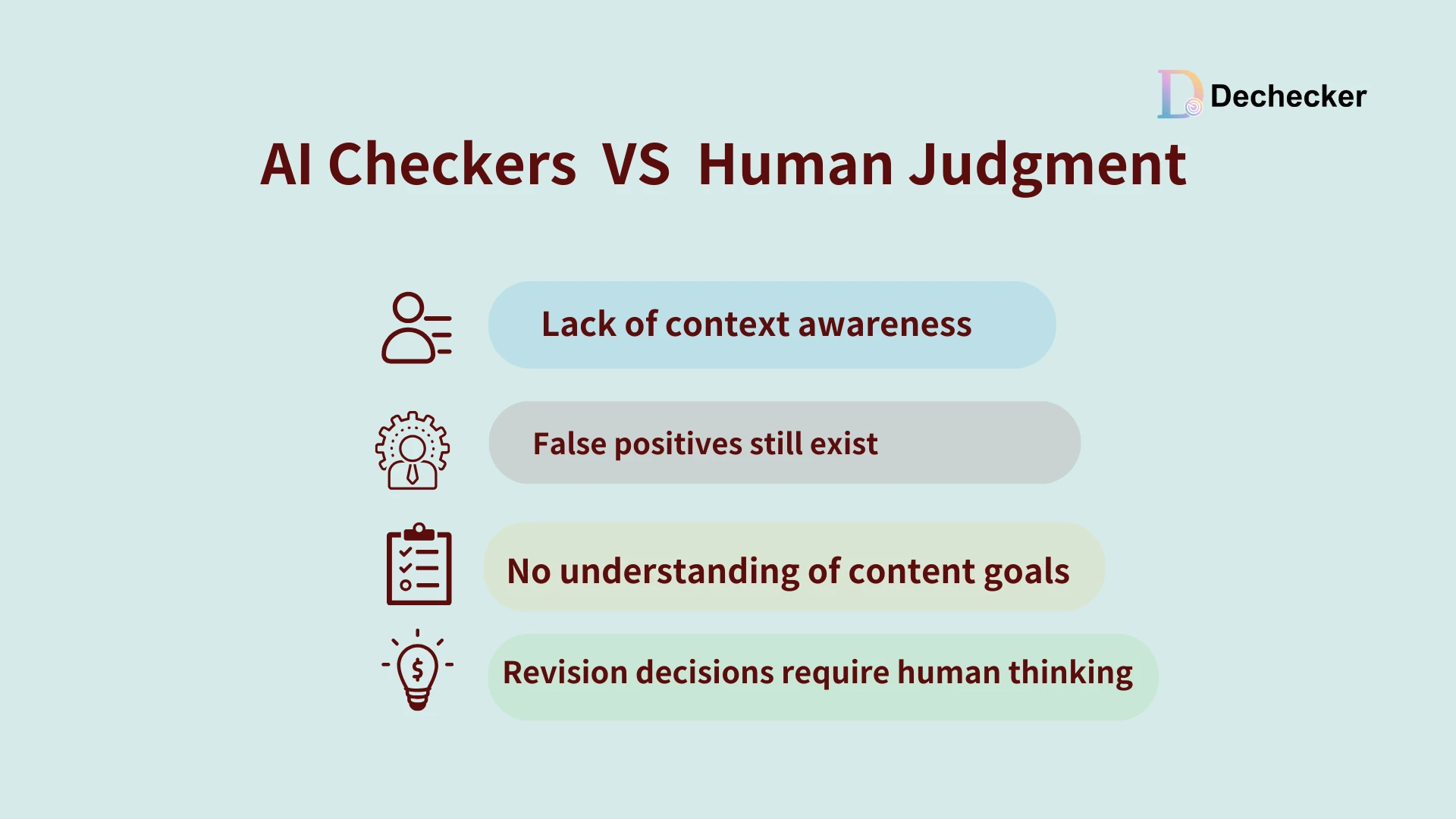
Here’s why AI checkers cannot replace human judgment:
- Lack of context awareness
AI checker tools analyze patterns, not intent. They cannot understand why certain wording was used, whether AI was used responsibly, or how much human effort went into revising the content. - False positives still exist
Even advanced tools may flag high-quality human writing as AI-generated. Only a human reviewer can assess whether the result makes sense and avoid unnecessary rewrites or rejection. - No understanding of content goals
AI checkers cannot judge tone, creativity, persuasion, or originality. They cannot decide whether content is effective, ethical, or appropriate for its audience. - Revision decisions require human thinking
When content is flagged, knowing how to revise it without harming clarity or meaning is a human skill. AI checkers can identify risk, but they cannot guide thoughtful rewriting.
AI checker tools are excellent for pre-checking, quality control, and risk reduction when you need to check for AI writing before publishing or submitting content. However, real trust, originality, and clarity come from human thinking, editing, and intent.
Conclusion
With so many AI checker tools available today, choosing the right one depends on what you value most — accuracy, low false positives, ease of use, or professional reliability.
If you need an AI checker that works well with real-world content, especially human-edited AI writing, Dechecker stands out for its balanced detection and clear results. Tools like QuillBot and ZeroGPT are useful for quick checks, while GPTZero and Scribbr are more suitable for academic-focused scenarios.
Ultimately, the best AI checker fits your workflow. Whether you are a student submitting assignments, a writer publishing SEO content, or a business reviewing professional documents, the right tool can help you publish with confidence in an AI-driven world.