
Homework today is no longer just a measure of knowledge—it often tests a student’s ability to manage time, focus on tasks, and access reliable learning resources. Across subjects like math, science, and writing, assignments are becoming more complex, requiring not only answers but also an understanding of the steps involved. Many students find themselves juggling homework with extracurricular activities, part-time work, or family responsibilities, which can make completing assignments efficiently a challenge.
An AI Homework Helper can play a valuable role in this context. These tools go beyond simply providing answers—they often offer step-by-step explanations, clarify difficult concepts, and adapt guidance to different learning levels. Within modern learning platforms, this support is often extended through specialized tools—for example, a dedicated Photomath experience for image-based math solving—allowing students to submit problems in multiple formats such as text, photos, PDFs, or mathematical symbols and receive structured feedback in return. Research and user reports suggest that students who use AI-powered homework assistants tend to approach problems more systematically, retain concepts more effectively, and complete assignments with greater confidence.
In this article, we will take a closer look at several widely used homework-solving approaches, comparing their core features, input options, explanation styles, and usability. The goal is to help students, parents, and educators better understand how different AI homework solutions fit into real study workflows—so they can choose the tools that best support their learning goals.
An AI Homework Helper is a software application powered by artificial intelligence designed to assist students with completing homework efficiently while deepening understanding. Unlike traditional search engines that simply return links or answers, these tools can interpret questions, provide step-by-step solutions, and highlight the reasoning behind each answer.
Modern AI homework helpers often support multiple input formats, including:
Additionally, many platforms allow students to choose between different learning modes—for instance, a quick-answer mode for rapid solutions or a detailed mode with step-by-step explanations and learning tips. They often permit multiple attempts, enabling students to experiment with different approaches and reinforce understanding.

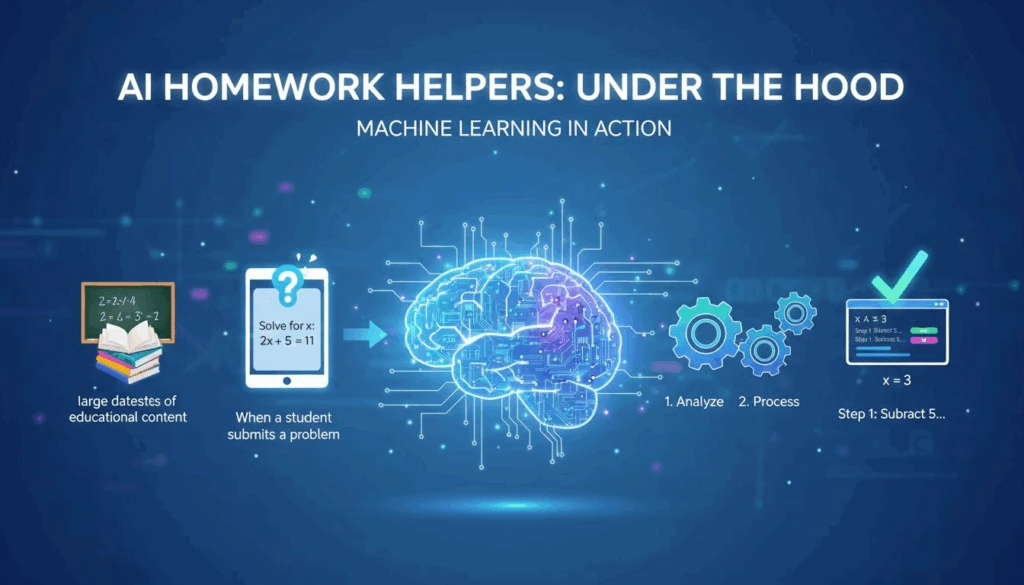
Under the hood, AI homework helpers rely on machine learning models trained on large datasets of educational content. When a student submits a problem, the tool typically follows several steps:
Additionally, many AI homework helpers provide flexibility in how solutions are presented. Some allow students to receive concise answers for quick reference, while others offer more detailed explanations to help learners understand each step and the underlying concepts. This flexibility encourages students to engage with problems at their own pace, explore different methods, and strengthen their overall understanding.
Homework can often be time-consuming, especially when tackling challenging problems or unfamiliar concepts. An AI Homework Helper allows students to approach assignments more efficiently by guiding them through solutions rather than leaving them stuck or guessing. By showing the reasoning behind each step, these tools help students complete work faster without compromising understanding, reducing frustration and improving study flow.
Studies indicate that students who engage with step-by-step explanations are more likely to retain knowledge than those who simply copy answers. Modern AI homework assistants do more than deliver solutions—they break down the reasoning, highlight relevant formulas or methods, and point out potential pitfalls. This process transforms homework from a simple task into an interactive learning opportunity, helping students understand the “why” behind each answer.
AI homework tools are versatile, covering a wide range of subjects from mathematics and science to history and language arts. They can adapt explanations to the type of problem, whether it’s a complex algebra equation, a chemistry reaction, or a literature analysis. By providing examples and context relevant to each subject, students can apply the concepts to similar problems, reinforcing understanding and building confidence.
One of the key advantages of an AI Homework Helper is flexibility. Students can use these tools at home, in the classroom, or on the go, allowing for consistent study habits regardless of schedule. This accessibility supports a variety of learning environments, making it easier for learners to stay engaged and address difficulties as they arise.

AI homework helpers are versatile tools that can support a wide range of learners. Their flexibility and interactive guidance make them useful in different contexts, from classroom learning to independent study.
For students, AI homework assistants can be particularly helpful in managing daily assignments. They allow learners to:
Using AI tools in this way can reduce stress, encourage problem-solving skills, and build confidence in tackling challenging homework.
Parents can also benefit from AI homework helpers as they support their children’s learning journey. Key advantages include:
This approach allows parents to stay involved in their child’s education while promoting self-reliance and critical thinking.
Educators can integrate AI homework assistants into lesson planning or tutoring sessions to:
AI tools can complement traditional teaching methods, providing additional guidance for students who need extra help.
For independent learners, AI homework helpers provide a flexible, self-directed study experience:
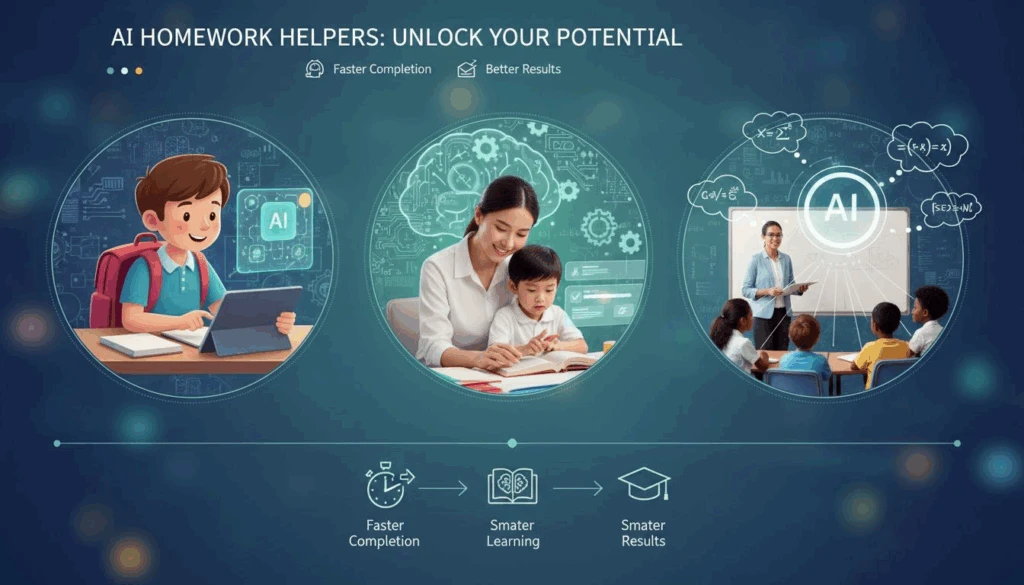
When used consistently, AI homework helpers can lead to:
By supporting learners across different ages, contexts, and goals, AI homework assistants offer practical ways to enhance study efficiency and comprehension.
Not all AI homework assistants are created equal. To truly support learning, an AI Homework Helper should combine flexibility, clarity, and reliability. Here are the key qualities that make these tools effective:
A versatile AI homework helper should handle a variety of homework formats. Whether students are typing questions, uploading documents or images, or working with formulas and equations, the tool should interpret the input accurately. This flexibility ensures that learners can tackle problems in the way that suits them best, without being constrained by a single input method.
Providing the correct answer is not enough. The best AI homework assistants break down problems into clear, logical steps, explaining the reasoning behind each stage. This helps students understand why a solution works, reinforces key concepts, and builds problem-solving skills that are useful beyond homework assignments.
A helpful AI tool allows students to revisit previous questions and solutions. By keeping a history of interactions, learners can review challenging problems, monitor their improvement over time, and identify areas that need extra attention. This feature turns homework from a one-time task into a structured learning experience.
Ease of use is essential. A clean, intuitive interface reduces distractions and allows students to focus on learning rather than navigating complicated menus. Smooth workflows and clear layouts help maintain engagement, especially when working on longer assignments or multiple subjects.
Top AI homework helpers provide more than answers—they summarize key points, highlight relevant concepts, and sometimes offer links to additional resources. These summaries reinforce understanding and give students the tools to apply knowledge to similar problems in the future.
Even complex assignments should be processed promptly and accurately. A reliable AI homework assistant delivers solutions efficiently without sacrificing correctness, ensuring that students can continue working without unnecessary delays.

Here’s an in-depth look at five popular Homework Helper tools — NoteGPT, DeCopy, Gauthmath, EduBrain, and Dechecker. We’ll break down their key features, advantages, disadvantages, practical notes, and user experience, helping you understand how each tool can support learning effectively.
Key Features:
✅ Advantages:
❌ Disadvantages:
💡 Practical Notes:
NoteGPT is suitable for students tackling math, science, or writing problems who want structured guidance. For example, a high school student working on algebra homework can receive step-by-step explanations and alternative approaches, improving comprehension. Its limitations make it more appropriate for casual or daily homework rather than continuous heavy usage.
Performance & User Experience:
NoteGPT delivers fast responses for text-based problems. The interface is simple, but heavy image or PDF submissions may take slightly longer to process. Overall, it balances ease of use and educational value, making it a reliable helper for focused study sessions.
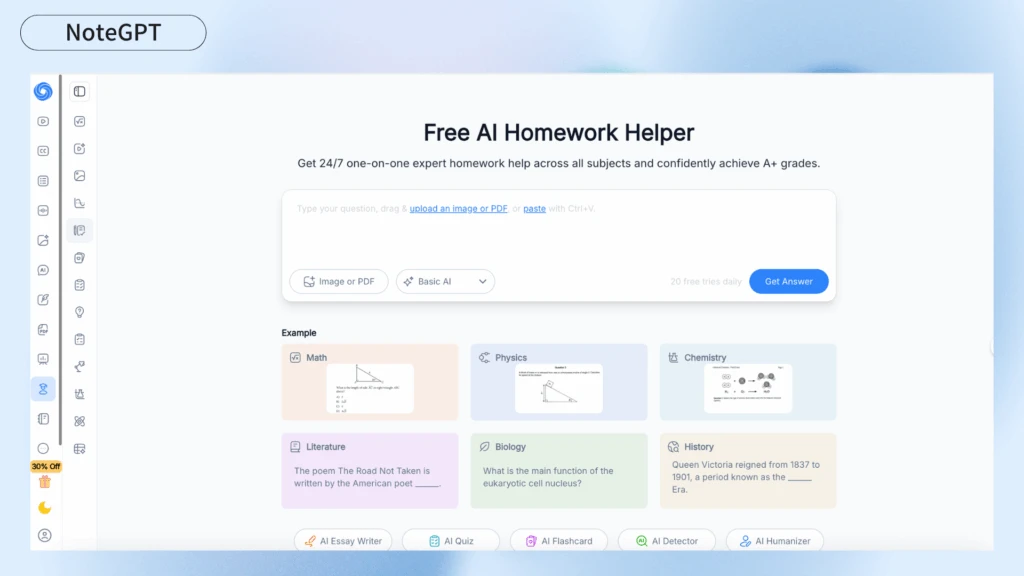
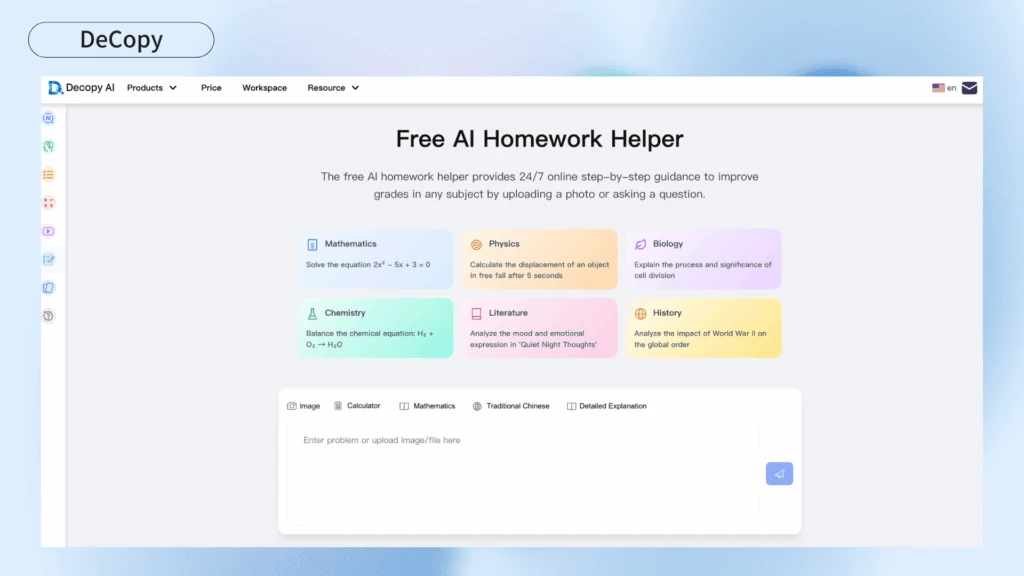
Key Features:
✅ Advantages:
❌ Disadvantages:
💡 Practical Notes:
DeCopy works well for students who prefer learning in a conversational manner. For example, a student reviewing chemistry or physics problems can follow dialogue-based explanations and explore similar questions interactively. It’s best suited for focused practice within a single subject at a time.
Performance & User Experience:
Responses are accurate, but scrolling through small answer blocks may feel tedious. The tool is more suited to learners who focus on one subject at a time rather than switching rapidly between topics.
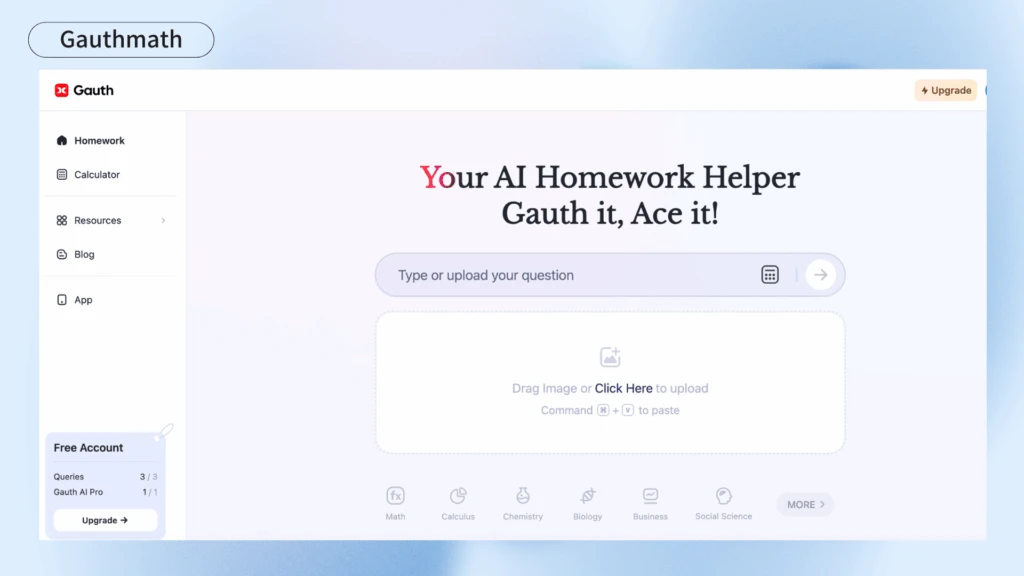
Key Features:
✅ Advantages:
❌ Disadvantages:
💡 Practical Notes:
Gauthmath is ideal for students working on mathematics assignments who want expert-verified solutions. For instance, a student solving algebra or calculus problems can benefit from the integrated calculator and stepwise explanations, though frequent users may need to consider subscription options.
Performance & User Experience:
Accuracy is high, and explanations are clear. However, navigating between input, calculator, and results can slow workflow. Gauthmath is particularly strong for detailed math support but less versatile for non-math subjects.
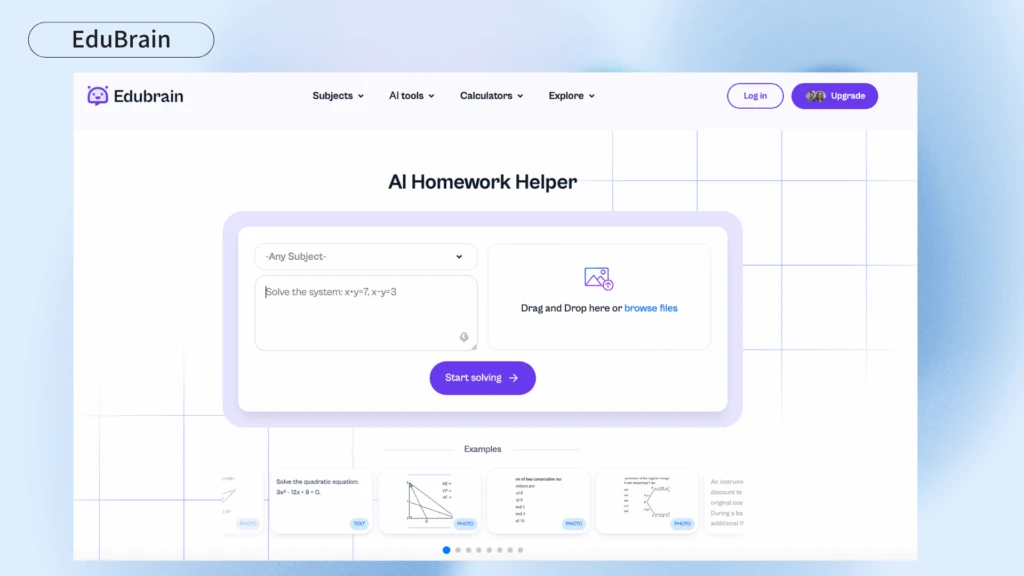
Key Features:
✅ Advantages:
❌ Disadvantages:
💡 Practical Notes:
EduBrain suits learners seeking in-depth guidance, such as students preparing for exams or working on large assignments. For example, a chemistry student can submit a full problem set and receive detailed explanations with references for review. The free version may be limiting, but the professional mode enhances learning depth.
Performance & User Experience:
The AI is accurate and detailed, though longer load times can slightly disrupt workflow. Its rich explanations and multi-format support make it valuable for learners who prioritize understanding over speed.
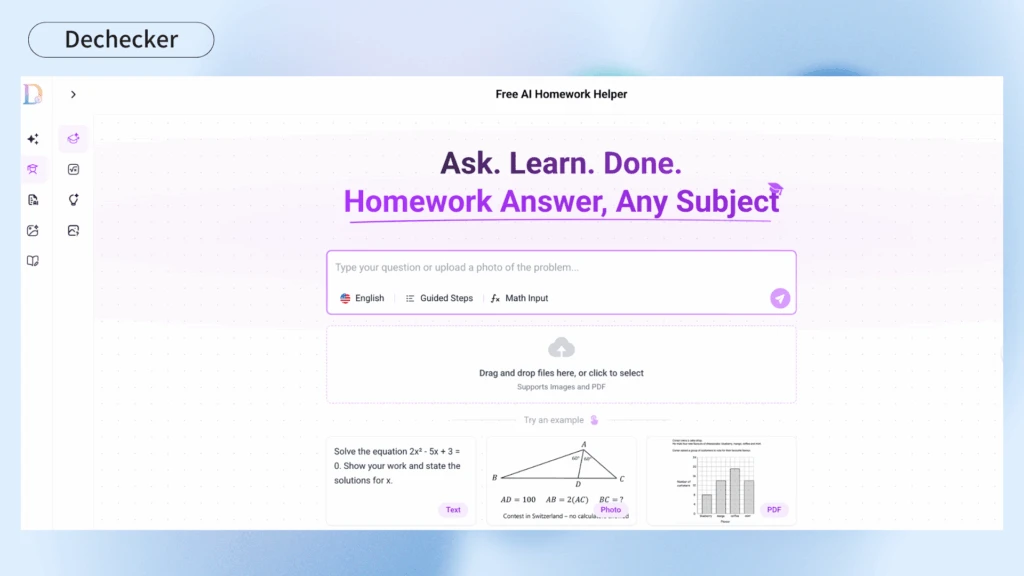
Key Features:
✅ Advantages:
❌ Disadvantages:
💡 Practical Notes:
Dechecker is ideal for students who want a fully free and versatile learning assistant. For example, a student can submit a handwritten math problem or a PDF assignment and receive step-by-step explanations along with related concepts for review. Its history feature allows revisiting past questions, making it excellent for long-term learning.
Performance & User Experience:
Dechecker is fast, accurate, and highly reliable. Its clean interface supports multiple input types and provides detailed explanations without distractions. Whether used at home, school, or on the go, it serves as a comprehensive educational companion.
Five popular AI Homework Helper tools — NoteGPT, DeCopy, Gauthmath, EduBrain, and Dechecker — each have strengths suited to different learning scenarios and user needs. Depending on whether you prioritize speed, depth of explanation, multi-format support, or history tracking, the right tool varies for students, parents, tutors, or self-learners.
Below is a guide to recommended tools for common use cases, showing which helper works best for different types of learners and why.
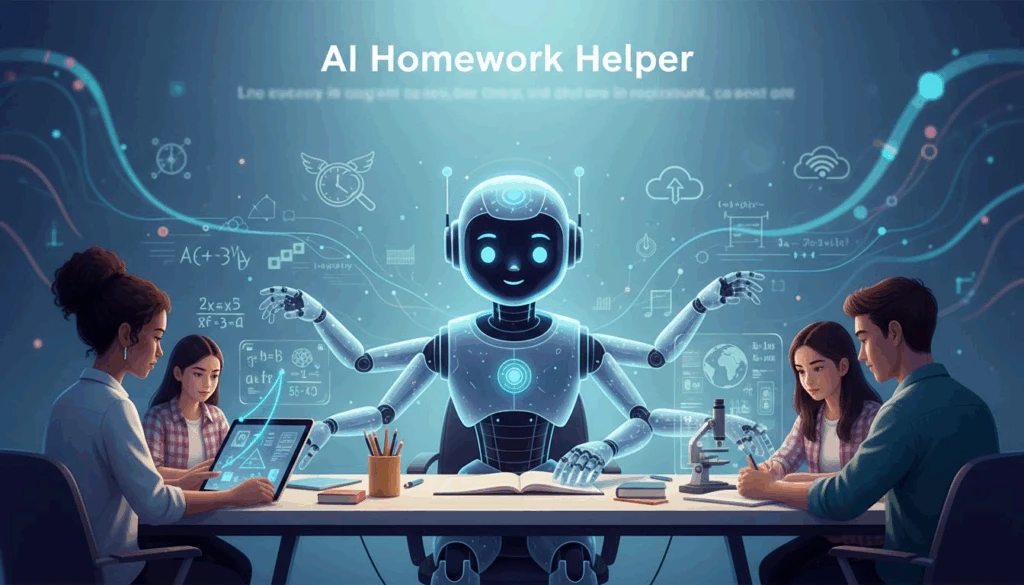
Depending on what you need most from an AI Homework Helper, different tools may suit different learning styles or homework types. Below is a quick overview of which platform works best for common scenarios:
For a clearer understanding, here’s a side-by-side comparison of the top AI Homework Helpers. This table highlights their key capabilities, limitations, and ideal use cases:
| Tool | Multi-Format Input | Step-by-Step Explanations | History Tracking | Expert Support | Voice Input | Free Access | Ideal For |
|---|---|---|---|---|---|---|---|
| NoteGPT | ✅ Text, PDF, Image | ✅ Yes | ❌ None | ❌ None | ❌ None | ✅ Limited daily | Students with document-heavy homework |
| DeCopy | ✅ Text, PDF, Image | ✅ Yes | ❌ None | ❌ None | ❌ None | ✅ Limited | Learners preferring conversational step-by-step guidance |
| Gauthmath | ✅ Text, Image | ✅ Yes | ❌ None | ✅ Expert-verified | ❌ None | ✅ Limited daily | Math-intensive students needing reliable calculations |
| EduBrain | ✅ Text, PDF, Image, Audio | ✅ Detailed steps | ❌ Limited | ✅ Expert help (paid) | ✅ Audio | ✅ Limited | Students seeking in-depth explanations and multi-format support |
| Dechecker | ✅ Text, PDF, Image, Math symbols | ✅ Step-by-step + summaries | ✅ Full history | ❌ None | ❌ None | ✅ Fully free | All-round, multi-subject, free learning assistant |
Different AI Homework Helpers cater to different learning needs, making it important for students, parents, and educators to choose based on context.
By integrating AI-assisted learning into their study routines, students can save time while reinforcing understanding, practice problem-solving, and review past queries efficiently. Dechecker, as a fully free and multi-subject AI Homework Helper, emphasizes practical, real-world learning support, making it a strong option for consistent, independent study.
When using AI tools for homework help, it’s crucial to align the tool with the learning goal—whether that’s quick clarification, deep understanding, or multi-format explanations. Tools like Dechecker AI Homework Helper can complement traditional study methods, providing reliable assistance while fostering critical thinking and long-term learning skills.