
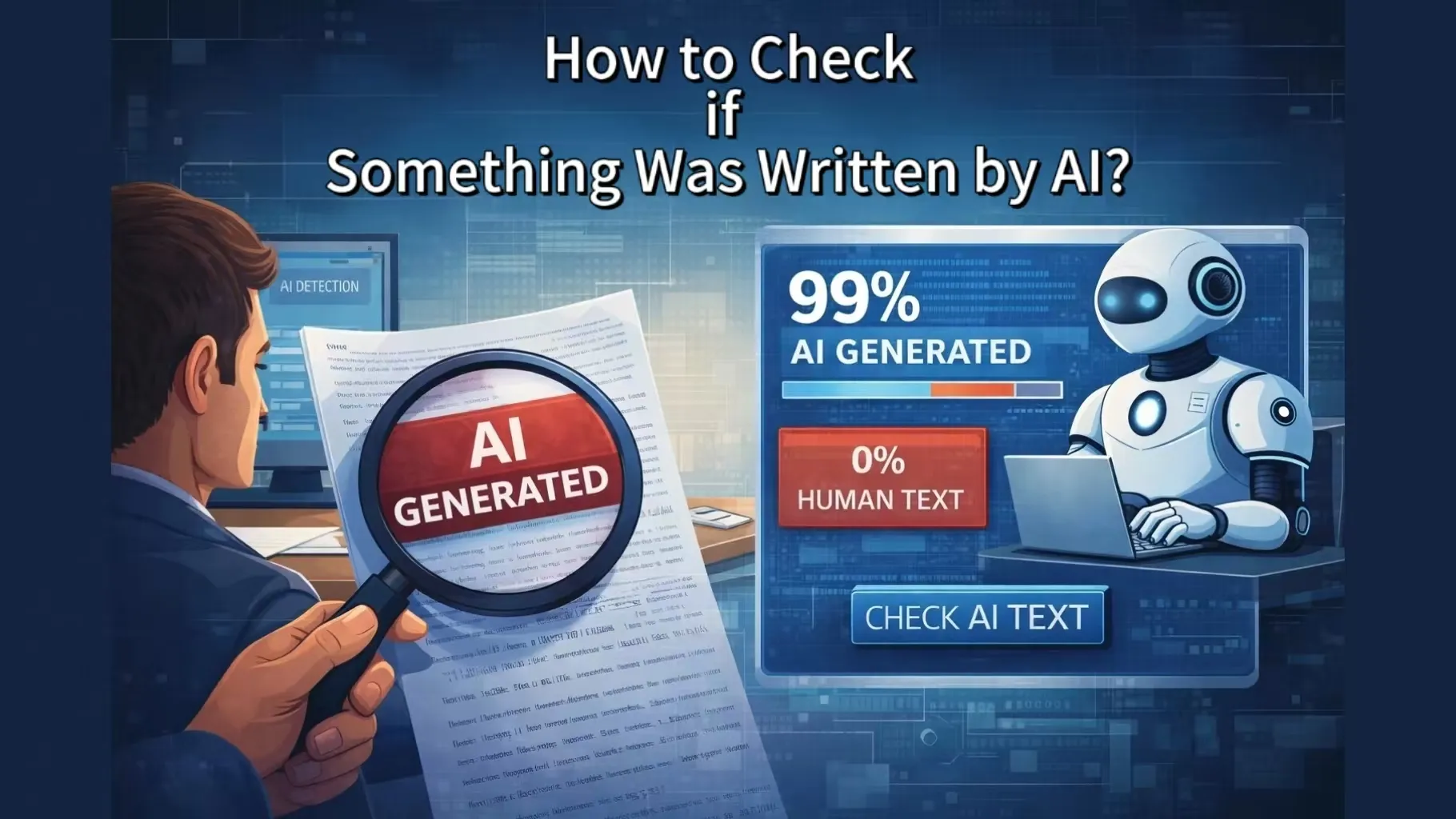
Using AI checkers and detectors like Dechecker to verify authenticity:
"Is this content written by a human, or is it AI?" That was the question Sarah, a content manager at a growing digital marketing agency, asked herself one afternoon as she reviewed a blog post that seemed too perfect—too precise and polished. She'd seen AI tools in action before, but was this really AI-generated content?
With the growing use of AI in content creation, it's becoming harder to distinguish between human-written and AI-generated text. But the good news is that with the right tools, such as an AI checker and AI detector, you can now quickly and accurately determine whether something was written by a human or powered by artificial intelligence.
In this guide, we’ll walk you through everything you need to know about checking if content is AI-generated. From using free AI checkers to understanding how AI detectors work, we’ll give you practical advice on how to separate authentic human writing from AI-produced content.
As AI continues to evolve, it's becoming a powerful tool in various fields, from content creation to customer service. But this advancement also brings challenges, especially in distinguishing between human-generated and AI-generated content. Here are the key reasons why checking for AI writing has become essential:

Academic Integrity and Plagiarism Prevention
In academic institutions, plagiarism detection is a priority. With the rise of AI writing tools, students and even professionals may turn to these technologies to "generate" essays, research papers, and reports. This can undermine the integrity of academic assessments. Educators and administrators use AI checkers to maintain academic standards and prevent AI-generated content from slipping through unnoticed. AI detection tools can also help prevent students from outsourcing their assignments to AI and claiming them as their own work.
Content Quality and SEO Performance
For content creators, digital marketers, and SEO specialists, content quality is the backbone of a successful content strategy. While AI can produce articles quickly, they often lack the depth, creativity, and personal touch that human writers offer. In terms of SEO, Google favors content that is original, well-researched, and human-driven, as it typically provides more value to users. AI-generated content, unless carefully refined, may be flagged by search engines for its repetitive nature and lack of originality. By using an AI detector, marketers can ensure that the content is authentic, helps build trust with readers, and adheres to SEO best practices.
Transparency and Ethical Considerations
As AI writing tools become more common, businesses and content creators must remain transparent about their content sources. The use of AI-generated content without proper disclosure could damage a brand’s reputation. Ethical concerns also arise when companies use AI to generate misleading or overly polished text that may give a false impression of authenticity. For these reasons, using an AI checker is essential to ensure the content aligns with the ethical standards expected in many industries.
Preventing Misinformation
AI-generated content, especially when poorly written or used for malicious purposes, can contribute to the spread of misinformation. Checking whether content is AI-generated can help identify low-quality, potentially harmful text and prevent its distribution on websites, social media platforms, and other channels. For journalists and news outlets, ensuring the accuracy and authenticity of content is crucial for maintaining credibility.
An AI checker is a tool designed to assess whether a piece of content has been generated by an artificial intelligence tool, such as GPT-3, GPT-4, or similar models. These tools use algorithms to detect patterns in the text that are common in AI-generated content.
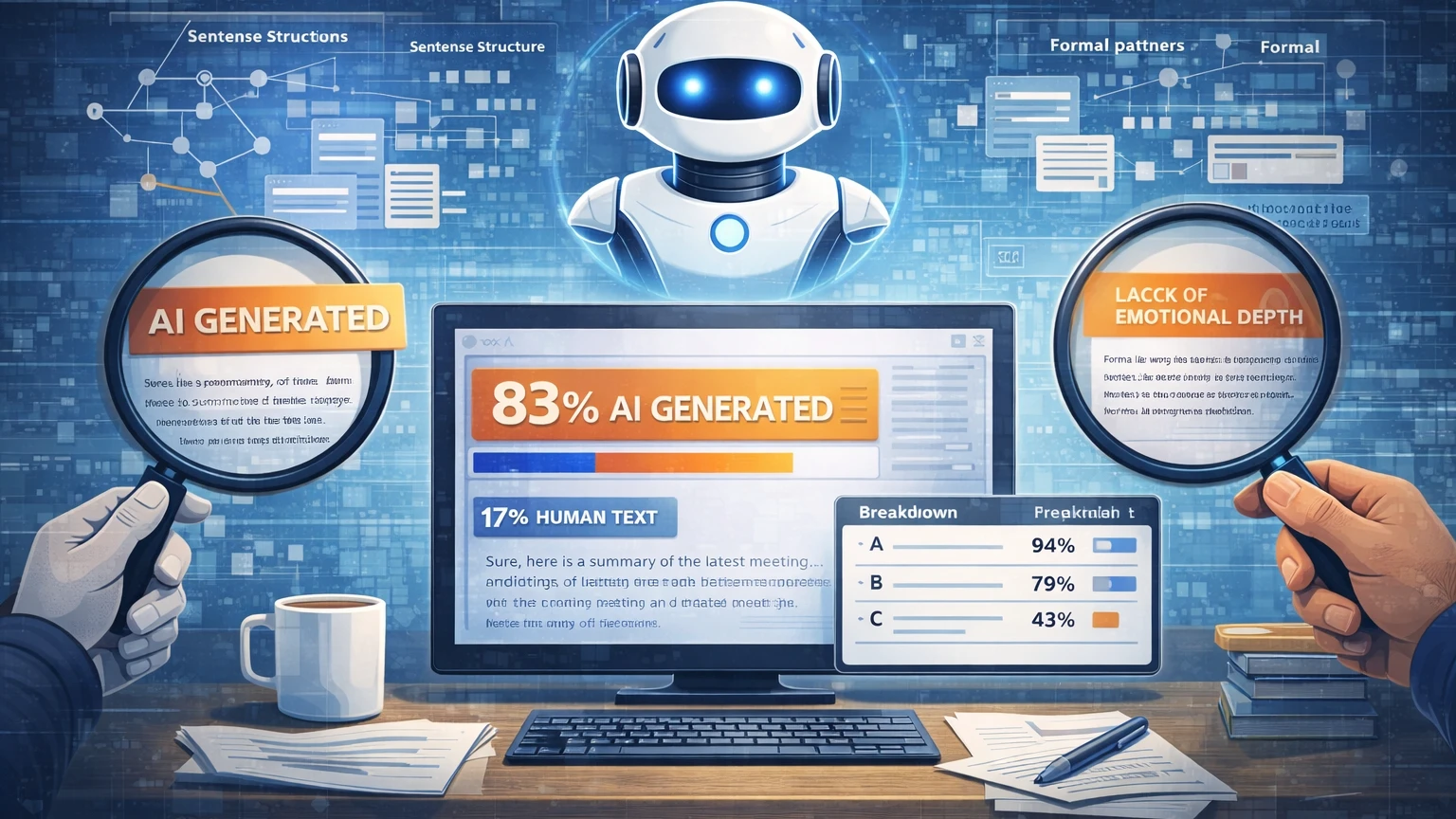
AI checkers analyze text for various linguistic markers that differentiate human writing from AI-generated text. These markers include:
Sentence structure: AI tends to produce more uniform sentence structures, while human writing typically has more variation.
Word choice and phrase patterns: AI often uses specific word combinations and formal phrasing that humans may not.
Repetitiveness: AI-generated text often repeats ideas or phrases in unnatural ways.
Lack of emotional depth: AI often lacks the personal tone and emotional nuance that human writers infuse into their content.
An AI detector takes the analysis one step further by not just identifying AI-generated content but also providing a probability score, often as a percentage. This score indicates how likely it is that a given piece of content was written by an AI model. Some AI detectors also provide a breakdown of specific paragraphs or sections that exhibit AI-like patterns.
AI detectors typically rely on statistical models, natural language processing (NLP), and machine learning algorithms to evaluate text. Here's how they work in detail:

AI detectors first analyze the text to identify unique linguistic features. For example, AI-generated content often uses a narrower range of vocabulary than human-written text. It also tends to favor more predictable sentence structures. These patterns are tracked by the AI detector’s algorithms.
Most AI detectors compare the text to known patterns from AI models like GPT-3 and GPT-4. These models have been trained on large datasets of text, and their outputs tend to follow certain linguistic patterns. The detector looks for these patterns in the input text and assesses its similarity to typical AI writing.
AI models are generally more predictable than humans when generating text. The detectors use perplexity (the unpredictability of text) to assess the likelihood that the text was generated by AI. Text with high perplexity is often more human-like, while low perplexity indicates machine-generated content.
The AI detection algorithms use pattern recognition to pinpoint specific telltale signs of AI-generated text. These algorithms may focus on factors like repetitive phrasing, lack of topic variation, and overly formal tone — all of which are common in AI writing.
Several tools are available to help you detect AI-generated content. Below are some of the most popular and reliable AI checkers and AI detectors:
✅ Dechecker: The Best Free AI Checker
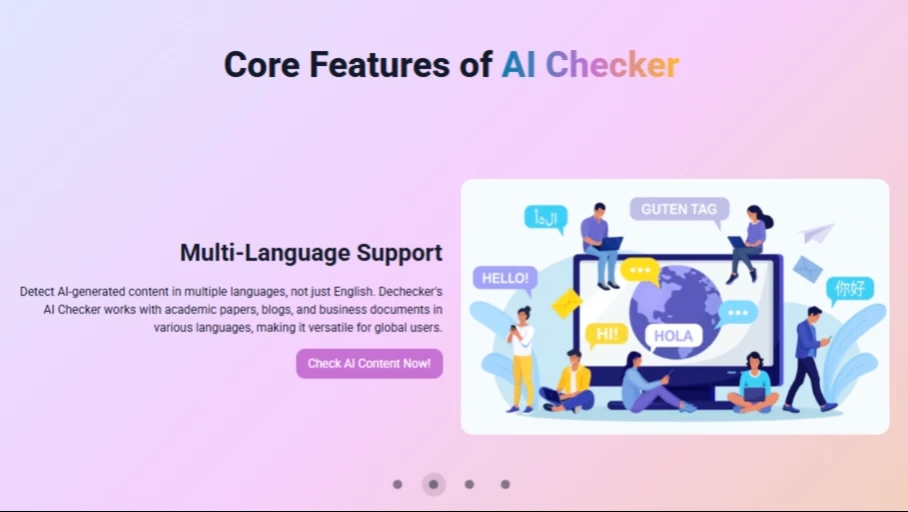
Dechecker is a free tool that helps you easily check if a piece of content has been written by AI. This tool analyzes the text and provides a percentage-based result to indicate the likelihood that the content was AI-generated. Dechecker is user-friendly and ideal for content creators, students, and educators who need a quick and accurate AI detection tool. Dechecker’s simplicity and ease of use make it an excellent choice for casual checks, while its comprehensive results provide valuable insight into the authenticity of content.
✅ GPTZero: Research-Backed AI Detection
GPTZero is one of the most advanced AI detectors in use today. It is popular in academic and professional circles for its accuracy in detecting AI-written content. GPTZero analyzes text using a combination of linguistic analysis and statistical models. It provides a detailed breakdown of the text, including a confidence score that indicates how likely it is that the text was generated by AI.
✅ Scribbr AI Detector: Detailed Paragraph Feedback
Scribbr’s AI detector doesn’t just give a high-level probability score; it breaks down the content by paragraph, helping users pinpoint which sections are most likely AI-generated. This tool is especially useful for educators and writers who want to ensure the quality and authenticity of academic papers, essays, and articles.
✅ QuillBot: Comprehensive AI Checker
QuillBot’s free AI checker tool is designed for simplicity and efficiency. It scans the text for signs of AI involvement and provides a clear percentage-based result. QuillBot is especially popular among students, content creators, and those looking for a straightforward solution for checking for AI writing.
✅ Copyleaks: Advanced AI Content Detection
Copyleaks is a robust AI detection tool used by businesses and content teams to detect AI-generated content. It supports multiple languages and is capable of scanning large volumes of text for AI involvement. Copyleaks offers a more comprehensive solution for businesses that need to monitor AI-generated content across websites and publications.( 表格补充在最下方)
| Tool | Free to Use | Ease of Use | Best For |
|---|---|---|---|
| Dechecker ⭐ | ✅ Yes | ✅ Very easy | Fast, everyday AI writing checks |
| GPTZero | ⚠️ Limited | ⚠️ Medium | Academic & research content |
| Scribbr AI Detector | ⚠️ Limited | ⚠️ Medium | Essays & academic papers |
| QuillBot AI Checker | ⚠️ Limited | ✅ Easy | Students & casual checks |
| Copyleaks | ❌ Mostly paid | ❌ Complex | Enterprise & large teams |
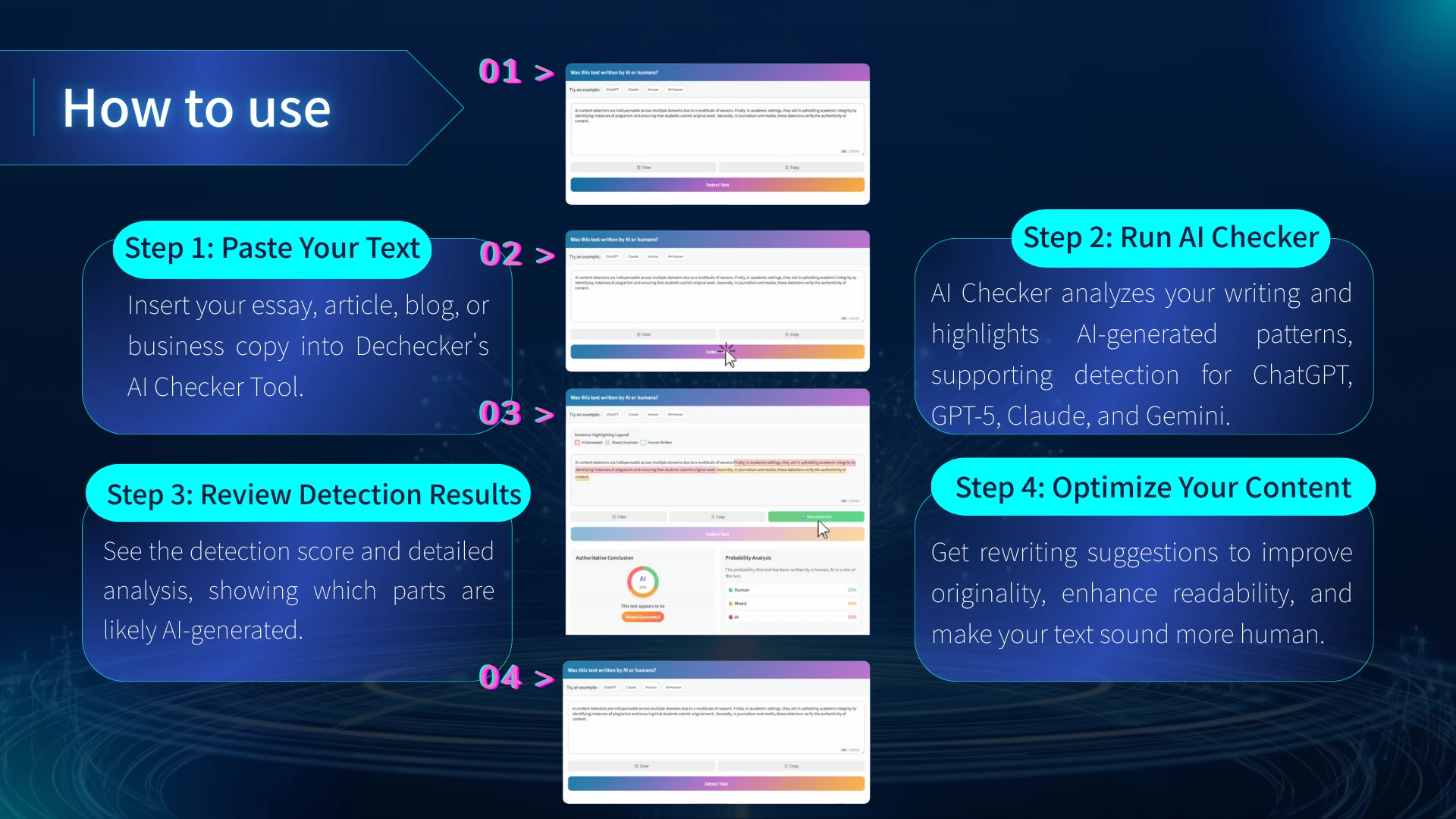
Now that you know what AI checkers are and how they work, let’s walk through the process of using Dechecker. Here’s a step-by-step guide:
While AI checkers are incredibly useful, they’re not perfect. There are several challenges when it comes to detecting AI-generated content:
False Positives
Sometimes, well-written and structured human content can be flagged as AI-generated. This is especially common in academic writing, where the language tends to be more formal and structured.
Mixed Content
Content that combines human writing with AI-generated text can be difficult to detect accurately. AI detectors may not always be able to parse out the portions of the text that were written by AI.
Evading Detection
Advanced AI models and paraphrasing techniques can sometimes make AI-generated content more difficult to detect. Writers may also use editing tools to refine AI-generated text, further masking its origins.

While AI detection tools are powerful, you can also spot AI-generated content through human observation. Here are a few techniques you can use to identify AI text:
Look for Unnatural Repetition
AI-generated content often includes unnatural repetitions of words or phrases. If the text feels robotic or overly structured, it's worth checking with an AI checker.
Check for Consistency
AI content may lack internal consistency. Look for sudden shifts in tone or voice that may suggest a portion of the text was generated by AI.
Assess Emotional Depth
AI often struggles with emotional nuance. If a piece of writing feels flat or lacks empathy, it may be AI-generated.
Let’s walk through a real-world example. Imagine you're an editor at a digital publishing agency, and you've just received an article from a freelancer. You suspect the article may have been written by AI due to its uniform tone and perfect grammar. Here's how you can verify its authenticity:
By using an AI checker, you can ensure the article meets editorial standards and maintain the authenticity of your content.

As AI tools become more advanced, learning how to check for AI writing is becoming an essential skill for content creators, educators, and marketers. By using an AI checker like Dechecker, you can ensure that your content is authentic and meets the standards for quality and originality.
With the right tools and an understanding of how AI detection works, you can confidently navigate the world of AI-generated text and maintain the integrity of your content. Always balance the efficiency of AI with the unique touch that only human writing can provide.